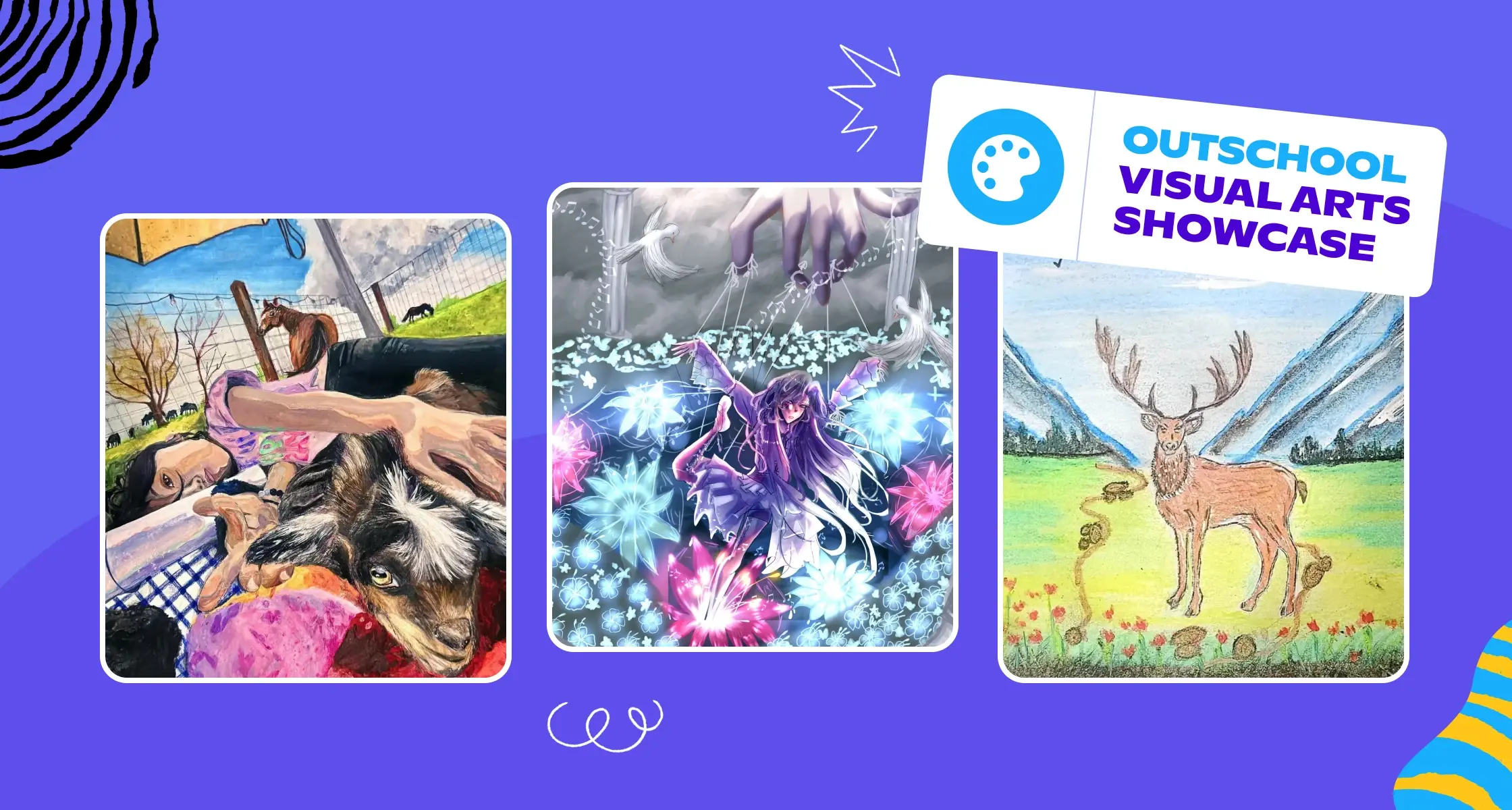
Most parents start looking for art classes when their kid's sketchbook is full and YouTube tutorials have hit their limit. The problem with most online art programs is that they're either passive (watch and copy) or so expensive they only make sense if your kid is heading to art school. What works for most families is something in between: a live class with a teacher who can see what your kid is making and help them get better at it.
This guide covers the types of online art classes available for kids, what to look for, how the options compare, and where Outschool fits.
Types of online art classes for kids
Art classes cover a wide range of skills and mediums. The right fit depends on what your kid is drawn to and how much structure they need.
Drawing
The foundation of most visual art. Drawing classes range from guided step-by-step sessions for younger kids to observational sketching and perspective work for older ones. Includes anime/manga drawing, cartooning, realistic pencil work, and character design. Browse drawing classes.
Painting
Watercolor, acrylic, and oil painting classes teach color mixing, brushwork, composition, and technique. Some classes provide a project each session; others build skills across multiple weeks. Browse painting classes.
Digital art and illustration
Kids learn to create art using Procreate, Photoshop, or other digital tools on tablets or computers. These classes combine traditional art fundamentals with digital-specific skills like layers, custom brushes, and digital color theory. Typically best for ages 10 and up. Browse digital art classes.
Animation
From stop-motion with household objects to 2D and 3D digital animation, these classes combine art skills with storytelling and technology. Kids learn timing, character movement, and visual narrative. Browse animation classes.
Crafts and design
Sewing, jewelry making, woodworking, graphic design, fashion design, and interior design classes. These are hands-on and project-based, often crossing into STEAM territory. Browse crafts classes.
Photography
Kids learn composition, lighting, editing, and visual storytelling through photography. Most classes work with whatever camera the kid has, including a phone. Browse photography classes.
What to look for in an online art class
Live teacher feedback on actual student work. Art is a skill that improves through individual feedback. If the class is too large for the teacher to look at each kid's work during the session, the value drops. Small class sizes (under 10) matter more in art than in most subjects.
Variety of class formats. The best platforms offer single sessions for trying something new, multi-week courses for building skills, and ongoing clubs for kids who want regular practice with a community. Not every kid wants a 12-week commitment upfront.
Transparent pricing with no subscriptions. Some platforms charge monthly subscriptions whether your kid takes classes or not. Look for per-class pricing so you only pay for what you use.
Parent ratings for each class and teacher. Not all art teachers are equally strong at online instruction. Transparent reviews help you pick the right class before your kid's first session.
Age-appropriate structure. A painting class for 6-year-olds should look fundamentally different from one for 14-year-olds. Look for classes with clear age ranges and skill-level descriptions.
How the options compare
YouTube channels (Art for Kids Hub, Draw So Cute, others). Free, abundant, and good for casual practice at home. No feedback, no accountability, and kids tend to copy rather than develop original skills. Good for supplementing structured instruction.
Self-paced platforms (Sparketh, Creative Bug). Sparketh ($15-$25/month) offers ~1,000 pre-recorded art video lessons designed for kids and homeschoolers. Good for self-motivated kids who will practice independently. No live feedback or interaction.
In-person classes. Local studios and community centers typically charge $150-$300 for a multi-week session. Quality varies by instructor. Limited by geography and scheduling.
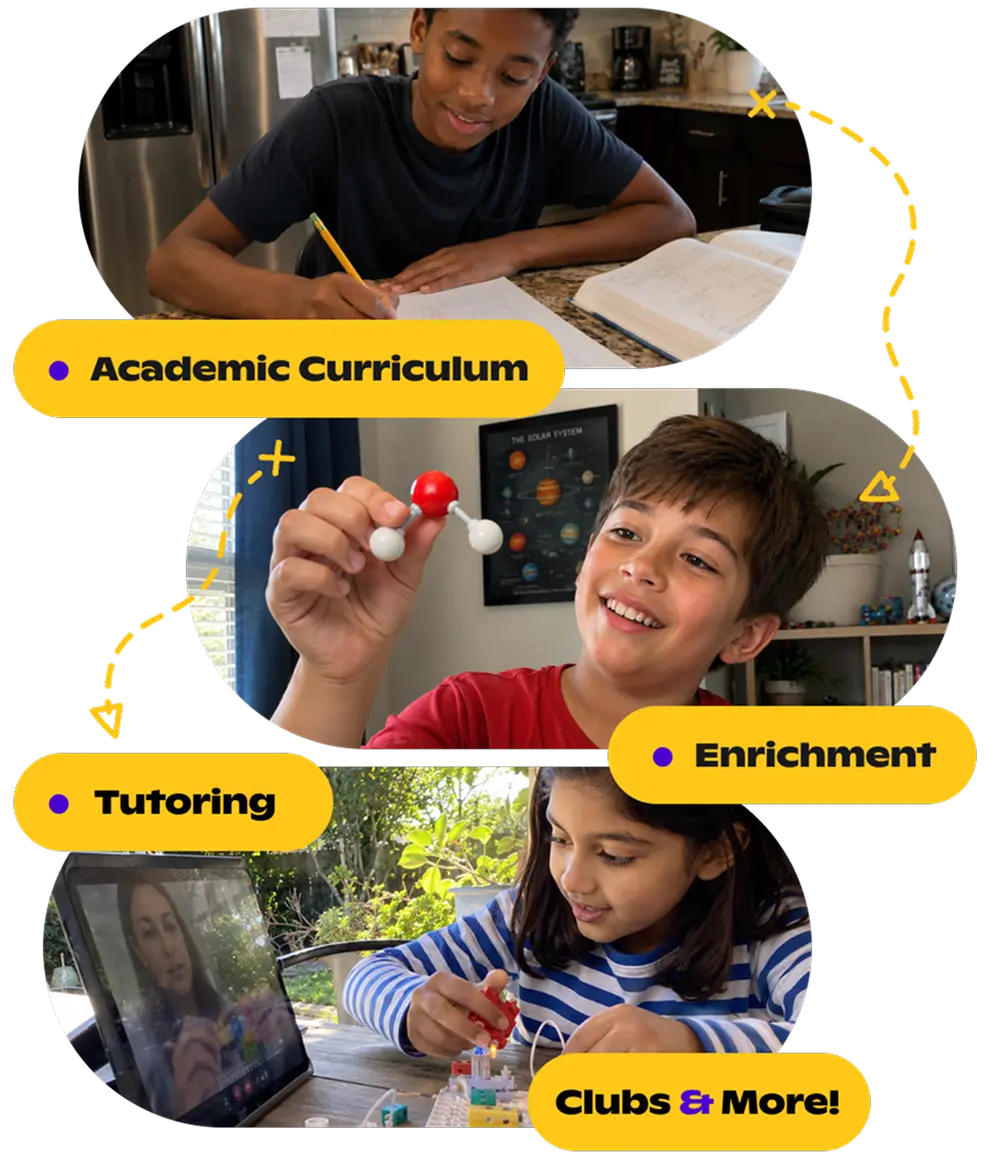
Live online classes (Outschool). Outschool's art classes are taught live by vetted teachers in small groups averaging 3-4 kids. The catalog covers every category above: drawing, painting, digital art, animation, crafts, photography, and more. Teachers provide real-time feedback. Most classes run $12-$25 per session with no subscription. Kids can try a single session or join ongoing clubs.
$20 off your first class WITH promo code: blog
Build the Education your Kid Deserves
Discover thousands of live classes taught by expert teachers, across academics and enrichment.
Browse classesArt classes by age
Ages 3-5: Process-focused classes that prioritize exploration over technique. Directed drawing with simple shapes, painting with primary colors, crafts that build fine motor skills. The goal is building comfort with materials and confidence in creating.
Ages 6-8: Ready for more structured instruction. Guided drawing classes, art clubs, and beginner painting work well. Kids can follow multi-step instructions and start thinking about composition and color. Popular interests: animals, fantasy characters, nature.
Ages 9-12: The sweet spot for skill development. Kids can handle anime/manga drawing, digital illustration, painting technique, and art history connections. Many kids this age want to develop a personal style. Art clubs with peer feedback build both skills and social connection.
Ages 13+: Ready for advanced technique and critique. Portfolio preparation, digital illustration in professional tools (Procreate, Photoshop), advanced painting, and art as career exploration. Some teens use Outschool art classes to build art school portfolios.
Why art education matters (and what the research says)
Art education does more than teach kids to draw. A meta-analysis published in the Review of Educational Research found that arts-integrated instruction improved academic achievement in non-arts subjects, with particularly strong effects in literacy and mathematics [1]. The mechanism isn't mysterious: art builds observation skills, spatial reasoning, persistence through frustration, and the ability to evaluate and revise your own work. Those are transferable skills.
For homeschool families, art classes also address one of the most common curriculum gaps. Most homeschool curricula focus on math, reading, and science. Art often gets pushed to the side because parents feel less confident teaching it. A live class with a skilled teacher fills that gap without requiring the parent to become the art instructor.
ESA families: using education funds for art classes
Art classes are a qualifying expense under most state ESA programs. They typically fall under "online educational course or program" or "enrichment" categories. Art education is explicitly approved in most state program guidelines.
If your state uses ClassWallet or Odyssey, you can pay for Outschool art classes directly from your ESA balance. For reimbursement states, keep your receipt and submit within your state's window.
For details, see our ESA approved expenses guide. For homeschool art curriculum options beyond live classes, see our homeschool art curriculum guide.
Frequently asked questions
Can kids really learn art online?
Yes. Online art instruction works particularly well because teachers demonstrate techniques on camera while kids follow along at their desks, then kids share their work for individual feedback. The format actually solves a problem that in-person classes have: in a physical classroom, a teacher can only stand behind one kid at a time. On video, the teacher can see every kid's work simultaneously when kids hold up their art to the camera.
What supplies does my kid need?
This varies by class type. For drawing: a sketchbook, pencils (HB, 2B, 4B), eraser, sharpener. For painting: student-grade acrylics or watercolors, brushes, paper or canvas. For digital art: an iPad with Apple Pencil or a drawing tablet (Wacom Intuos, ~$70). Check the class listing for specific supply lists before enrolling.
My kid says they 'can't draw.' Will art classes help?
Usually, yes. The 'I can't draw' feeling typically comes from comparing finished results to a mental image without understanding the steps in between. Structured instruction breaks drawing into learnable skills (shapes, proportion, shading) that build confidence. Most kids who say they can't draw simply haven't had anyone teach them how to see and translate what they see onto paper.
How is an art class different from an art curriculum?
An art class is a single session or series led by a live teacher. An art curriculum is a structured year-long program (like a textbook or workbook series) that covers art concepts systematically. Both have value. Classes provide live feedback and social connection; curricula provide structure and scope-and-sequence. Many homeschool families use both: a curriculum for daily practice and a weekly live class for feedback and motivation. See our homeschool art curriculum guide for curriculum comparisons.
Are art clubs worth it?
For many kids, art clubs are the most valuable format. They meet weekly, build community, and create accountability. Kids share work, get peer feedback, and develop alongside a consistent group. The social element is especially valuable for homeschool families. Browse art clubs and camps.
Browse art classes on Outschool to find live, small-group classes with real teacher feedback, covering drawing, painting, digital art, animation, crafts, and more.
Sources
[1] Hardiman, M. M., JohnBull, R. M., Carran, D. T., and Shelton, A. (2019). The effects of arts-integrated instruction on memory for science content. Review of Educational Research. journals.sagepub.com/doi/10.3102/0034654319868844.


.svg)
.svg)