If your child resists getting dressed, starting a meal, or stopping a preferred activity, and the word used most often to describe them is "defiant," it's worth pausing on that word. Some kids aren't being defiant. They're overwhelmed by the sensation of being told what to do.
Pathological demand avoidance, or PDA, is an anxiety-driven profile most commonly associated with autism. The core feature is extreme avoidance of everyday demands and expectations, driven by a need to feel in control. Understanding that distinction changes everything about how you respond.
What PDA is (and what it isn't)
PDA is not a formal diagnosis in the DSM-5 or the ICD-11. It was first described by developmental psychologist Elizabeth Newson in the early 1980s, based on clinical observations of children who didn't fit neatly into existing autism categories. Most clinicians who recognize it today describe it as a profile within autism, one with a specific pattern that looks different from more typical presentations.
The defining feature isn't a bad attitude. It's anxiety. For a child with PDA, the feeling of having no choice, even about something small like being asked to put on shoes, triggers a threat response. The demand doesn't have to be unreasonable. It just has to feel like it's coming from outside.
This is why PDA is so often mistaken for oppositional defiant disorder (ODD). The behaviors look similar: the child refuses, argues, melts down, or simply doesn't comply. But ODD is rooted in oppositionality toward authority. PDA is rooted in anxiety about autonomy loss. The interventions for each look almost nothing alike.
How PDA shows up in kids
No two PDA kids look exactly the same. Some are socially fluent and charming when demands are low, then seem to fall apart without warning when an expectation is placed on them. Others are more consistently overwhelmed.
Common patterns include:
- Resisting or avoiding even preferred activities if they've been requested by someone else
- Using social strategies (negotiating, redirecting, distracting) to delay or escape demands, rather than refusing outright
- Appearing to understand the rules, then finding creative workarounds
- Having mood shifts that seem disproportionate to the trigger
- Coping better in unstructured settings where they feel they have genuine choice
That last point matters for parents thinking about learning at home. Structure itself can be a trigger. A child who struggles to get through a school morning might manage three focused hours of work at home if the work is chosen by them and the environment feels within their control.
Why PDA is so often missed
Many PDA kids are highly capable under the right conditions. They can present well in short interactions with new people (novelty temporarily lowers anxiety), seem engaged when a topic genuinely interests them, and appear fine to anyone who isn't spending six to eight hours a day with them.
The PDA Society's 2023 parent survey found that 78% of families waited three or more years for recognition of their child's profile. Many were told their child was manipulative, spoiled, or experiencing anxiety that would pass. Some were told there was nothing to diagnose because the child performed adequately on formal assessments.
What those assessments often miss is the cost. A child who appears fine at school may be spending all of their coping resources just to get through the day, then arriving home in a state of complete dysregulation. If your child's behavior at home is dramatically different from their behavior in other settings, that gap is worth paying attention to. Families working through similar patterns often find that resources on school anxiety and sensory processing provide a useful starting point while they're still building a fuller picture.
Why rewards and consequences usually backfire
Traditional behavior management (reward charts, token economies, logical consequences) generally makes things worse for PDA kids. Not because kids are trying to outsmart the system. Because any condition with a consequence feels like a demand.
"If you eat your dinner, you can have dessert" is experienced as a command with a price tag, not an incentive. "You'll lose screen time if you don't get ready" adds threat to an already-anxious state. Even positive reward systems can increase anxiety, because the child now has something to lose.
Dr. Ross Greene's Collaborative Problem Solving model offers a more useful framework. Rather than imposing solutions, parents identify the expectations causing problems, understand the specific skills or conditions that are missing, and work with the child to find solutions that address both sides. It's not permissive parenting. It works at a different level entirely. The goal shifts from "how do I get my child to comply?" to "how do I understand what's making compliance impossible right now?"
For kids whose executive function challenges are part of the picture, this is especially relevant. Demand avoidance often overlaps with difficulty managing transitions, shifting attention, and regulating emotional responses to unexpected changes.
$20 off your first class WITH promo code: blog
Build the Education your Kid Deserves
Discover thousands of live classes taught by expert teachers, across academics and enrichment.
Browse classesWhat helps: low-demand strategies at home
The strategies that work for PDA kids share a common thread: they increase the child's sense of autonomy and reduce the sensation of being directed.
In practice, this looks like:
- Offering genuine choice rather than disguised choice. "Before or after the story?" is a real choice only if both options remain available regardless of what the child picks.
- Using indirect language: "I wonder if it might be time to..." rather than "Go get your shoes"
- Separating tasks from timing where possible, so the child can finish a thought before moving to the next expectation
- Reducing the overall demand load so essential demands (safety, basic self-care) don't compete with optional ones
- Naming what you notice rather than directing: "Your bag is by the door" rather than "Put your bag away"
None of this is about lowering expectations long-term. It's about reducing ambient anxiety so the child has the capacity to meet expectations at all.
Learning environments that fit PDA kids
PDA kids often thrive where their interest drives what they're learning and where the teacher responds to the child's readiness rather than a fixed schedule. Interest-led, self-paced learning tends to work better than timetables and assignments with hard deadlines.
Online classes with small groups or one-on-one formats give PDA learners something hard to find in a traditional classroom: the ability to participate on their own terms, at their own pace, and on their own timeline. When a child chooses a class based on something they're genuinely curious about, the demand quality changes. It's no longer "you must learn this." It's "here's a place to go deeper into something you already want to know."
This is one reason many families with PDA kids find that building a home learning structure around interest-led classes works better than any set curriculum. The framework follows the child, not the other way around. If you're not sure where to start, working through a homeschool method quiz together can be a low-stakes way to identify which formats and structures might feel most natural for your family.
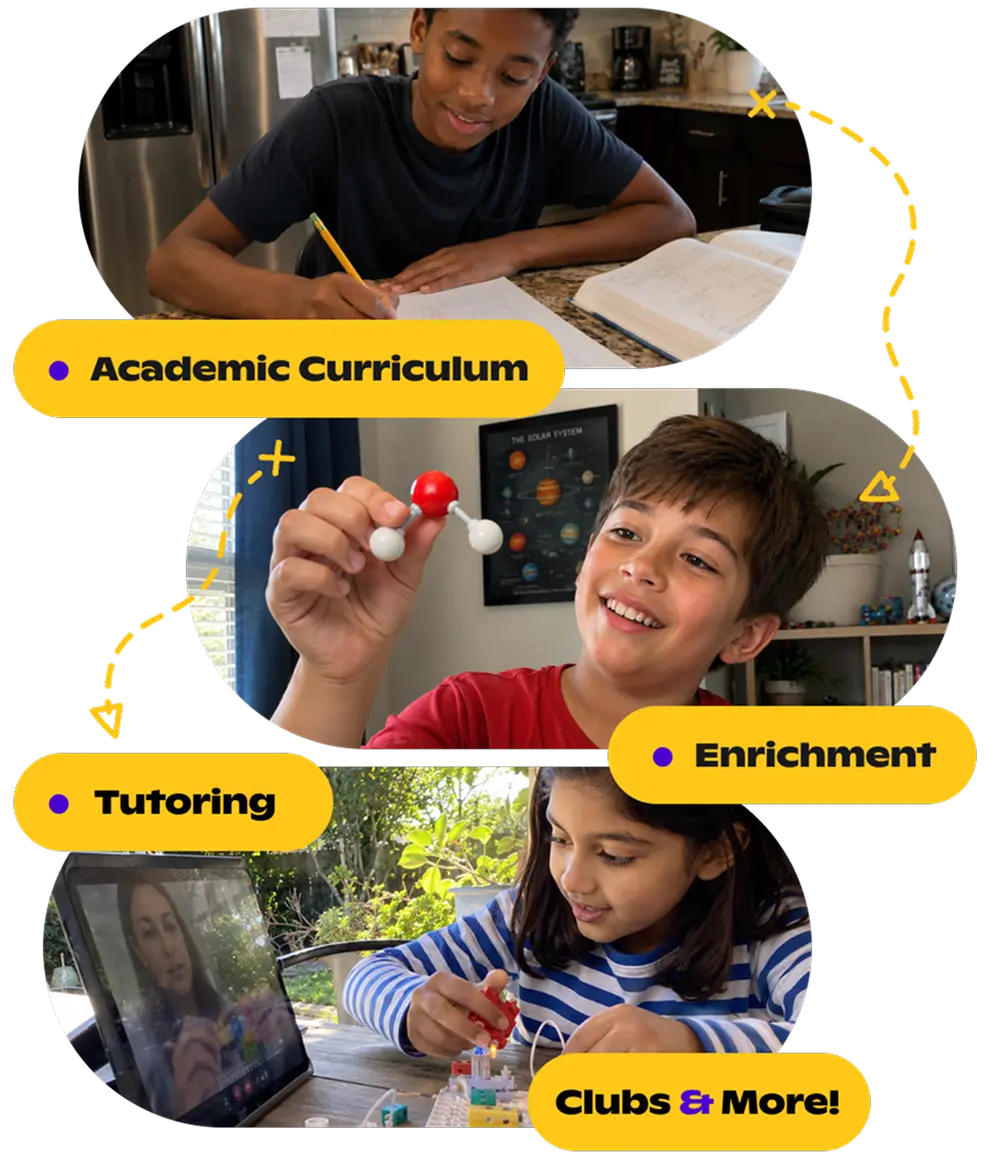
Outschool's live small-group classes (most capped at six to nine kids) and one-on-one tutoring options let a child choose based on genuine interest. A child who picks their own class in the subject they care most about this week will almost always show up differently than one assigned the next item in a curriculum.
A note on getting support
PDA is not yet widely recognized in the United States, which means some families face real barriers to diagnosis and support. A child can receive an autism spectrum diagnosis without a clinician noting the PDA profile specifically. Some parents find it helpful to seek neuropsychologists or developmental pediatricians familiar with PDA, rather than relying on a general referral.
The most useful thing you can do right now is document what you're seeing: when demands trigger the most intense avoidance, what conditions reduce it, and what has helped at home. That record is valuable for clinical appointments and for building a clearer picture of your own child's specific profile.
You don't need a formal diagnosis to start adjusting your approach at home. Many of the strategies that work for PDA kids reduce stress for the whole family regardless of what the paperwork eventually says. Understanding your child's options for formal support, including what documentation you might need, is a useful parallel step while you're figuring out what works day to day.



.svg)
.svg)