If your child with ADHD struggles with things that seem straightforward — starting homework, keeping track of belongings, shifting from one activity to another — executive function is very likely at the root of it.
Executive function skills are the mental processes that help people plan, focus, organize, and follow through. In kids with ADHD, these skills tend to develop more slowly and work less reliably than in neurotypical peers. Understanding what executive function actually is — and what it isn't — is one of the most practical things a parent can do.
What Are Executive Function Skills?
Executive function is a set of cognitive processes managed primarily by the prefrontal cortex, the part of the brain that handles planning and decision-making. In kids, it's still developing — which is why even neurotypical children struggle with impulse control and organization. In children with ADHD, that development is typically delayed by around three years and can be inconsistent even within the same day.
Working memory — holding and using information in your mind while completing a task. A child with weak working memory might forget the second part of a two-step instruction before finishing the first.
Cognitive flexibility — shifting focus, adapting to changes in plans, and seeing problems from different angles. Kids who struggle here find transitions genuinely hard and may respond with significant frustration when plans change unexpectedly.
Inhibitory control — pausing before acting, filtering distractions, and resisting impulses. This is one of the most recognizable ADHD challenges and closely tied to impulsivity and difficulty following multi-step instructions.
Task initiation — getting started on something, especially something that feels boring, overwhelming, or both. Many children with ADHD can describe exactly what they need to do but still can't seem to begin.
Planning and organization — breaking a goal into steps, sequencing them logically, and tracking progress. Long-term assignments are especially hard here.
Time management — estimating how long things take and monitoring how time is passing. Dr. Russell Barkley describes ADHD time perception as existing in two zones: "now" and "not now."
Emotional regulation — managing frustration, disappointment, and excitement without being overwhelmed by them. This is closely tied to behavior in challenging learning environments.
Goal-directed persistence — staying on a task through difficulty or distraction, especially when there's no immediate reward or strong interest to drive engagement.
Why ADHD Specifically Affects Executive Function
ADHD is sometimes described as an executive function disorder rather than simply an attention disorder. Barkley's framework frames it primarily as a problem with self-regulation — the ability to manage one's own behavior, emotions, and actions over time.
This framing is useful for parents because it shifts expectations in a productive direction. A child with ADHD isn't ignoring instructions because they don't care or are being defiant. They're genuinely struggling with the mental scaffolding needed to follow through. Strategies that work for neurotypical kids — "just try harder," "you need to pay attention" — often don't translate, and applying them repeatedly can damage a child's confidence and motivation.
What does help is reducing the executive function demands in the environment, building skills explicitly and consistently, and finding contexts where a child's natural engagement does some of the work that their executive function can't yet do reliably.
$20 off your first class WITH promo code: blog
Build the Education your Kid Deserves
Discover thousands of live classes taught by expert teachers, across academics and enrichment.
Browse classesWhat Parents Can Do at Home
Build external scaffolding first. Because working memory and task initiation are unreliable, external systems do the job the internal system can’t. A morning routine checklist on the bathroom mirror removes the need to remember the steps — the list does it instead. Visual schedules, written checklists, physical timers, and prominent reminders work with the ADHD brain rather than against it.
Use body doubling. Many children and teens with ADHD focus noticeably better when another person is present, even if that person isn’t actively helping. Sitting nearby while your child does homework — doing your own work at the same table — can significantly reduce procrastination and distraction. The mechanism isn’t fully understood, but the effect is widely reported and consistent.
Break tasks into explicit steps. “Clean your room” is an executive function obstacle course. “First, put all the clothes on the floor into the hamper” is a concrete, completable task with a visible start and end. Reducing the number of decisions a child has to make lowers cognitive load and makes starting far easier.
Protect sleep and build in physical activity. Both are directly tied to executive function quality. A sleep-deprived or sedentary child will have measurably worse self-regulation, working memory, and impulse control. Regular aerobic exercise has strong research support for improving executive function in children with ADHD — it’s one of the most effective non-medication interventions available.
Celebrate process over outcome. When a child with ADHD initiates a task without a reminder, manages a transition without a meltdown, or pauses before an impulsive choice, that deserves genuine recognition. These small behavioral wins are how executive function skills get reinforced over time. The child needs to experience success at the skill level, not just at the task level.
How Structured Online Classes Can Help
One underused strategy for supporting executive function is finding structured, high-interest learning environments where these skills get practiced naturally — with external support built in.
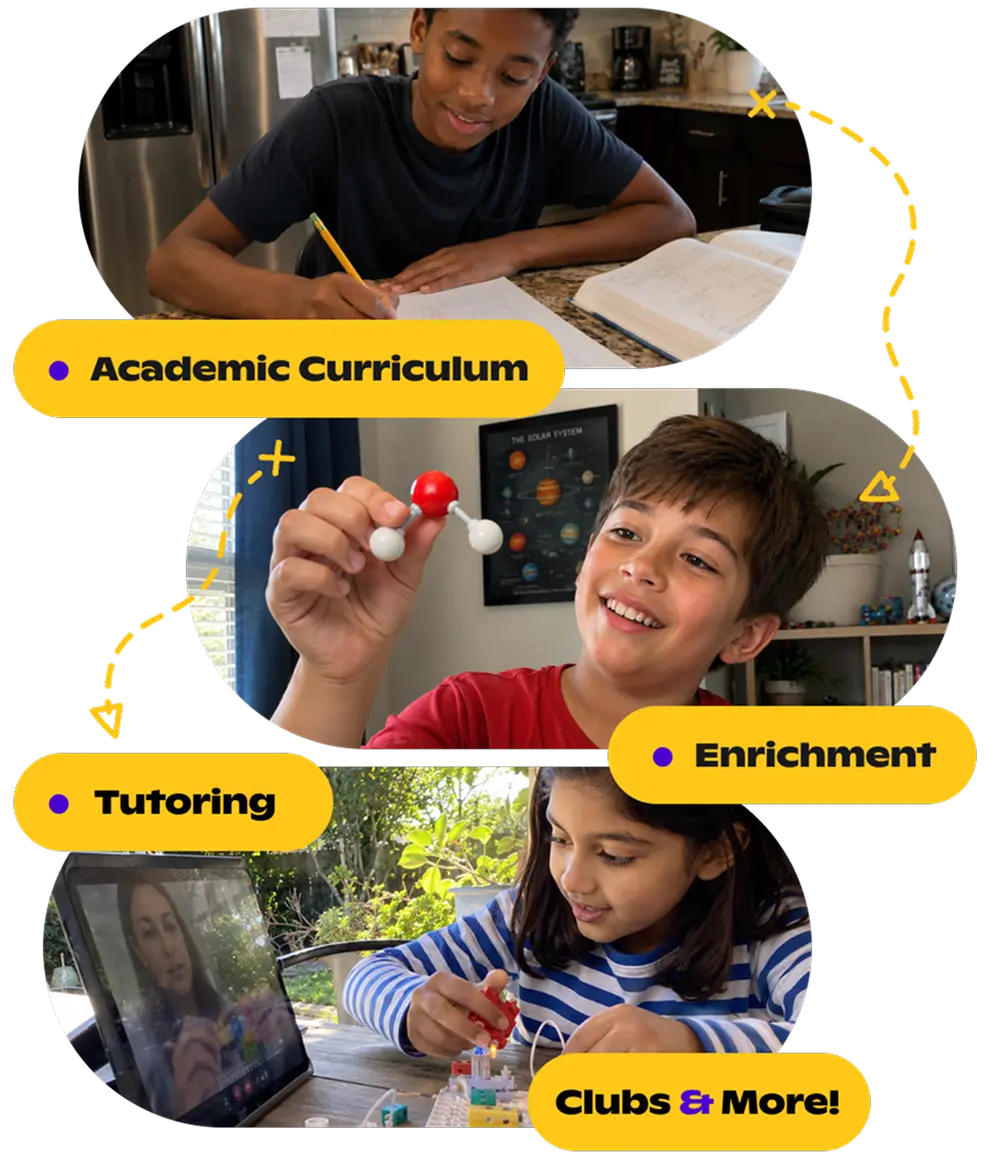
Small online classes with a live teacher offer an interesting combination: a scheduled time (external structure), a teacher’s expectations (external accountability), and a topic the child actually wants to engage with. That combination allows many kids to sustain focus and follow multi-step instructions in a way that’s much harder in unstructured settings.
Some online educators specifically design classes for kids with ADHD, building in shorter activity bursts, check-ins, and scaffolded instructions. These classes aren’t “therapy” — they’re just well-designed for the way ADHD brains work.
Browse:
Frequently Asked Questions
Can executive function skills improve in kids with ADHD?
Yes. Executive function skills can develop with consistent practice and the right support systems. Development is slower in kids with ADHD, but it does happen — especially in structured, engaging environments that reduce cognitive load and build skills incrementally.
At what age do executive function skills develop?
Executive function develops from early childhood through the mid-20s. In children with ADHD, development is typically delayed by around three years. A 10-year-old with ADHD may have executive function that functions more like that of a 7-year-old neurotypical child — which is genuinely important context for setting expectations.
What’s the difference between executive function and intelligence?
They are separate. Many children with ADHD have average or above-average intelligence and still struggle significantly with executive function. A highly capable child can know exactly what they need to do and still find starting, organizing, or following through genuinely difficult. These are different cognitive systems.
Should I have my child evaluated for executive function difficulties?
If your child struggles significantly with planning, task initiation, managing transitions, or emotional regulation, a neuropsychological evaluation can be useful. It can identify specific areas of strength and challenge and guide more targeted interventions at home and school.
What tools help with executive function at home?
External scaffolding tools many families find useful include visual timers (Time Timer is widely recommended), written checklists for recurring routines, and consistent homework structures. The most important factor is consistency — whatever system you build needs to be used every day for it to become reliable scaffolding rather than another thing to remember.



.svg)
.svg)