Every child learns differently, and sometimes that means they need a plan tailored to their unique strengths and challenges. If you’ve come across the term Individualized Education Program or IEP, you might be wondering what it really involves and how it fits into your child’s learning journey. For parents considering or already homeschooling, understanding how IEPs work can open the door to new ways of supporting your child’s progress.
At Outschool, we believe that every learner deserves an education that meets them where they are. Let’s explore what an IEP is, how it’s typically used in schools, and how it can benefit homeschoolers, too.
What is an IEP?
An Individualized Education Program (IEP) is a personalized plan created for students who require additional support in school due to a learning difference, disability, or other unique educational need. It outlines specific goals, services, and accommodations designed to help a child succeed in a structured learning environment.
In some states, an IEP or similar documentation can also be used when applying for Education Savings Account (ESA) programs. Because some ESAs require proof of a qualifying learning need or diagnosis, an IEP can serve as part of the evidence of eligibility.
Who qualifies for an IEP, and who determines eligibility?
In public schools, eligibility for an Individualized Education Program (IEP) is typically decided by a team that includes the parent or guardian, teachers, and school specialists. The team of school specialists will conduct various tests and evaluations on your child. This group then meets to review your child’s evaluation results and discuss how their learning needs manifest in day-to-day interactions.
To qualify for an IEP, a child must meet two main criteria:
- They have a disability that fits into one of IDEA’s 13 categories, such as a learning disability, like dyslexia, autism, ADHD, or a speech and language impairment.
- That disability clearly affects their ability to learn and participate in school activities, and requires accommodations to ensure success.
If the team agrees that both apply, your child becomes eligible for an IEP. From there, you’ll work together to create a plan with specific learning goals and supports.
Key components of an IEP
An IEP is like a roadmap for how a school supports a child’s learning. It outlines where your child is now, what goals they’re working toward, and what help they’ll receive to achieve them. While every plan looks a little different, most IEPs share the same core sections:
- Student information and team members: This lists basic details about your child, like age, grade, and school, as well as the people responsible for creating and reviewing the plan, including parents or guardians, teachers, and specialists.
- Present levels of performance (PLOP): A summary of your child’s current strengths and challenges in academics, behavior, and social skills. It’s the foundation for setting realistic goals.
- Annual goals: These are specific, measurable objectives the team wants your child to achieve during the school year. They often include smaller steps or benchmarks to track progress.
- Progress reporting: Outlines how and when the school will update you on your child’s growth, such as through written reports or meetings.
- Services and supports: Lists what special education or related services your child will receive, how often, and in what setting (for example, small-group instruction vs. individual support).
- Supplementary aids and accommodations: Includes tools or adjustments, like audiobooks, extra time on tests, or assistive technology, that help your child learn and participate fully in class.
- Participation and consent: Explains how your child will be included in general education settings and requires your signature to approve the plan.
Services and accommodations
The IEP also explains what direct support your child will receive to help meet their learning goals. These are the supports that bring the plan to life:
- Specialized instruction: Targeted teaching in areas like reading, math, or writing, often in small groups or one-on-one settings.
- Therapies and related services: Speech, occupational, or physical therapy may be added to strengthen communication, coordination, or social skills.
- Classroom accommodations: Adjustments such as extra time on assignments, visual aids, or flexible seating that make learning more accessible.
- Curriculum modifications: Changes to lesson content or workload, like simplified materials or fewer test questions, to keep learning achievable and less stressful.
- Assistive technology: Tools such as text-to-speech programs, calculators, or typing supports that help bridge learning gaps.
- Extended services: Some students qualify for summer learning or transition support to help them move smoothly into new grades or settings.
For homeschooling families, understanding the range of services and accommodations an IEP can include provides ideas for supporting learning at home.
Homeschool-specific options and considerations
How IEPs fit into your homeschooling situation depends on your specific circumstances: some families begin homeschooling with an existing IEP, while others are exploring support for the first time. Here’s what to know in both cases.
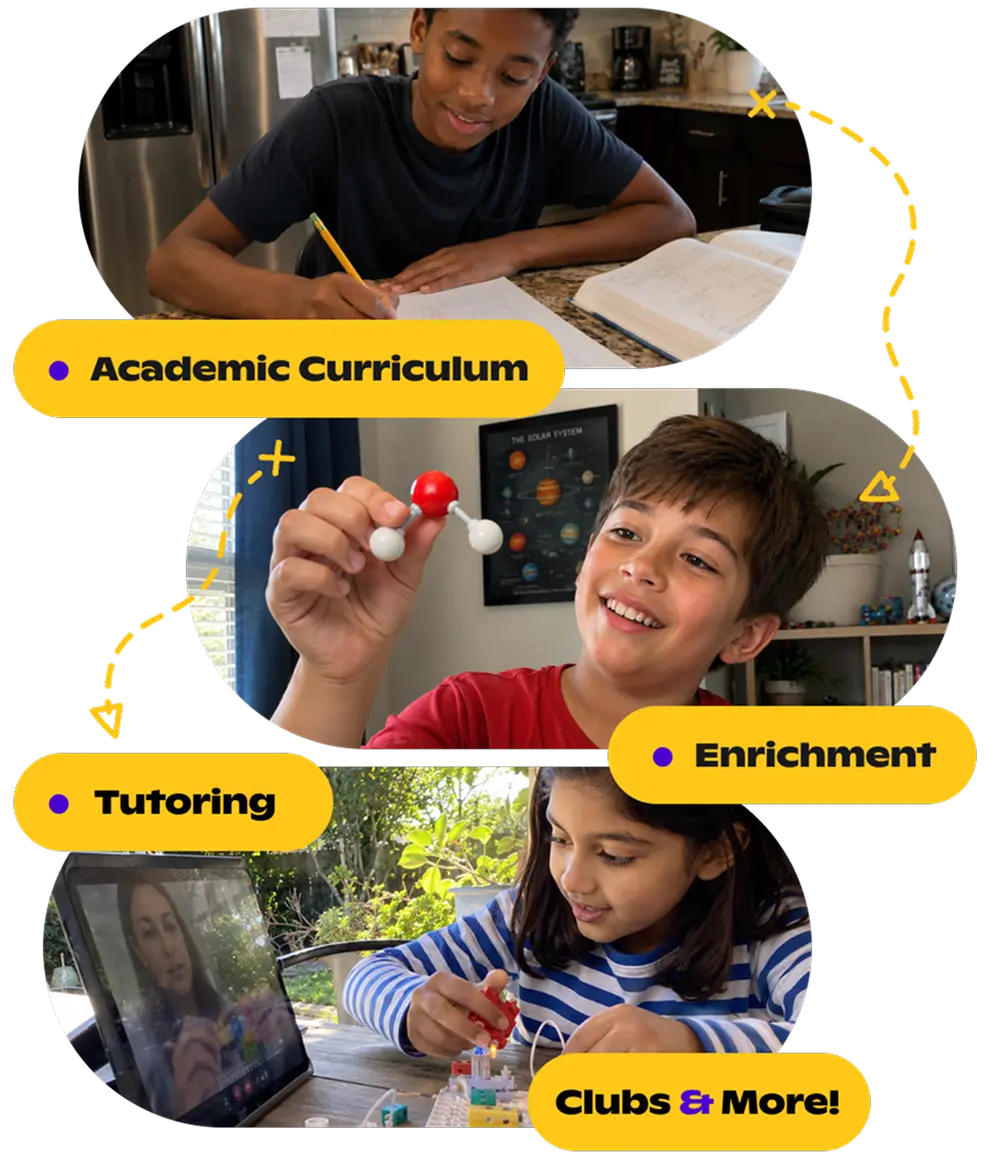
$20 off your first class WITH promo code: blog
Build the Education your Kid Deserves
Discover thousands of live classes taught by expert teachers, across academics and enrichment.
Browse classesIf your child already has an IEP and you’re homeschooling
If your child had an IEP before you began homeschooling, it can serve as a valuable reference tool as you design your homeschool routine. The goals, teaching strategies, and accommodations outlined in the IEP can help you understand what worked well and where your child may still need support.
You don’t have to follow the plan exactly as written and can instead think of it as a starting point. You can adjust the goals, pacing, or methods to better fit your child’s current needs and learning style. Perhaps that means spending more time using hands-on lessons, utilizing visual materials, or integrating practical life skills alongside academics. Perhaps your child's in-person school did not offer some of the necessary supports that you can now access as a homeschooler.
The flexibility of homeschooling allows you to build on the foundation of an IEP while tailoring every part of learning to what helps your child thrive.
If you’re starting homeschooling and your child does not have an IEP
If you’ve never had an IEP but believe your child might benefit from one, you can still request a free evaluation through your local school district under Child Find. This process can help identify learning differences or developmental needs, even if your child isn’t enrolled in public school. The evaluation results can guide you in choosing a curriculum, pacing lessons, or finding the proper outside supports, such as specialized reading tutoring or occupational therapy.
While again, the district isn’t required to provide ongoing IEP services for homeschoolers, the information you gain can be helpful. You can use it to create a personalized education plan at home, choosing materials and teaching methods that align with your child’s strengths.
Practical tips for adapting IEP principles at home
Bringing the ideas behind an IEP into your homeschool doesn’t have to be complicated. It’s really about understanding your child’s learning needs and creating a plan that’s flexible, goal-oriented, and easy to follow. By borrowing some of the structure of an IEP, you can make learning at home more consistent and supportive.
Here are a few ways to apply IEP principles in your homeschool routine:
- Set clear, measurable goals: Focus on specific skills you want your child to build, such as reading comprehension or handwriting. Keep goals realistic and trackable so you can celebrate progress along the way.
- Use multiple teaching methods: Combine visual, hands-on, and auditory approaches to match your child's learning style. For example, mix reading with videos or hands-on activities to keep lessons engaging.
- Track progress regularly: Keep a simple log of what your child is working on and how they’re improving. Regular check-ins with your child's support team members, including therapists or tutors, help you identify what’s working and where adjustments may be needed.
- Offer consistent support: If your child struggles in a particular area, break lessons into smaller steps or build in extra time to practice. Patience and repetition often make a big difference.
- Create a comfortable learning space: Choose a quiet, distraction-free area and keep materials organized so your child feels focused and ready to learn.
- Bring in outside resources when needed: You can utilize online programs, community groups, or learning platforms like Outschool to access expert-led classes or specialized instruction that complements your at-home learning.
Adapting IEP principles to homeschooling gives you a strong framework for meeting your child’s needs without the formality of a school-based plan. Over time, you’ll find what balance of structure and flexibility works best for your family.
What is an IEP: Frequently asked questions (FAQs)
Homeschooling a child with learning differences can raise a lot of questions, especially when IEPs and special education come into the mix. Here are some of the most common questions parents ask when navigating this process.
What is the main purpose of an IEP?
An IEP outlines a plan of support for students who need extra help due to a learning difference or disability. It sets clear goals, explains what services are provided, and helps ensure a child gets the support they need to make steady progress in school.
Can homeschoolers still get an evaluation for special education needs?
Yes. Homeschool families can request a free evaluation from their local school district to learn more about their child’s learning needs. Even if you don’t receive formal IEP services, the results can help guide how you teach at home.
Do homeschoolers qualify for IEP services?
In most cases, homeschoolers don’t receive ongoing IEP services from their district. However, some states or local programs may offer limited support, such as speech therapy or consultations. It’s worth checking your state’s specific policies.
Can I use an old IEP as part of my homeschool plan?
Absolutely. Your child’s previous IEP can serve as a great reference for identifying goals, strategies, and accommodations that work well. You can adjust it to fit your homeschool schedule and your child’s current learning level.
What if I think my child needs more help than I can give at home?
You’re not alone in that feeling. Many parents combine homeschooling with outside support, such as private tutors, therapists, or online classes through platforms like Outschool. The goal is to create a balanced learning plan that fits your child’s needs.
Supporting your child’s learning journey
An IEP can serve as a helpful reference when building your homeschool plan, but the real value lies in how you adapt those ideas to your own child. Homeschooling provides the flexibility to design lessons, pacing, and support that align with your child’s strengths, allowing them to thrive.
At Outschool, you’ll find resources that help you do just that: flexible classes, passionate teachers, and subjects that match your child’s interests and learning style. It’s a simple way to make personalized learning both effective and enjoyable.


.svg)
.svg)