South Carolina homeschool law is a three-door hallway, not one statewide ESA. You pick Option 1 (your district), Option 2 (South Carolina Association of Independent Home Schools, often called SCAIHS), or Option 3 (another association with at least 50 member families). The South Carolina Department of Education lists those three paths and posts the 2026-27 Option 2 and Option 3 association lists [2].
The statute lives in Title 59, Chapter 65. Option 1 is S.C. Code 59-65-40. Option 2 is 59-65-45. Option 3 is 59-65-47 [1]. Parents or guardians who teach under these sections need at least a high school diploma or GED.
If you are still deciding whether to leave campus school, start with switching from traditional school to homeschooling. For what to keep in a binder, see homeschool record-keeping. For a grade-band sense of time, see hours by grade. Live classes can fill a subject without changing your legal option: homeschool classes.
At a glance: district, SCAIHS, or association
Use this box to pick a door, then read the matching section. Confirm current membership rules with the group you join. SCDE updates the Option 3 list each year [2].
- Option 1, district (59-65-40): board of trustees approval. 180 days. 4.5 hours of instruction per day, not counting lunch and recess. Required subjects. Annual standardized testing. Most paperwork to the district.
- Option 2, SCAIHS (59-65-45): membership in the South Carolina Association of Independent Home Schools. 180 instructional days. Association handles much of the reporting to the state. Testing follows SCAIHS rules (nationally normed, on their schedule).
- Option 3, other association (59-65-47): join a homeschool association with no fewer than 50 members that meets the statute. 180 days. Core subjects and records. Testing is set by the association. Many groups do not require a yearly state test.
A co-op is not a fourth legal option. SCDE says co-ops are not an approved homeschooling option on their own. You still need Option 1, 2, or 3 [3].
Homeschooling options in South Carolina
South Carolina statutes give parents three ways to homeschool instead of enrolling in a public, private, or parochial school. Option One is district approval. Option Two is SCAIHS. Option Three is another association with no fewer than fifty members that meets the home school requirements [2]. You pick the door that fits your paperwork tolerance and testing comfort, not a ranking of which is real homeschool.
How to choose among the three options
If you want the district in the loop and you can live with annual testing, Option 1 is the straight statute path. If you want one statewide association and transcript help, many families look at Option 2. If you want to pick from the current SCDE list and often skip a yearly state test, Option 3 is the usual umbrella conversation.
None of these is a statewide ESA. South Carolina homeschoolers on Options 1 through 3 are not on the ESTF private-school scholarship path [3]. For a national ESA explainer, see what is an education savings account.
Option 1: Homeschooling under school district approval
This is the most district-facing path. You request the district's notice of intent, share a plan, and stay on their calendar for review. Instruction must cover the required subjects and 180 days of at least 4.5 hours [1].
Have an adult who holds a diploma or GED listed as the teacher. Keep attendance in a form you could hand a district clerk without translating your slang.
Watch for: treating 4.5 hours as optional because a friend on Option 3 logs differently. Option 1 hours are in the statute for that path.
Start paperwork 30 to 60 days before you want to begin, because districts often need time to process a notice of intent and send confirmation. If you are leaving public school mid-year, file the option first, then complete the district's transfer process. Do not unenroll before you have a legal option in place.
Option 2: Homeschooling through SCAIHS
SCAIHS is the named association in 59-65-45. You apply through their membership process and pay their fee. They stand in for district oversight on reporting. You still teach 180 days and keep the records they ask for.
Confirm the current testing years and transcript services before you pay. Membership rules can be tighter than Option 3 even when the state statute looks similar. SCDE posts a 2026-27 Option 2 list so you can confirm the association is the one the state recognizes [2].
Families often pick Option 2 when they want transcripts handled and a single statewide association instead of shopping a long Option 3 list. Ask, in writing, what they require for attendance, testing years, and high school credits.
Option 3: Homeschooling under a third-party accountability association
Option 3 is the path many families mean when they say umbrella. The association must have at least 50 members and meet 59-65-47. SCDE publishes the 2026-27 Option 3 list [2]. Pick from that list, not a Facebook group name that sounds official.
You still cover core subjects and keep records. Testing depends on the group. Ask, in writing, whether they require a standardized test before you enroll.
Option 3 often feels lighter on testing than Option 1, which is why families choose it. Lighter does not mean no records. Keep attendance and work samples even if the association is relaxed, because a move to another state or a college application may ask for more than the minimum.
Enrollment paperwork
Each path has its own packet:
- Option 1: contact the local district for their notice of intent and any curriculum-plan form they want before the year starts. See also how to create a homeschool curriculum if you need a plan on paper.
- Option 2: complete SCAIHS membership and pay the annual fee.
- Option 3: choose a group on the current SCDE list and finish their enrollment.
Keep copies of the acceptance letter. That letter is often what a public school asks for as evidence of transfer [2].
Attendance and instruction
All three options use a 180-day instructional year [1]. Option 1 adds the 4.5-hour day. Option 2 and 3 follow the association plus the 180-day floor.
South Carolina's legal floor is days (and hours on Option 1), not a national hours chart. Use hours by grade only as a planning aid, then log what your option requires.
If a kid has a rough week, many families still count a shorter day on Option 2 or 3 when the association allows it. Option 1 families should not invent that flexibility. The 4.5-hour rule is in the statute for that path.
Curriculum guidelines
You have a lot of freedom in how you teach. The state still asks that every homeschool program include reading, writing, math, science, and social studies. Once your kid reaches seventh grade, include composition and literature too [1].
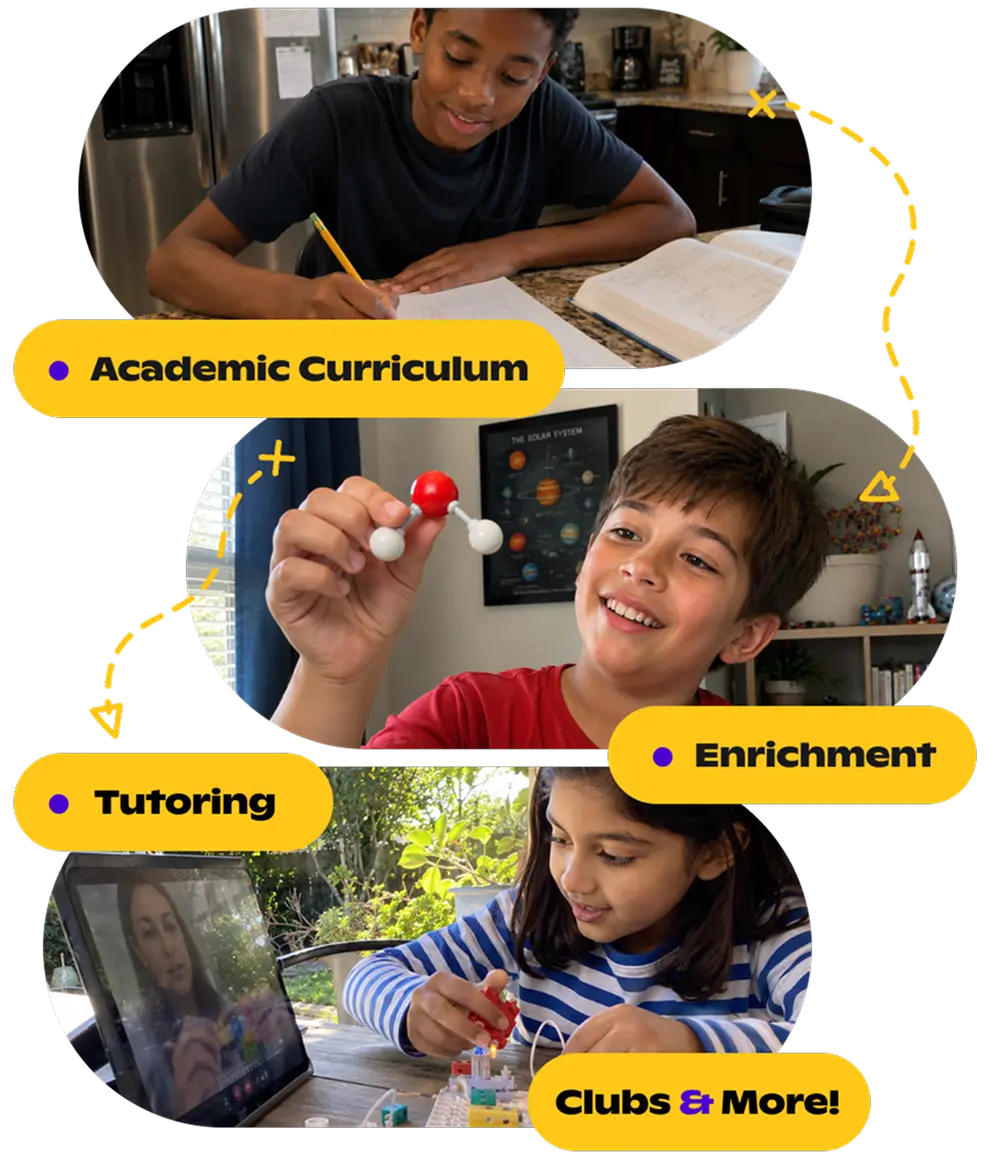
Within those subject areas, you decide the materials: a boxed curriculum, projects, live classes, or a mix. Outschool can sit beside any of the three legal options as supplemental classes. It does not replace Option 1, 2, or 3. For core subject browsing, see core academics and tutoring.
Diploma or GED requirement
Parents who hold a high school diploma or GED can teach under all three options. If that requirement is a barrier in your household, talk with the association or district before you file. Do not assume a co-op teacher covers the legal parent-teacher rule.
Co-ops, sports, and equal access
A co-op can be a wonderful week, and it still is not a legal homeschool option by itself [3]. File Option 1, 2, or 3, then add the co-op. SCDE also publishes equal-access information for interscholastic activities. Ask your district and association what transfer paperwork they want if your kid wants a school sport after you file.
Recordkeeping essentials
Keep records even when your association is light on paperwork. College and a later move often ask for more than the minimum. See homeschool record-keeping.
- Option 1: attendance, lesson plans, and progress notes for district review
- Option 2: SCAIHS typically handles transcripts and much of the permanent file as part of membership
- Option 3: your association sets the list. Attendance plus a portfolio or progress notes is common
Testing and assessments
Testing looks different on each path:
- Option 1: annual standardized testing is part of the statute path. A certified district employee often administers it, and results can affect grade advancement conversations
- Option 2: SCAIHS requires nationally normed testing on a schedule (commonly every other year from about third through eleventh grade). Confirm current membership rules before you pay
- Option 3: many associations do not require a state test. Some still ask for a progress measure. Ask before you join
Subjects the statute names across options include reading, writing, math, science, and social studies. Composition and literature are added in seventh grade. How you cover them is yours. Live classes can fill a hole without changing your legal option. Browse homeschool classes or core academics.
Watch for
- Assuming a co-op is a legal option. SCDE says co-ops are not one of the three paths by themselves [3]
- Mixing Option 1 hour rules with Option 2 or 3 membership
- Treating ESTF as a homeschool ESA. If you are enrolled in an Option 1-3 homeschool association, you are not on the ESTF private-school scholarship path [3]
- Waiting until August to file. Associations and districts often need weeks
Funding note: FSTC is not a South Carolina ESA check
South Carolina does not run a statewide ESA like Florida or Texas. The federal scholarship tax credit (FSTC) is a 2027 donor credit in 31 states. It is not a family debit card for 2026-27. See federal scholarship tax credit for homeschool families and what is an ESA.
FAQ
Do I have to test every year?
Only if your option requires it. Option 1 does. Option 2 follows SCAIHS. Option 3 often does not. Confirm in writing with the group you join.
Can I start mid-year?
Often yes. File with the district or association first, then withdraw from public school with their transfer process. Do not unenroll before you have a legal option in place.
Where do hours go?
Log instructional days (and 4.5 hours on Option 1 days). For a grade-band rule of thumb, see hours by grade.
Does SCDE monitor my homeschool?
SCDE reviews associations and posts the Option 2 and Option 3 lists. Day-to-day oversight is the district (Option 1) or your association (Option 2 or 3) [2].
Sources
[1] South Carolina General Assembly. "Title 59, Chapter 65, Attendance of Pupils." S.C. Code of Laws. https://www.scstatehouse.gov/code/t59c065.php
[2] South Carolina Department of Education. "Home Schooling." https://ed.sc.gov/districts-schools/state-accountability/home-schooling/
[3] South Carolina Department of Education. "Frequently Asked Home School Questions." https://ed.sc.gov/districts-schools/state-accountability/home-schooling/home-school-faq/
Fill subjects without changing your legal option
Once the association letter is filed, you still have to teach. Live classes can cover writing, math, or science while you keep attendance. Start with homeschool classes on Outschool.



.svg)
.svg)