Most parents who ask "is homeschooling worth it" aren't really asking about test scores. They're asking whether the trade is worth it for their own kid, their own calendar, and their own bank account. Those answers are different in every house.
This quiz won't tell you what to do. It gives you eight questions to sort out what matters most right now, plus a plain read on what each result usually means. You can retake it in January, when many families reassess around the school-year midpoint.
How to use this quiz
Pick the answer that fits your family today, not the one you hope will be true in six months. Keep a tally of your letters. Short on time? Skim the questions, then jump to the results.
Homeschooling also doesn't have to be all or nothing. Many families start by supplementing public school, joining a homeschool co-op, or trying it for a single semester. Keep that in mind as you answer.
Question 1: What's pulling you toward homeschooling?
A. A specific problem, such as bullying, a poor fit, or a learning need the school isn't meeting.
B. More flexibility for travel, health, sports, or a non-traditional schedule.
C. A general sense that school isn't working, but I can't name why yet.
D. I want more say in what my kid learns and how.
Question 2: How much of the weekday could an adult realistically give?
A. Most of it. One of us is home or can be.
B. A few focused hours, with outside help for the rest.
C. Evenings and weekends only.
D. I'm not sure yet.
If you work full time, you aren't automatically out. Plenty of working parents make it work with a flexible schedule and outside teachers. Our guide on homeschooling while working full-time walks through how.
Question 3: How does your kid react to learning at home?
A. Does well with independence and picks up new topics without much prompting.
B. Needs some structure and a teacher who isn't Mom or Dad.
C. Pushes back hard when home becomes school.
D. I haven't tested it.
Question 4: What would the money look like?
A. We have a budget set aside for curriculum, classes, and materials.
B. We'd use education savings account funds or a state program if we qualify.
C. Tight. We'd need to keep costs very low.
D. I haven't priced it out.
Funding depends on your state, and not every state has a program. Start with our overview of education savings accounts, then check ESA application dates by state if you think you might qualify. Some families also look at the homeschool tax credit rules where they live.
$20 off your first class WITH promo code: blog
Build the Education your Kid Deserves
Discover thousands of live classes taught by expert teachers, across academics and enrichment.
Browse classesQuestion 5: How much does your kid's social life depend on school?
A. A lot. Most of their friends are at school.
B. Some, but they also have friends from sports, clubs, or classes.
C. Not much. School hasn't been a good social fit.
D. I worry about this one more than anything else.
Question 6: How do you feel about being the one in charge of the plan?
A. Excited. I like picking the curriculum and building the schedule.
B. Fine, if I can lean on a program or teachers for the heavy parts.
C. Nervous. I'd worry about gaps.
D. Overwhelmed just thinking about it.
Question 7: What does your state require?
A. I've read the requirements and they feel manageable.
B. I've looked a little, but I'm not sure about reporting or testing.
C. I haven't looked yet.
D. I think the rules would make it hard for us.
Rules for notice, subjects, and testing vary widely from state to state. Check your state education department's homeschool page before you decide.
Question 8: If you tried it for one semester, what would success look like?
A. My kid is curious again and the day-to-day feels calmer.
B. We keep up academically while gaining schedule freedom.
C. We learn what works and what doesn't, with no pressure to commit.
D. I couldn't say.
Your results
Mostly A's: homeschooling is likely a strong fit. You have a clear reason, time, and a kid who can work with some independence. Spend your energy on a simple plan for the first month, not on perfecting the full year. Our homeschool year planning guide is a good next step.
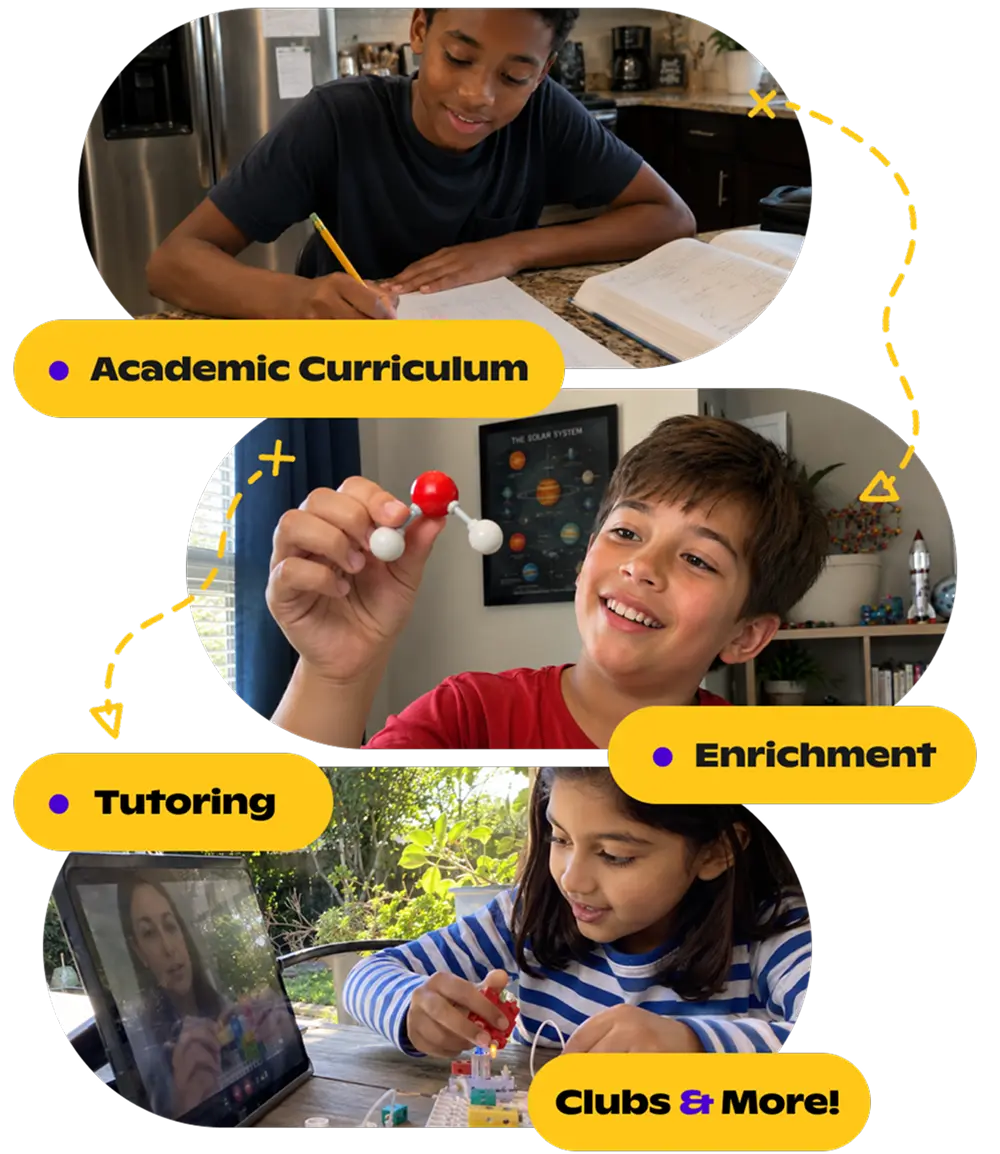
Mostly B's: a hybrid approach may be worth it. You want flexibility, but you don't want to do it all yourself. Mixing a core program with live online classes, a co-op, or a tutor can cover the parts you don't want to teach. Browse live classes on Outschool to see what that could look like.
Mostly C's: try a low-stakes trial first. There's real hesitation here, and that's useful information. Run a semester or a long break as an experiment. Set one goal and one review date, and decide after that.
Mostly D's: you're still gathering information. That's a fair place to be. Choose one question from above you couldn't answer, such as cost, state rules, or your kid's reaction, and answer only that one this week.
A mix of everything? That's common. It usually means the answer depends on one or two specifics. Look back at the questions where you picked C or D, and start there.
Frequently asked questions
Is homeschooling worth it for working parents?
It can be, but it takes planning. Families often use flexible hours, shared teaching with another adult, or outside classes to cover the weekday hours. Be honest in Question 2 about what you can sustain.
Is homeschooling worth it if you can't afford it?
Costs range from very low to substantial, depending on the curriculum, classes, and materials you choose. If your state has an education savings account or similar program, it may offset part of the cost. Confirm eligibility and available funds with your state's official program site.
How do I know if my kid will do well homeschooling?
You usually find out by trying it. Kids who thrive on independence tend to adjust quickly. Kids who need external structure often do better when a teacher other than a parent leads part of the day.
Can I switch back to school if homeschooling doesn't work?
Many families do, but re-enrollment rules vary by school and district. Ask your local school how mid-year re-entry works before you withdraw, so you know your options.
How is homeschooling different from virtual school?
With homeschooling, you choose the curriculum and set the schedule. A virtual school typically provides the curriculum and schedule, and your child follows its calendar. Our guide to virtual school vs. homeschool breaks down the differences.
If you want to try before you commit, you can browse live online classes on Outschool for one subject or one month and see how your kid responds.