If you’re looking for flexibility, personalized learning, or a way to nurture your child’s unique interests, homeschooling in North Carolina offers a clear path forward. Your child might thrive through hands-on exploration, need a gentler pace to master concepts, or have passions that deserve more time than a standard curriculum allows. The state’s homeschool laws are simple and supportive, giving families the freedom to design a learning journey that fits their goals without unnecessary steps.
With a straightforward process and access to local groups and online resources, you can navigate the legal process, choose the right curriculum, and take part in a supportive learning community. Outschool offers live, interest-led classes that can add variety and expertise to your homeschool routine.
Homeschooling pathways in North Carolina
North Carolina offers a single homeschooling option that requires families to register with the North Carolina Division of Non-Public Education (DNPE). This is done by filing a Notice of Intent to Operate a Home School, which officially recognizes your homeschool under state law and provides legal protection.
As the chief administrator, you get to choose your child’s curriculum, set the schedule, and guide their learning. The state’s requirements for registration, recordkeeping, and annual testing are straightforward, leaving you with the freedom to design an education that fits your child’s needs and your family’s goals.
Requirements for homeschooling in North Carolina
Homeschooling in North Carolina is regulated by the Division of Non-Public Education (DNPE). Families must register, keep certain records, and meet annual testing requirements. While the rules are specific, they still give you the freedom to choose your curriculum, teaching style, and schedule, making it possible to build an education that fits your child and your family’s goals.
Enrollment paperwork
Before starting, you must file a Notice of Intent to Operate a Home School with DNPE. This step legally establishes your homeschool and provides the protection you need to teach at home.
- What to include: Your school name and address, proof that the chief administrator has a high school diploma or GED, and your chosen legal designation (private church school or qualified nonpublic school).
- School name rules: Must be academic in tone, fewer than 30 characters (including spaces), and avoid restricted terms such as “public,” “elementary,” “high,” “university,” or the name of an online program you use. Once submitted, your school name cannot be changed. If you leave it blank, DNPE will assign one using your last name plus “School.”
- When to submit: Notices are accepted from July 1 through the end of April. Send it at least five days before opening or before your child turns 7 (if that will happen before June 1). No submissions are accepted in May or June.
- Filing tips for faster processing: Complete your Notice online using DNPE’s portal. If possible, submit Monday through Friday, 7 a.m. to 3 p.m., to help ensure quick processing. Approval generally takes three to five business days.
- Wait for approval: Do not withdraw your child from their current school until you have received written acknowledgment from DNPE.
- Reopening after closure: If you previously closed your homeschool, follow the re-open process on the Notice of Intent form.
- Save your confirmation: Print or download the Notice of Intent confirmation and store it safely in your homeschool files. This serves as proof of your legal status and protects your educational choices.
Attendance and instruction
Homeschools must operate on a regular schedule for at least nine calendar months each year, not counting holidays or vacations. You choose the daily routine, subject order, and teaching methods. Instruction can be provided by:
- A parent or guardian from the household(s) covered by the homeschool.
- Tutors or instructors you hire.
- Group or community-based programs such as co-ops, 4-H classes, apprenticeships, or subject experts.
This flexibility allows you to combine independent learning, hands-on activities, and outside instruction in a way that best supports your child’s learning style.
Curriculum guidelines
North Carolina does not supply or mandate a curriculum. You are responsible for selecting and acquiring all educational materials. Many families include:
- Core academics such as reading, writing, math, science, and social studies.
- Electives or enrichment subjects like art, music, coding, or foreign languages.
- Online or community-based classes to add variety or specialized instruction.
Because you choose the scope and sequence, you can adapt lessons to your child’s interests and pace while meeting general educational expectations.
Recordkeeping
You must maintain certain records at your homeschool and make them available to DNPE if requested:
- Attendance records for each child.
- Immunization records or exemption documentation.
- Standardized test results (keep for at least one year).
Although not required, DNPE recommends keeping a daily log, journal, or lesson plan book showing subjects covered and time spent. Retaining records indefinitely can help with high school transcripts, college applications, or a return to public or private school.
Testing and assessments
Each child must take a nationally standardized achievement test every year in:
- English grammar
- Reading
- Spelling
- Mathematics
Important: The first test must be given during the same academic year your homeschool starts, and then annually after that. You can choose how and where to test, such as mail-in services, local testing centers, homeschool co-ops, or independent evaluators. Keep results for at least one year in case DNPE requests them.
If you stop homeschooling, notify DNPE to terminate your school’s registration. This ensures your child is recognized as meeting compulsory attendance requirements and allows for a smooth transition into public or private school if needed.
Homeschool with Outschool
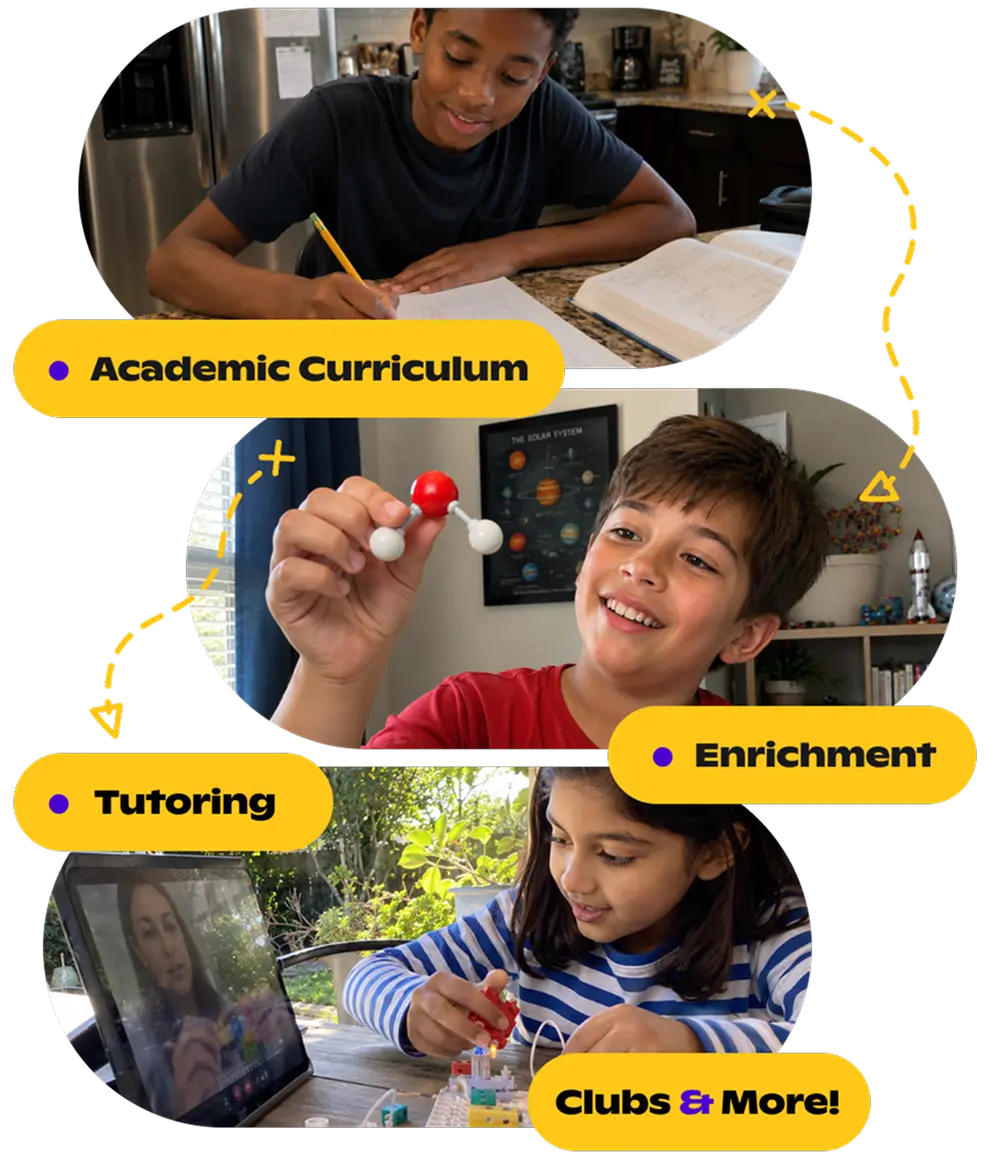
Homeschooling gives you the freedom to design your child’s education and Outschool can help you take it further. With thousands of live, online classes, you can introduce new subjects, deepen existing skills, and keep learning fresh and exciting.
Why families choose Outschool:
- Interactive learning with small groups and real-time feedback from knowledgeable teachers
- Flexible class times that work around your homeschool schedule
- Hands-on projects that encourage problem-solving and creativity
- Peer connections through clubs, discussion groups, and shared interests
- Wide range of subjects from math and science to art, languages, and life skills
Whether you want to add structure to your day, explore enrichment opportunities, or connect your child with passionate instructors, Outschool makes it easy to support curiosity and growth in a way that fits your family’s homeschool style.
How to get started
North Carolina’s clear homeschool process makes it simple to begin. Here’s how to meet the state’s requirements while setting up a program that works for your family.
- Gather your high school diploma or GED, then file your Notice of Intent to Operate a Home School through the DNPE website, selecting the designation that fits your approach.
- Submit your paperwork before withdrawing your child from their current school, and wait for DNPE confirmation to ensure legal protection.
- Choose a curriculum suited to your child’s learning style, set up a dedicated learning space, and plan a nine-month schedule with breaks and field trips.
- Begin instruction while tracking daily attendance, keeping immunization records, and arranging for a nationally standardized test during the school year.
- Connect with local homeschool groups for support, and use Outschool’s live online classes to add variety, expertise, and social opportunities to your routine.
Find support through homeschool communities in North Carolina
Homeschooling doesn’t have to be a solo journey. Connecting with other families can bring new ideas, encouragement, and lasting friendships for both parents and children. Across North Carolina, there are active networks—both in-person and online—that make it easier to share resources, plan activities, and feel supported throughout your homeschooling journey.
Statewide organizations
Statewide groups offer advocacy, resources, and events that connect families from all regions. They often provide legislative updates, conferences, and networking opportunities to help you stay informed and inspired.
- North Carolina Division of Non‑Public Education: The official state resource for homeschooling. Here you’ll find the Notice of Intent form, guidance documents, operating instructions, and filing support.
- North Carolinians for Home Education (NCHE): The state's leading advocacy organization since 1984, offering legislative updates, annual conferences, and regional support through nine designated areas across North Carolina.
- North Charlotte Secular Homeschool Community: A 501(c)(3) non-profit in the greater Charlotte area, offering community events, park play dates, a co-op, and online support without religious affiliation.
Local groups and co-ops
Community groups help families connect through hands-on learning, field trips, and shared teaching opportunities. These co-ops are especially valuable for children to engage with peers in small, supportive settings:
- Piedmont Triad Secular Homeschoolers: A popular online group where secular homeschool families in Greensboro, Winston-Salem, and High Point share local events, organize outings, and offer mutual support.
- EACH of Greensboro: A cooperative offering secular classes, park days, field trips, and enrichment programs for learners ages 5-18 in Guilford County.
- Cary Homeschoolers: All-inclusive, secular support group based in Cary with open membership for homeschooling families in and around the area.
- Wake Forest Homeschoolers: A secular, inclusive support group dedicated to creating enrichment and social opportunities for homeschoolers.
- Asheville Secular Homeschoolers: This supportive online community welcomes families in Western North Carolina who teach with secular or child-led philosophies.
Public funding options for homeschoolers in North Carolina
Homeschooling doesn’t have to mean going it alone, or footing every bill out of pocket. In North Carolina, some homeschooling families have access to public funding programs that can help cover the cost of curriculum, tutoring, enrichment, and more.
Here’s a quick overview of the public funding options that may be available to homeschoolers in North Carolina:
1. Education Student Accounts (ESA+)
The ESA+ program provides eligible families with $7,000–$9,000 per year for a child with a disability who is eligible for special education. Students who have a designated disability identified as a primary or secondary IEP eligibility may qualify for a higher scholarship award. These funds can be used for a wide range of educational expenses, including:
- Curriculum and instructional materials
- Standardized tests and assessments
- Online courses and live classes (like those offered by Outschool)
- Educational therapies, tutoring, and assistive technology
- School supplies and specialized equipment
2. Opportunity Scholarship Program
While this program is primarily designed for students attending private schools, some North Carolina homeschoolers use the Opportunity Scholarship in creative ways when enrolled in hybrid models or umbrella programs. The scholarship provides up to $3,000 per year for homeschooling families enrolled in hybrid models to help cover tuition at eligible private schools.
If your homeschool plans include part-time enrollment at a private school, this may be worth exploring.
Frequently asked questions (FAQs) about homeschooling in North Carolina
If you’re thinking about homeschooling in North Carolina, it’s natural to have questions. This FAQ covers the essentials, giving you clear, practical answers so you can start your homeschooling journey with confidence.
Do I need to be a certified teacher to homeschool my child in North Carolina?
No, you don't need teaching certification to homeschool your children. North Carolina only requires that parents have at least a high school diploma or equivalent to serve as the chief administrator of their homeschool. Your life experience, dedication to your child's learning, and willingness to guide their education are what truly counts.
What are the annual testing requirements, and how do I choose a test?
Your child must take a nationally standardized achievement test each year in areas like English grammar, reading, spelling, and mathematics. You can find a list of approved tests through the North Carolina Division of Non-Public Education. Many local homeschool support groups, educational service centers, and even public libraries can help you locate testing administrators in your area.
Can my homeschooled child participate in public school sports or extracurriculars?
North Carolina doesn't have a statewide law requiring public schools to allow homeschooled students to participate in athletics or extracurricular activities. Each school district sets its own policy, so you'll need to contact your local district directly to ask about their specific rules. Many homeschool families find great alternatives through community sports leagues, homeschool co-ops, and local clubs.
How do homeschooled students earn a diploma or graduate in North Carolina?
As the administrator of your homeschool, you have the authority to issue your child's high school diploma when they complete their education. You decide what graduation looks like based on your family's goals and your child's achievements. Many families create their own graduation ceremonies and transcripts, while others work with umbrella schools or online programs that provide official documentation.
How can homeschooled students in North Carolina transition to college or other post-high school options?
Homeschooled students can absolutely pursue higher education and career paths successfully. Colleges increasingly welcome homeschool applicants, and many appreciate the self-direction and unique perspectives homeschooled students bring.
You'll need to maintain detailed transcripts, document extracurricular activities, and may want to consider standardized tests like the SAT or ACT. Community colleges offer another excellent pathway, often with more flexible admission requirements and the opportunity to earn transferable credits.
Are there specific rules for homeschooling children with special needs?
North Carolina's homeschool laws apply equally to all children, including those with special needs. You have the freedom to adapt your teaching methods, pace, and curriculum to meet your child's unique learning requirements, such as using visual learning tools, adjusting lesson pacing, or incorporating hands-on activities.
While you won't receive the same services available in public schools, many families find that homeschooling allows for more personalized attention and flexible approaches that better serve their children.
What should I do if I decide to stop homeschooling and re-enroll my child in public school?
Contact your local public school district to discuss enrollment procedures and any documentation they may need. Schools typically want to see records of your child's educational progress, including attendance records and test scores you've maintained. The school will likely assess your child's academic level to determine appropriate grade placement, and you may need to provide immunization records as well.
Make homeschooling in North Carolina feel like second nature
Homeschooling in North Carolina offers the freedom to design an education that reflects your family’s values and your child’s unique learning style. With simple legal requirements and strong support from statewide and local organizations like NCHE, you have the resources to succeed from day one. The state’s flexible approach allows you to combine core academics with hands-on projects, field trips, and real-world learning experiences that nurture your child’s strengths and interests.
To make your program even more engaging, Outschool offers live, small-group online classes that fit seamlessly into your homeschool routine. From science experiments to language immersion and creative arts, these interactive lessons complement your curriculum while meeting North Carolina’s educational standards. Explore classes tailored for homeschoolers and give your child the chance to learn, connect, and grow in ways that keep curiosity alive.


.svg)
.svg)