New Jersey is one of the easiest states for homeschooling, with few regulations and lots of freedom for families. Parents are trusted to make educational choices without needing to notify the state, give standardized tests, or use approved curricula. If you want an alternative to traditional school or a more personalized education for your child, New Jersey makes homeschooling simple and accessible.
Understanding your rights and responsibilities under New Jersey law can help you homeschool with confidence from day one. This guide covers everything you need to know about homeschooling in New Jersey. If you’re looking for added support along your homeschool journey, Outschool's live, interactive classes can enhance your homeschool with expert instruction and engaging content that brings subjects to life.
Understanding New Jersey homeschool laws
New Jersey welcomes homeschooling as an education option. Families have flexibility in how they teach, as long as children get instruction equivalent to that provided in the public schools. This broad rule gives families a lot of freedom in how they teach, making New Jersey one of the least restrictive states for homeschooling.
New Jersey courts have affirmed that homeschooling families are trusted to do what’s best for their children. In State v. Vaughn (1965) and State v. Massa (1967), the courts decided that parents don’t have to submit proof or meet approval requirements, education is assumed to be appropriate unless there’s a clear problem. This protects your right to homeschool while keeping fair standards.
Age requirements
In New Jersey, children must start school by age 6 and continue until age 16. You can start homeschooling earlier with preschool or kindergarten activities if you want, but it's not required. The law applies to all children ages 6 to 16, whether they go to public school, private school, or learn at home.
Parent qualifications
New Jersey does not require parents to have any special qualifications to homeschool. You don't need a teaching certificate, college degree, or any other credentials. The state trusts parents to know what's best for their children and to provide a good education, no matter their own education level.
New Jersey homeschool requirements
New Jersey's homeschool rules are simple and give you a lot of freedom to create the right education for your family. The basic guidelines offer a framework, but don't limit your choices.
Annual notification
You don't have to tell your school district when you start homeschooling in New Jersey. The Department of Education suggests letting them know to avoid any confusion about truancy. The only time you must notify is if you are taking a high school student out of public school; then you need to fill out a transfer form.
Many families still choose to let their local board of education know, just to keep a clear record and avoid any confusion about their child's schooling.
Instructional hours and days
There are no required minimum hours or school days for homeschoolers in New Jersey. You just need to give "equivalent instruction" to what public schools provide. This means you can set up any schedule that fits your family's needs, whether that's a traditional school year, year-round learning, or a flexible daily routine.
Curriculum requirements
The state does not require homeschoolers to use a certain curriculum or teach specific subjects. You just need to make sure your teaching is similar to what public schools offer, usually including language arts, math, science, and social studies. You are free to choose how and what materials you use to teach these subjects.
You can select from:
- Traditional textbook programs
- Online curriculum platforms
- Unit studies and project-based learning
- Literature-based approaches
- Unschooling methods
- Any combination that suits your child's learning style
Many families look at the New Jersey Student Learning Standards for ideas, but you don't have to follow them exactly by law.
Recordkeeping
New Jersey doesn't require you to keep specific records, but keeping documentation is helpful. Good records make it easier if your child returns to school, applies to college, or if you ever need to show proof of progress. You might want to keep:
- Attendance records or calendars
- Samples of your child's work
- Reading lists and completed projects
- Descriptions of learning activities and field trips
These records are mainly for your own reference. In New Jersey, they are only requested in the rare situation where there is a concern about educational neglect.
Testing and assessments
New Jersey does not require homeschooled students to take standardized tests. You can check your child's progress in any way that works for you, such as portfolio reviews, informal checks, or optional standardized tests if you want them.
How Outschool supports your New Jersey homeschool
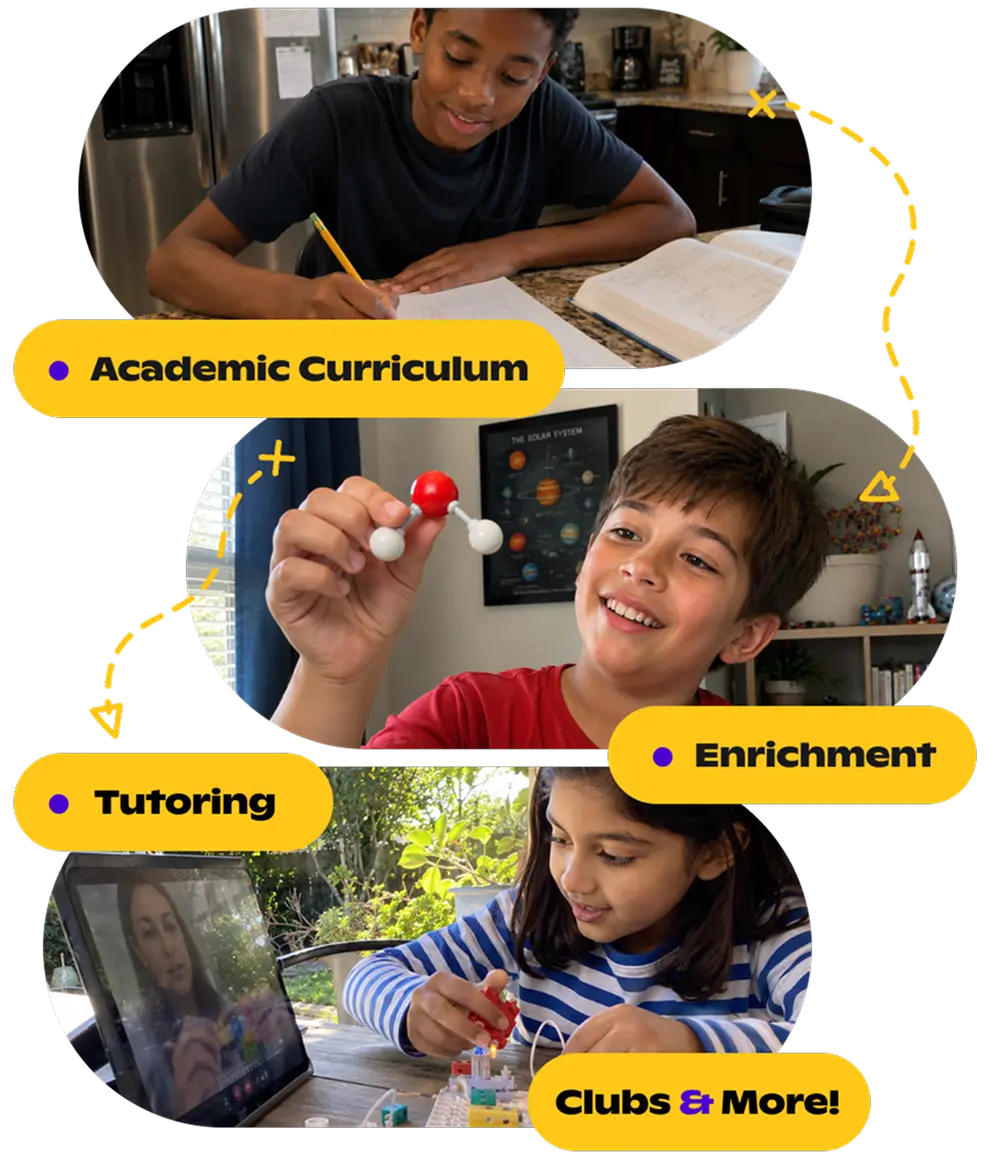
It's easier to create a fun and complete education when you have good resources. Outschool works well for New Jersey homeschoolers by offering live, small-group classes that give structure and expert teaching, while still letting you keep your flexible schedule.
Here's how Outschool enriches your homeschool experience:
- Live, interactive classes covering core subjects and unique electives that bring learning to life
- Flexible scheduling with classes available throughout the day to fit your family's routine
- Expert teachers who specialize in engaging young learners with passion and expertise
- Social connections through small-group interactions with peers from across the country
- Diverse subjects from traditional academics to creative arts, coding, and specialized interests
- Easy documentation with class records that support your optional recordkeeping efforts
Whether you want full instruction in tough subjects, extra help in areas your child enjoys, or just value expert teaching, Outschool offers the quality and convenience that New Jersey homeschoolers like.
How to get started
Starting to homeschool in New Jersey is simple because the state has very few requirements. Once you decide to homeschool, you can get started quickly with just a few easy steps.
Here's your roadmap to getting started:
- Withdraw from public school if your child currently attends. If withdrawing a high school student, complete the transfer form, indicating your intent to provide instruction elsewhere.
- Consider notifying your local school district to prevent potential truancy concerns, though this isn't legally required for most families.
- Choose your approach and curriculum based on your child's learning style, interests, and your educational philosophy.
- Plan your school year with whatever schedule and structure works best for your family.
- Set up your learning environment, whether that's a dedicated homeschool room or flexible learning throughout your home.
- Establish a recordkeeping system to track your child's progress and maintain work samples.
- Connect with local homeschoolers for support, activities, and community connections.
- Begin teaching with confidence, knowing you have the freedom to adjust your approach as you discover what works best.
Find support through homeschool communities
New Jersey has a strong homeschool community that offers support, resources, and friendship as you start homeschooling. From statewide groups to local co-ops, you'll find experienced families who are happy to share advice and encouragement.
Statewide organizations and local support groups
New Jersey Homeschool Association (NJHA): This nonpartisan organization protects homeschooling freedom and maintains a favorable climate for home education across New Jersey. NJHA provides legal information and support for all homeschool families regardless of background or educational philosophy.
SEA Homeschoolers: This inclusive national network welcomes families of all backgrounds, offering resources, virtual conferences, and an active online community where New Jersey families connect with homeschoolers nationwide.
North Jersey Home Schoolers Association (NJHSA): Serving Bergen, Essex, Morris, Passaic, and Hudson Counties, this Christian organization offers academic programs, athletic opportunities, fine arts activities, and social events. They provide graduation ceremonies, field trips, and year-round community connections.
Many other local groups across the state offer special support for families with different teaching styles, religious backgrounds, or who live in certain areas.
Public funding options for homeschoolers in New Jersey
Right now, New Jersey does not have Education Savings Accounts (ESAs), tax credits, or other direct funding for homeschoolers. Unlike some other states, New Jersey families pay for their own homeschooling costs.
Some school districts may lend textbooks or other materials to homeschoolers, but they are not required to do so by law. You can ask your local district if they offer any resources.
Many New Jersey families save money on homeschooling by swapping curriculum, using the library, finding free online resources, and joining co-ops that share teaching and costs.
Homeschooling in New Jersey: Frequently asked questions (FAQs)
When you start homeschooling, it's normal to have questions about your rights and responsibilities in New Jersey. Here are answers to the most common concerns families have.
Do I need teaching credentials to homeschool in New Jersey?
No, New Jersey doesn't require any teaching credentials, college degrees, or specific qualifications to homeschool your children. The state recognizes parents as capable educators regardless of their formal education level or professional background.
Do I have to notify the school district that I'm homeschooling?
No formal notification is required in most cases. The only exception is if you're withdrawing a high school student from public school, then you must complete a transfer form. However, many families choose to voluntarily notify their local board of education to prevent potential truancy concerns and establish a clear record.
What subjects do I need to teach?
New Jersey law doesn't specify required subjects. You must provide instruction that's "academically equivalent" to public school education, which typically includes language arts, math, science, and social studies. However, you have complete freedom in choosing what subjects to teach and how to teach them.
Do I need to keep records of my homeschooling?
New Jersey doesn't require you to keep records, but it's a good idea. Keep attendance, work samples, and notes about learning activities. These records help with college applications, switching schools, or showing progress if needed.
Are homeschoolers required to take standardized tests?
No, New Jersey does not require homeschooled students to take standardized tests. You can check your child's progress in any way you find helpful, including optional tests if you want them.
Can homeschooled students participate in public school activities?
Access to public school programs depends on your district. New Jersey law does not guarantee homeschoolers can join public school classes, sports, or activities. Check with your local district to see what is available.
What if my child has special needs?
New Jersey law says school districts must evaluate students for special education services if you ask. But they only have to provide special education services to students enrolled in public school. Some districts may still help homeschooled students with special needs, so check with your local district to see what support is available.
How do New Jersey homeschool graduates apply to college?
Colleges in New Jersey accept students who have been homeschooled. Make a detailed transcript with courses, grades, and credits. Add extracurriculars, volunteer work, and awards. Taking the SAT or ACT can help your application. Many New Jersey homeschoolers go on to both in-state and out-of-state colleges every year.
Start your New Jersey homeschool journey with confidence
New Jersey's homeschool laws respect your authority as your child's primary educator. New Jersey's homeschool laws give you the freedom to be your child's main teacher and create an education that fits your family. With few rules and lots of flexibility, you can focus on helping your child learn and grow in ways that match their interests and strengths. Resources like Outschool's engaging online classes make this the perfect time to begin. Whether you're drawn to unschooling, classical education, unit studies, or a traditional approach, you have the freedom and support to succeed.
Want to see how online classes can add to your New Jersey homeschool? Outschool offers thousands of live, interactive courses that make learning exciting. From core subjects to creative and unique electives, you can find classes that fit your homeschool and help your child thrive.


.svg)
.svg)