For many families in Minnesota, homeschooling is a chance to take education into their own hands. It allows you to balance state requirements with the freedom to teach in ways that match your child’s learning style. That balance is what makes homeschooling such a practical and rewarding choice across the state.
Of course, taking charge of education can feel like a big responsibility. Outschool provides live online classes that make it easier to explore interests across subjects like math, science, art, and music. With thousands of options, you can blend state-required subjects with your child’s unique interests, creating a well-rounded program that feels both structured and inspiring.
Homeschooling options in Minnesota
Minnesota recognizes one primary pathway for families who want to educate their children at home. Under state law, parents serve as the primary instructors for their students, treating homeschooling as a form of nonpublic education. This approach puts you in the driver's seat of your child's learning journey, allowing you to make educational decisions that align with your family's values and your learner's unique needs.
This single-pathway system gives you broad flexibility with a few documentation requirements that help track learning. Parents don’t need licenses or formal credentials, and the state does not approve or oversee homeschool curricula. That means you can select methods, resources, and schedules that fit your family’s values and your child’s learning style, all within the framework of state law.
Requirements for homeschooling in Minnesota
Homeschooling in Minnesota offers families flexibility while still including a few key requirements. While parents have full authority over how and what their children learn, the state does ask families to follow some clear rules. These guidelines help ensure children receive a well-rounded education while keeping parents in the lead role.
Enrollment paperwork
To begin homeschooling in Minnesota, you’ll need to file a simple notification with your local school district. This takes the form of an Initial Registration when you first start, followed by a Letter of Intent to Continue to Provide Instruction in each subsequent year.
These forms, due by October 1 or within 15 days of withdrawing your child from public school, include basic details such as your child’s name and birthdate, the name of the instructor, your intended testing method, and proof of immunization.
Attendance and instruction
Minnesota law requires children ages 7 through 17 to comply with compulsory instruction, but it leaves the details of attendance and scheduling up to you. That means there’s no minimum number of school days or hours to track.
When it comes to who can teach, parents are automatically considered qualified to homeschool their own children. If someone other than a parent provides instruction, they must meet one of the following requirements:
- Hold a valid Minnesota teaching license in the field and grade taught
- Teach under the direct supervision of a licensed teacher
- Provide instruction in a school recognized or accredited by the state board
- Hold a bachelor’s degree
Curriculum guidelines
Homeschoolers are expected to cover a set of core subjects, but how you teach them is entirely up to you. Families must include:
- Reading
- Writing
- Literature
- Mathematics
- Science
- Social studies
- Health
- Physical education
- Fine arts
- U.S. Constitution studies
Beyond those requirements, you have the freedom to choose the materials, pacing, and teaching styles that best suit your child, be they textbooks, online classes, projects, or community-based learning.
Recordkeeping essentials
Good recordkeeping creates a foundation for your family's educational journey and keeps you compliant with state law. Minnesota law requires you to maintain specific documentation that demonstrates your child's learning progress and your adherence to state requirements.
Here’s what you’ll want to keep on file:
- Daily instruction and attendance notes so you can show your child is learning regularly.
- Samples of your child’s work, like math problems, essays, or even photos of projects.
- Curriculum and resources used, whether that’s textbooks, workbooks, or online courses.
- Annual test results, stored at home, in case your district ever requests them.
- Immunization records and district correspondence, which should be saved for at least two years.
- High school transcripts, which you’ll want to keep permanently to help with college or career applications later.
Testing and assessments
To homeschool in Minnesota, you’ll need to make sure your child takes a nationally norm-referenced standardized test each year. You can choose from a list of approved options, like the Iowa Assessments or the Stanford Achievement Test, and you decide whether to give the test at home, online, or in another setting.
If your child scores at or below the 30th percentile, state law requires you to put a remediation plan in place, which might mean adjusting curriculum, adding tutoring, or providing extra practice in certain subjects.
Public funding options for homeschoolers in Minnesota
Minnesota offers a few ways to help families manage homeschool costs and expand learning opportunities:
Families can reduce their taxable income by claiming approved educational expenses like curriculum, textbooks, tutoring, and computer hardware. You can deduct up to $1,625 per child in grades K–6 and $2,500 per child in grades 7–12, with no income limit.
This credit covers 75% of eligible expenses (up to $1,500 per child) for families earning $70,000 or less, with a gradual phase-out for higher incomes. You can use it for textbooks, instructional fees, and educational software.
Homeschooled students in grades 10–12 can earn both high school and college credit by taking courses at participating Minnesota colleges. Tuition and required books are covered, making it a valuable way to get a head start on college.
- Special education services
Public schools are required to evaluate homeschooled students for learning differences upon request, but service offerings like speech therapy are not guaranteed and depend on district policy. It’s best to contact your local special education department to learn what’s available.
Minnesota allows homeschoolers to join public school classes part-time through what’s called shared time aid. This means your child can take specific courses at a local public school while continuing to homeschool the rest of the time. Districts receive state aid for these students, so families usually aren’t charged tuition, though participation may depend on local policy and available space.
- Extracurricular activities
Homeschoolers in Minnesota can join public school sports, clubs, and other activities in their resident district on the same basis as enrolled students. This provides social and enrichment opportunities without giving up homeschooling freedom.
Minnesota families may also qualify for OpenEd, a free program that provides up to $2,000 annually in credits for approved Outschool classes. This is a separate pathway from state tax benefits and doesn’t affect eligibility for the K–12 Education Credit or Subtraction. See our full OpenEd guide to check eligibility and apply.
Minnesota’s free online schools, like Minnesota Virtual Academy, are available for families who prefer structured, full-time online learning. Keep in mind that enrolling in these programs changes your child’s status from homeschooled to a public school student.
Homeschool with Outschool
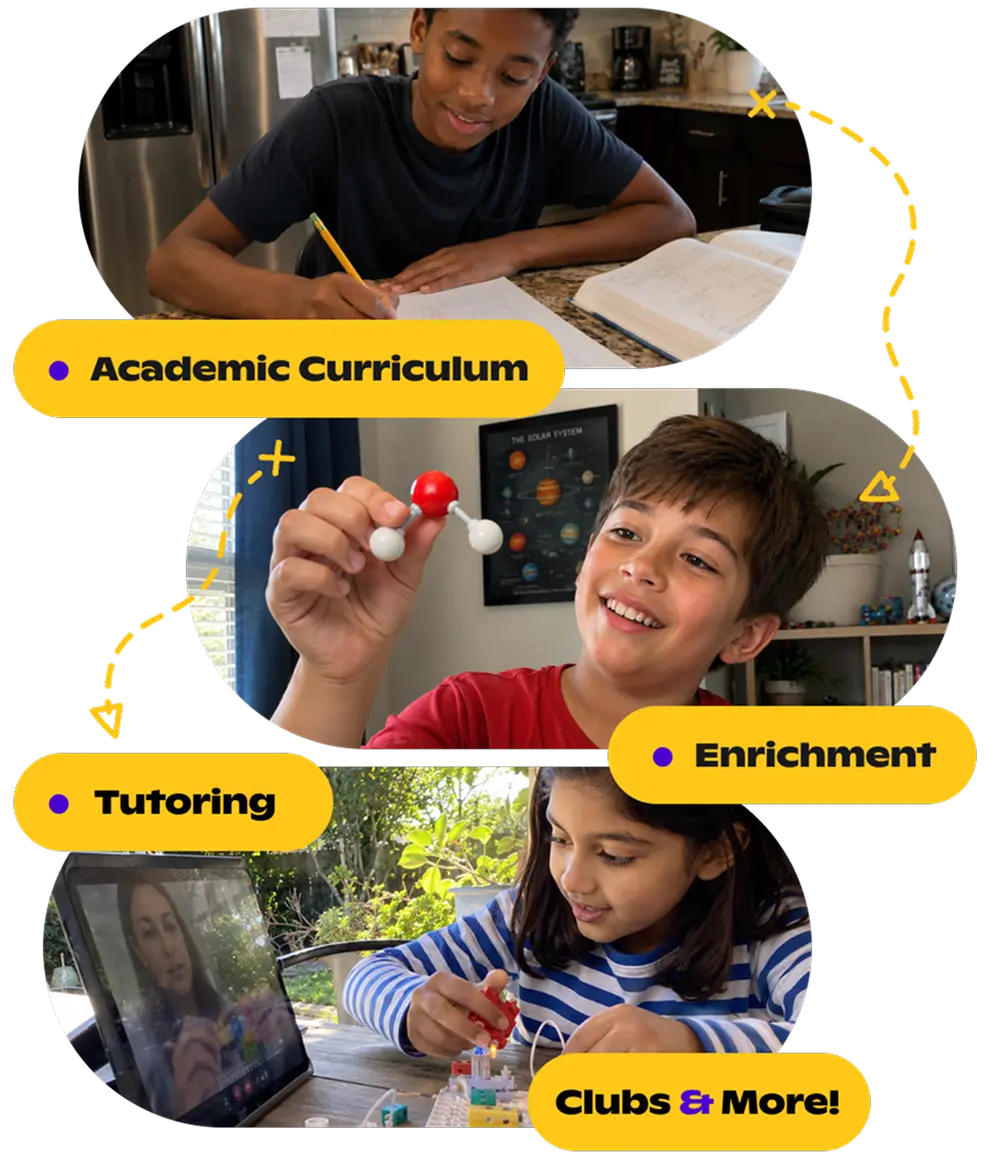
Meeting Minnesota's requirements doesn't mean you have to do everything on your own. Outschool makes it easier to design a flexible and engaging program by offering live online classes that support both academic needs and creative exploration.
- Access thousands of live classes: From core subjects like math, science, and writing to electives like art and coding, you can find classes that fit your child's needs and interests.
- Choose a schedule that works for you: Classes are available throughout the day and week, giving you freedom to shape learning around your family's routine.
- Learn from passionate teachers: Skilled teachers bring energy and expertise to every lesson, making topics more engaging and easier to understand.
- Small group settings: Your child can connect with peers in a supportive environment, building confidence and social skills while learning.
- Supplement your homeschool plan: Use Outschool to cover Minnesota's required subjects or to add enrichment opportunities that keep your child curious and excited.
With Outschool, you can strike the right balance between meeting Minnesota's guidelines and keeping learning fresh and enjoyable at home.
How to get started
Taking the first steps into homeschooling in Minnesota might feel overwhelming, but the process is more straightforward than it seems. The state's system respects your lead as the primary educator while verifying that instruction requirements are being met.
Here's what to do:
- Submit your paperwork: File the Initial Registration Form with your district superintendent by October 1 of the first year you begin homeschooling, or within 15 days if you're withdrawing your child mid-year. In the following years, you'll submit a Letter of Intent to Continue.
- Include required details: Your notification must list your child's name, birthdate, and address; the instructor's name and qualifications (parents are automatically qualified); your planned annual standardized test; and immunization records.
- Choose your curriculum: Select materials that cover the required subjects but reflect your child's learning style. Minnesota leaves these decisions up to you, so you can blend textbooks, online resources, and hands-on activities.
- Set up recordkeeping: Keep documentation of schedules, materials, test results, and samples of your child's work. These records are important if you ever transition back to public school or need to show compliance.
- Plan for testing: Your child must take a nationally norm-referenced standardized test each year (unless your homeschool is accredited). You'll keep the results in your own files, but should be prepared to share them if requested.
- Stay organized: Create a simple system, like a binder or digital folder, to store all required forms, test results, and progress notes. This will save you stress down the road.
Once these steps are complete, you'll have a solid foundation to begin homeschooling confidently.
Find support through homeschool communities in Minnesota
Homeschooling becomes more enjoyable when you have a network to lean on. Minnesota has both statewide organizations and local groups that give families a chance to socialize, share ideas, and find encouragement along the way.
Statewide organizations
Local groups and co-ops
These groups provide both practical support and social opportunities, helping your child connect with peers and giving you a community of parents who understand the homeschooling journey.
Homeschooling in Minnesota: Frequently asked questions (FAQs)
Starting your homeschooling journey raises many practical questions. These answers address common concerns and misconceptions to help you move forward with confidence.
What paperwork do I need to start homeschooling in Minnesota?
You'll need to file an Initial Registration Form with your local school district superintendent by October 1 of your first homeschooling year, or within 15 days if you withdraw your child mid-year. In later years, you'll file a Letter of Intent to Continue. Both forms are simple and only require basic family and student information.
Do I need to follow a specific curriculum?
No curriculum is mandated by the state, giving you complete creative control over your child's learning materials and approach. You can mix resources, create your own materials, or even use free online content as long as you cover the required subjects. For detailed guidance on building your curriculum approach, see our curriculum guidelines section above.
Are there required subjects I must teach?
Minnesota requires instruction in reading, writing, literature, math, science, social studies, health, physical education, fine arts, and U.S. Constitution studies. You can decide how to cover these subjects and what materials to use.
Can my homeschooled child participate in public school activities in Minnesota?
Yes, Minnesota law supports homeschooled students joining public school sports teams, clubs, and extracurricular activities in their resident district. Each district sets its own participation policies, so contact your local school directly to understand their specific requirements, which might include grade verification or residency proof.
Do I need a teaching license to homeschool my child in Minnesota?
No, parents are automatically considered qualified to teach their own children in Minnesota. If someone else provides instruction, they'll need to meet one of the state's criteria, such as holding a teaching license or a bachelor's degree.
Start your Minnesota homeschool journey
Minnesota's homeschooling landscape offers you the freedom to craft an educational experience that honors your child's unique learning style and interests. With over 31,000 students now choosing this path, you're joining a thriving community that values educational flexibility and family choice.
To support that journey, you might want extra resources that keep learning dynamic. Outschool provides thousands of live online classes across subjects and interests, making it simple to supplement your homeschool with lessons taught by experienced teachers. It's a flexible way to round out your homeschool plan while giving your child more chances to grow and connect.
More resources for Minnesota homeschoolers
If you're interested in learning about ways to make homeschooling more affordable, be sure to check out our guide on Minnesota's tax benefits for homeschooling families. It's a helpful place to see how state tax policies can support your home education budget.


.svg)
.svg)