Homeschooling in Indiana gives families the freedom to shape education around their child's unique learning style, interests, and pace. Whether you're drawn to the flexibility, the ability to explore personalized subjects, or the chance to spend more quality time together as a family, Indiana's homeschool-friendly laws make it one of the easiest states in the country to get started.
Getting going is often simpler than expected: Indiana has minimal paperwork, no mandatory testing, and no curriculum requirements. This guide will walk you through everything you need to know about the state's requirements, support systems, and resources to help you begin with confidence. With live, flexible classes designed for homeschoolers, Outschool is here to help you customize your child's learning experience every step of the way.
Understanding Indiana's homeschool laws
Before you dive into lesson planning and curriculum shopping, it helps to understand how Indiana classifies and regulates home education. Knowing the rules upfront can save you time and give you peace of mind as you build your homeschool routine.
Indiana classifies homeschools as non-accredited, non-public schools. This designation gives families significant flexibility in how they approach education while still meeting the state's compulsory attendance requirements. Children between the ages of 7 and 18 must receive some form of education, and homeschooling is a fully recognized way to fulfill this obligation.
Notification and registration requirements
One of the biggest advantages of homeschooling in Indiana is that you don't have to register or notify the state before you begin. There's no mandatory enrollment form, no approval process, and no waiting period. If your child has never attended public school, you can simply start homeschooling whenever you're ready.
If you're withdrawing a child from public school, you'll want to notify the school to avoid any truancy concerns. For elementary and middle school students, no specific form is required; a simple letter or phone call to the school is sufficient. For high school students, parents must sign a "Withdrawal to Non-Accredited Non-public School Located in Indiana" form. This isn't a registration document; it simply removes the student from the school's graduation cohort.
The Indiana Department of Education does offer a voluntary online enrollment form, but submitting it is entirely optional. You only need to do it once if you choose to register, and it remains active from year to year.
Curriculum and subject requirements
Indiana does not mandate a specific curriculum or list of required subjects. The law simply states that homeschool instruction must be "equivalent" to what's offered in public schools and taught in English. What "equivalent" means is left open to interpretation, which gives families the freedom to tailor education to their child's needs and interests.
You can use textbooks, online programs, unit studies, hands-on projects, or a mix of everything. Many families find it helpful to reference the Indiana Academic Standards as a general guideline, but following them isn't required.
Attendance and record-keeping
Indiana requires homeschoolers to provide 180 days of instruction per academic year, which runs from July 1 to June 30. However, there's no requirement for how many hours you need to teach per day or which days of the year you choose. This flexibility lets your family choose what works best, whether that means learning on weekends, taking breaks when needed, or adjusting your schedule along the way.
You are required to keep an attendance record, but there's no specific format you must use. A simple log noting each day of instruction is sufficient. While you won't need to submit this to anyone, the public school superintendent can request to verify your records, so it's smart to keep them organized.
Beyond attendance, Indiana doesn't require you to maintain academic records. However, it's a good idea to document grades, completed coursework, and samples of your child's work, especially for high school students who will need transcripts for college applications.
Testing and assessments
Indiana homeschoolers are not required to take standardized tests. Your child won't participate in statewide assessments unless they're enrolled in at least one class at a public or accredited school. Some families choose to administer tests privately to track progress, but this is entirely optional.
How to start homeschooling in Indiana
Once you understand the legal landscape, getting started becomes much more straightforward. From making it official to choosing your materials, here's a step-by-step look at launching your homeschool.
Starting your homeschool journey in Indiana is refreshingly simple compared to many other states. There's no approval process to navigate and no waiting period before you can begin teaching your child.
Step 1: Decide to homeschool
Take some time to research different homeschooling approaches and think about what would work best for your family. Consider your child's learning style, your own teaching strengths, and how much structure you want in your days.
Step 2: Withdraw from public school (if applicable)
If your child is currently enrolled in public school, notify the school that you're withdrawing them to homeschool. For high school students, you'll need to sign the official withdrawal form. Keep a copy of any correspondence for your records.
Step 3: Choose your curriculum and approach
Select curriculum materials and resources that align with your family's goals and your child's interests. You might use a pre-packaged curriculum, piece together resources from multiple sources, or take an unschooling approach.
Step 4: Create an attendance system
Set up a simple way to track your 180 instruction days. This could be a paper calendar, a spreadsheet, or a homeschool planning app.
Step 5: Start teaching
Begin your homeschool journey! Remember that you have full flexibility over your schedule, subjects, and methods.
Public funding options for homeschoolers in Indiana
Homeschooling doesn't have to break the bank. Indiana offers several ways to help families offset educational costs and expand learning opportunities through tax benefits and scholarship programs.
Indiana Private school/homeschool tax deduction
Indiana families can claim a state income tax deduction of up to $1,000 per child who is homeschooled or enrolled in private school. This deduction covers educational expenses like curriculum, textbooks, software, tutoring, and school supplies. There's no income limit to qualify, and you can claim it for each child you homeschool.
Indiana Education Scholarship Account (ESA)
Students with disabilities and their siblings may qualify for Indiana's ESA program, which provides state funding to customize education outside the public school system. These funds can be used for private school tuition, therapies, tutoring, curriculum materials, testing fees, and other approved educational expenses. Learn more through the Indiana Treasurer's ESA page.
Dual enrollment opportunities
Homeschooled high school students in Indiana can get a head start on college by taking courses at participating colleges and universities. Ivy Tech Community College works closely with homeschool families across the state, offering dual enrollment options that allow students to earn college credit while completing high school requirements. Students pay tuition but gain access to advising, student support services, and the chance to pursue the Indiana College Core. This fulfills a full year of college requirements and transfers to any public (and many private) Indiana universities.
Special education services
Homeschooled students may be eligible to receive special education evaluations and services through their local public school district. While districts are required to evaluate students upon request, the availability of specific services like speech therapy varies by district. Contact your local special education department to learn what's available in your area.
Part-time public school enrollment
Some Indiana school districts allow homeschoolers to enroll part-time in specific classes. Policies vary by district, so reach out to your local schools to find out if this option is available and what requirements apply.
Extracurricular activities and sports
Access to public school extracurriculars varies by district in Indiana. For high school athletics, the Indiana High School Athletic Association (IHSAA) allows homeschool students to participate if they've been homeschooled for at least three consecutive years and are enrolled in at least one class per day at the school. Since many homeschoolers don't meet the enrollment requirement, community sports leagues and homeschool athletic organizations are popular alternatives.
How Outschool supports Indiana homeschoolers
Building a complete curriculum on your own can feel overwhelming, but you don't have to do it all yourself. Outschool offers flexible support that fits seamlessly into your Indiana homeschool routine.
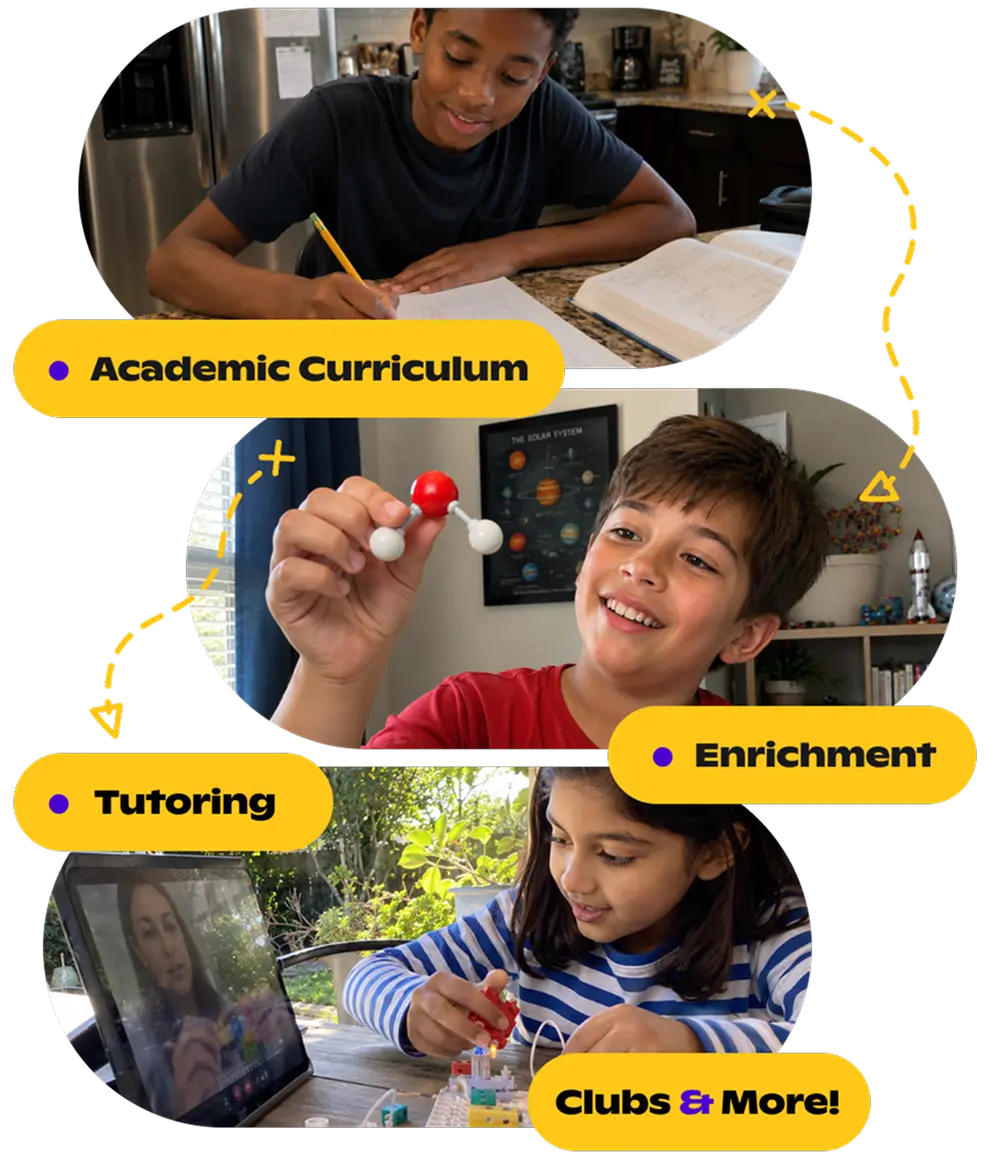
One of the most significant advantages of homeschooling in Indiana is the freedom to customize your child's education to match their interests and needs. Whether you're building a complete curriculum or supplementing key subjects, Outschool makes it easy to create an engaging and personalized learning experience.
Homeschooling benefits you can enjoy with Outschool in Indiana include:
- Live, teacher-led classes across academic subjects, arts, and life skills
- Flexible scheduling that fits your family's routine
- Small group sizes that encourage participation and connection
- Wide subject variety to explore interests beyond core academics
- Easy record-keeping for attendance and coursework documentation
With no state curriculum requirements to navigate, Indiana families have the freedom to build exactly the education their child needs, and Outschool makes it easier to fill in the gaps, explore passions, and keep learning fresh.
Homeschool groups and organizations in Indiana
Connecting with other homeschool families can make your journey richer and more sustainable. Indiana has a variety of support networks, co-ops, and organizations ready to welcome you, whether you're looking for field trip buddies, enrichment classes, or simply other parents who understand your daily reality.
State and regional organizations
These groups offer resources, events, and community connections for homeschoolers across Indiana:
Local co-ops and support groups
Joining a local group gives you access to enrichment classes, field trips, social events, and peer support throughout your homeschool journey:
Finding a local group that matches your family's values and approach can make all the difference in your homeschool experience!
Homeschooling in Indiana: Frequently asked questions (FAQs)
Homeschooling in Indiana comes with plenty of freedom, and naturally, a few questions along the way. These answers address common concerns from legal steps to learning resources.
Do I need to notify anyone before I start homeschooling in Indiana?
No. Indiana doesn't require you to register with the state or notify your local school district before homeschooling. If your child is currently enrolled in public school, you should notify the school to withdraw them, but there's no approval process. For high school students, you'll need to sign a withdrawal form; for younger students, a letter or phone call is sufficient.
What curriculum do I need to use?
Indiana doesn't mandate any specific curriculum. The law requires instruction to be "equivalent" to public school education and taught in English, but the interpretation is left to families. You can use textbooks, online programs like Outschool, unit studies, or a blend of options based on your child's interests.
How do I keep records of my homeschool?
You're required to maintain an attendance record showing 180 days of instruction per academic year. There's no specific format required; a simple calendar or log works fine. While not mandatory, keeping academic records like grades, completed work samples, and course descriptions is highly recommended, especially for high school students who will need transcripts.
Do homeschoolers in Indiana have to take standardized tests?
No. Indiana does not require homeschooled students to take any standardized tests or participate in state assessments. Some families choose to test privately to measure progress, but this is entirely optional.
Can my homeschooler play sports at a public school?
It depends. The IHSAA allows homeschoolers to participate in high school sports if they've been homeschooled for at least three consecutive years and are enrolled in at least one class per day at the school. Since many homeschoolers don't meet the enrollment requirement, community sports leagues and homeschool athletic organizations are popular alternatives.
How do I create a diploma for my homeschool graduate?
Indiana doesn't issue diplomas to homeschoolers, but parents have full authority to create and award their own homeschool diplomas. Pair this with a detailed transcript showing courses completed and grades earned. Many colleges accept parent-issued diplomas alongside transcripts, SAT/ACT scores, and recommendation letters.
Can my homeschooler take college classes while in high school?
Yes! Indiana colleges, including Ivy Tech Community College, offer dual enrollment programs for homeschooled students. Your teen can earn college credit while completing high school, saving time and money on their post-secondary education.
Conclusion
Homeschooling in Indiana offers families remarkable freedom to create an education that truly fits their child. With minimal paperwork, no testing requirements, and complete curriculum flexibility, you have the space to build something meaningful.
Understanding your legal responsibilities is just the first step. From there, you can tap into tax benefits, connect with local communities, and access resources that make the journey more manageable and rewarding. And you don't have to do it alone.


.svg)
.svg)