Ask two homeschool parents how their kid gets classes and community, and you'll often hear two completely different answers. One drives to a church basement every Tuesday for a co-op with fifteen other families. The other logs their kid into a live online class with a teacher three states away. Both work. The question isn't which one is better in the abstract. It's which one fits the family you have right now, this year.
Here's an honest comparison across the things that tend to decide it: cost, socialization, academic rigor, and time. Plus a short framework at the end to help you land the call.
What a homeschool co-op offers
A co-op is a group of homeschool families who pool their time to teach and supervise kids together, usually in person, on a set day each week. Parents often take turns teaching, and the group shares the load of subjects that are more fun or more manageable in a group, like science labs, art, drama, or PE.
The draw is real community. Kids see the same faces every week and build friendships over months. Parents get a support network of people living the same day-to-day. If you want your child rooted in a local group and you value the accountability of showing up somewhere, a co-op delivers that in a way a screen can't. If you're weighing whether to join one, our guide to what a homeschool co-op is and how to find one walks through the types and how they run.
What online classes offer
Online classes bring a live teacher and a small group of kids together over video, on a schedule you choose. The reach is the difference. Your child can take a marine biology class from a working scientist, learn Spanish from a native speaker, or find a small group of kids who share one very specific obsession, whether that's Minecraft engineering or ancient Rome.
The flexibility is the other draw. You pick the time, the subject, and the level. If your seventh grader is doing high school math and first-grade handwriting in the same week, online classes can meet both without you needing a local teacher for either. You can browse live online classes by subject and age to see the range.
Cost: the real numbers
Co-ops are usually cheaper per hour. Many charge a small semester fee to cover space and materials, sometimes under a few hundred dollars for a full term. The catch is the hidden cost: your time. Most co-ops expect parents to teach, assist, or coordinate, so you're paying in Tuesdays as much as in dollars.
Online classes are priced per class or per session, so the range is wide. A one-time workshop might cost less than a coffee run, while an ongoing multi-week class costs more. You're paying money instead of time, and you're paying only for the specific subjects you want. For many families, the deciding factor is whether they have more free hours or more flexible dollars.
One more thing worth checking: if you have an education savings account or a state scholarship, online classes on Outschool can often be paid for with those funds through ClassWallet, Odyssey, or reimbursement, depending on your state. Co-op fees are sometimes eligible too, but it varies. Confirm with your program before you assume either way.
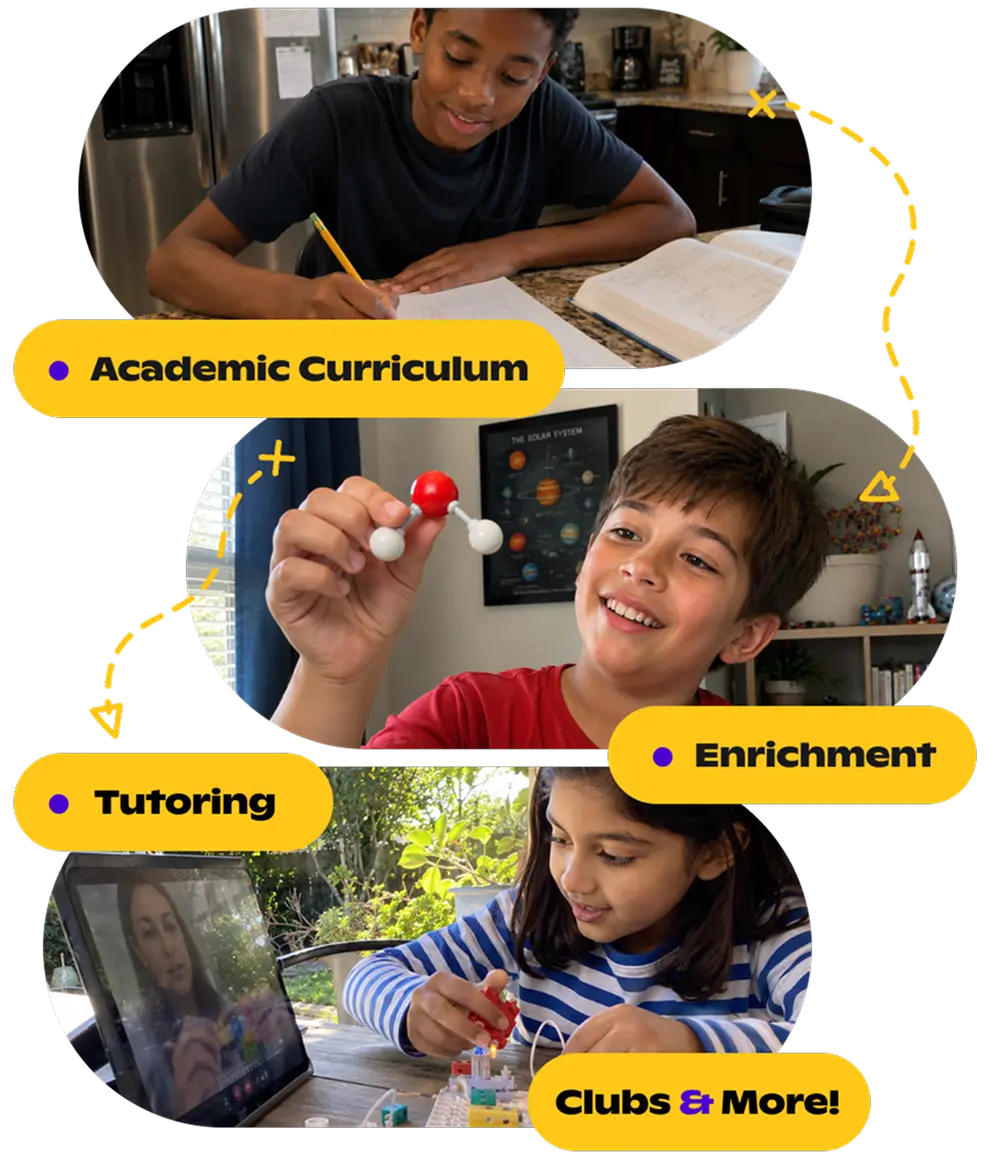
$20 off your first class WITH promo code: blog
Build the Education your Kid Deserves
Discover thousands of live classes taught by expert teachers, across academics and enrichment.
Browse classesSocialization: two different kinds
This is where the comparison gets interesting, because co-ops and online classes don't offer the same kind of social experience. They offer two different ones.
A co-op gives your child a consistent local peer group, in person, with all the messy, valuable stuff that comes with it: reading body language, resolving a squabble, learning to be part of a room. Online classes give your child access to peers who share a specific interest, sometimes from all over the country, which can be a lifeline for a kid whose passion no one nearby shares. A child obsessed with astrophysics may find their people online long before they find them down the street.
Neither is "more social." A shy kid might open up faster in a small online class than in a crowded co-op gym. A high-energy kid might need the in-person outlet a co-op provides. Match the format to the child in front of you.
Academic rigor and flexibility
Co-op academic quality depends on the parents teaching. A co-op with a chemist mom running labs is extraordinary. One where volunteers are stretched thin can be uneven, and you're locked into what the group offers this semester.
Online classes let you choose the level and the teacher. You can read reviews, see a teacher's background, and pick a class that matches where your child actually is, not where the group average sits. If your child needs a challenge in math and gentle support in writing, you can source each separately. That precision is the biggest academic advantage of going online.
Time and logistics
Co-ops require a fixed weekly commitment and, usually, a drive. If your week already runs tight, or you're homeschooling multiple kids on different schedules, that standing Tuesday can be a stretch. Online classes remove the commute and let you slot learning around your family's real rhythm, including evenings and weekends. If your family travels, moves often, or lives somewhere rural, that flexibility can be the whole ballgame.
A 5-question decision framework
When families are stuck, these five questions usually surface the answer:
- Do we have more free time or more flexible money?
- Time-rich leans co-op. Time-poor leans online.
- Does my child need local, in-person friends or interest-based peers?
- Local community leans co-op. Niche passion leans online.
- How specific are our academic needs?
- Standard grade-level subjects fit a co-op. Uneven or advanced needs fit online.
- How predictable is our weekly schedule?
- Steady weeks fit a co-op. Variable weeks fit online.
- Do I want to teach, or do I want someone else to?
- Want to teach leans co-op. Want a pro leans online.
You don't have to choose just one
The best-kept secret is that most families don't pick a side. They use a local co-op for community, hands-on science, and a standing social anchor, and they use online classes to cover the subjects the co-op can't, to feed a specific passion, or to add rigor where their child is ahead. A predictable weekly rhythm at home ties it together, and our guide to building a homeschool routine can help you slot both into the week.
Start with the format that solves your biggest pain point this year. You can always add the other one later.
Frequently asked questions
Is a co-op cheaper than online classes? Usually yes, in dollars. But co-ops cost you time, since most expect parents to teach or help. Online classes cost more money and less time.
Can my child get enough socialization from online classes alone? For many kids, yes, especially interest-based peer groups. Others do better with in-person contact. Some families use online classes plus a park day, sport, or club for the local piece.
Can I use ESA or scholarship funds for either? Online classes on Outschool are often eligible through ClassWallet, Odyssey, or reimbursement depending on your state. Co-op eligibility varies. Check with your specific program.
Which is better for high schoolers? Online classes often edge ahead for high school because you can source specialized subjects and advanced levels a local co-op may not offer, while still using a co-op for community.


.svg)
.svg)