Starting a middle school homeschool routine can feel like a big shift. What worked in the elementary years may no longer fit your developing child. Lessons take longer, expectations increase, and your learner is ready for more independence.
Many families look for a schedule to solve this, but middle school homeschooling works best with a fluid system instead of a rigid plan. A strong middle school homeschool routine creates a steady rhythm for learning while still allowing space for growth, flexibility, and real life.
As your child grows, routines can evolve. Early middle school will likely include more guided instruction, while later years will shift toward more independent work. This is also a key time to build skills such as planning, organization, and self-monitoring, all of which are supported by consistent routines.
In this article, we will walk through what a middle school homeschool day can look like, how routines shift over time, and how to create a system that supports both learning and independence across this important stage.
What a Middle Schooler’s Homeschool Day Can Look Like
A middle school homeschool day often feels different from both elementary and high school. It sits somewhere between structured guidance and flexible independence.
Instead of moving through many short lessons, middle schoolers typically work in longer stretches. In a single day, your middle schooler may focus on core subjects like math and reading, spend time writing or working on a project, and still have space for movement, creativity, and real-world experiences.
One of the biggest advantages of homeschooling at this stage is the ability to move beyond desk work. Many families include regular outdoor time, community-based learning and creative projects.
A homeschool day will not always look the same. What matters most is that learning happens consistently, with a balance between focused academic work and learning from life experiences.
How your routine changes from elementary to middle school
One of the biggest adjustments families notice is that middle school routines are no longer built around you keeping your child engaged. Instead, you are now helping them stay focused on their own and teaching them skills to become independent learners.
In the elementary years, the day often includes shorter lessons, frequent breaks, and more direct guidance. Parents usually lead most of the learning, moving from subject to subject and helping their child stay on track.
The middle school shift occurs gradually over time. A 6th grader still needs a fair amount of guidance and direction, while a 7th grader is able to handle longer assignments and take more responsibility for their work. In the last year of middle school, an 8th grader can often manage their workload, track progress, and meet expectations with less oversight.
This progression is not always linear. Some days may feel more independent, while others require more support. What matters is that your routine allows space for that growth.
Research notes that young adolescents benefit from learning environments that balance structure with increasing autonomy, allowing them to develop both competence and confidence as learners.
For example, instead of completing a short writing task each day, a middle schooler might work on one piece over several days, revising and improving it each time. This kind of routine supports deeper thinking and helps learners build persistence.
Structuring your middle schooler’s day
When creating a middle school homeschool routine, structure is still important, but it looks different from earlier years. Instead of planning every hour, most families find success with a consistent flow to the day.
A simple structure might include:
- A focused academic block in the morning
- A second work period for projects or content subjects
- Breaks and movement throughout the day
- Time for exploration, creativity, or real-world learning
The goal is not to control the day, but to create a rhythm that supports learning. This structure can stay consistent even if the topics and subjects change. One day might include a science experiment at home, while another includes a trip to the library or a local nature trail.
Research on learning and development suggests that students benefit from a mix of focused academic time and active, real-world experiences. Homeschooling naturally supports this balance by allowing families to adjust the day based on their needs and opportunities.
Understanding your role
As your child moves through middle school, your role begins to change. Instead of leading every part of the day, you gradually shift into a guide, mentor, and support system.
In earlier grades, you were likely managing lessons and schedules and helping your child stay focused throughout the day. In middle school, your role often shifts to a guide who sets expectations, introduces new material, and is there for check-ins and feedback when necessary.
This shift allows your child to begin taking ownership of their learning while still feeling supported.
For example, instead of sitting beside your child during every assignment, you might introduce a new concept, then step back while they work independently. Later, you check in to review their work or talk through any challenges.
Research on executive function shows that adolescents develop stronger planning and self-regulation skills when they are given opportunities to manage tasks with guidance rather than constant direction.
This balance is key. Too much control can limit independence, while too little support can lead to frustration. A strong middle school routine helps you find the middle ground, where your learner can grow while still having the support they need.
How Much Time Should You Spend Homeschooling a Middle Schooler?
One of the most common questions parents ask is how long the homeschool day should be during middle school. The answer often depends on how the day is structured and how your learner is working.
Middle schoolers are capable of longer focus, but they do not need to mirror a full traditional school schedule. In most homeschool settings, learning is more direct and focused, allowing families to cover material in less time, even though it is often deeper and more connected to life experiences.
Typical instructional time
Most middle school homeschool routines include about 3 to 5 hours of focused academic time per day.
This time usually includes:
- Core subjects such as math, reading, and writing
- Content areas like science or social studies
- Time for discussion, review, or feedback
In earlier middle school years, this time may lean more toward guided instruction. By later middle school, more of this time shifts toward independent work and longer assignments.
National frameworks such as the National Assessment of Educational Progress (NAEP) emphasize that middle school learners should be developing reasoning, analysis, and communication skills. These types of skills often require focused time rather than rushed lessons.
Independent work vs. parent-led worktime
In middle school, the balance between parent-led learning and independent work will change from day to day and year to year. Instead of separating subjects into “teaching time” and “independent time,” most days naturally move back and forth between the two.
This pattern often repeats throughout the day:
- A quick check-in or explanation
- Time to work independently
- A follow-up conversation or review
In writing, this might look like helping your learner organize their ideas, then stepping back while they draft, and later reviewing their work together. In math, you might go over a new concept, allow time for practice, and then check in on any mistakes or questions.
This approach allows you to stay involved in the learning process without needing to direct every step. Your role becomes more about guiding at key moments rather than leading the entire lesson from start to finish.
Research on adolescent development shows that this kind of supported independence helps learners build confidence and stronger problem-solving skills over time.
Length of full homeschool day
Even though academic time may be shorter than a traditional school day, the overall homeschool day often includes more than just formal lessons, as learning often occurs throughout the day in different forms.
A full day may include:
- Academic work
- Breaks and outdoor time
- Creative projects or hobbies
- Community activities, co-ops, or outings
- Practical life skills, such as cooking or planning
Example Middle School Homeschool Daily Routine
Every homeschool routine will look different depending on your family’s needs, your learner’s personality, and the resources you use. Some families prefer a consistent structure, while others build flexibility into their day.
The examples below show different ways to approach a middle school homeschool routine while maintaining a balance among academic work, independence, and real-life learning.
Structured homeschool schedule
Some families prefer a consistent daily flow that helps learners stay organized and reduces decision fatigue.
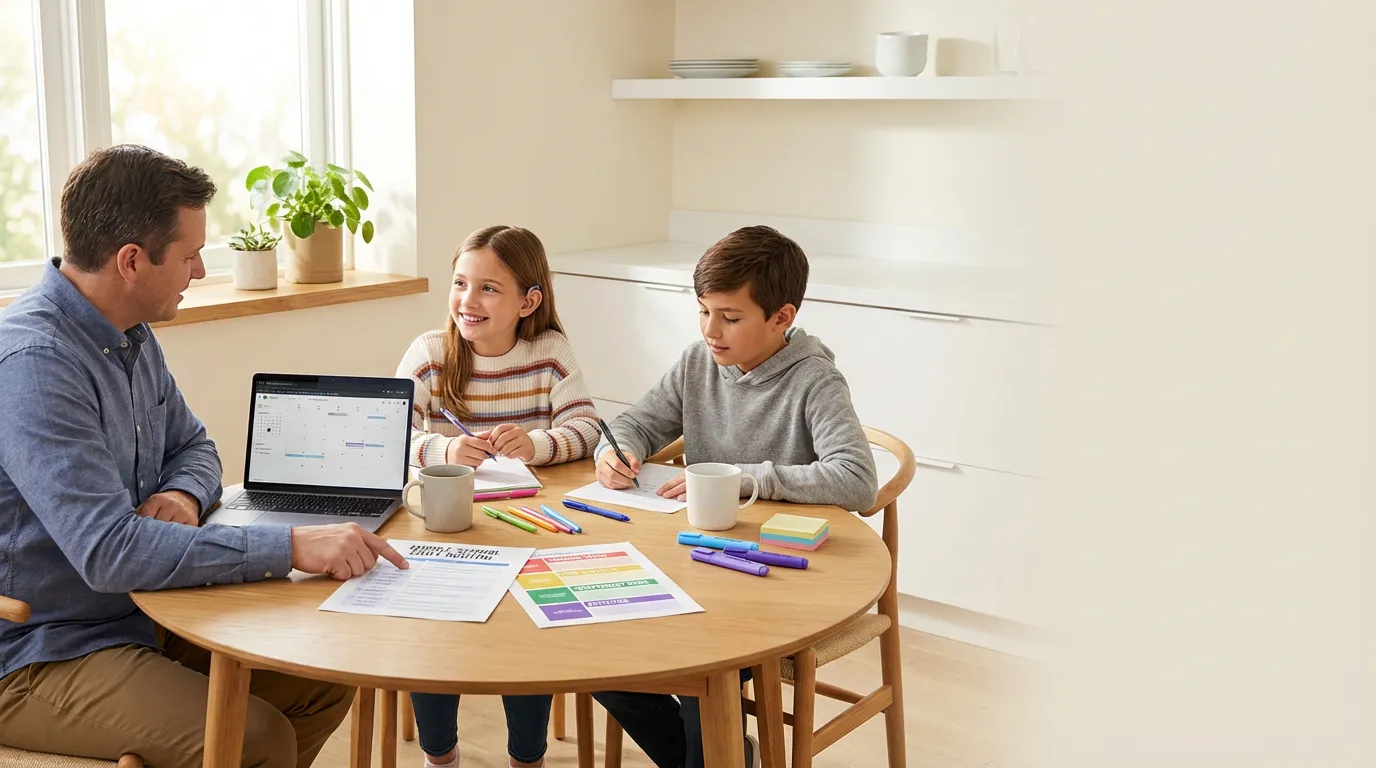
A structured day often begins with a simple check-in. You and your learner review what needs to be completed and set expectations for the day.
- The morning, when focus is strongest, is usually reserved for core subjects. Your learner might begin with math, working independently, then check in with you to review or learn something new. From there, they may move into reading or begin a writing assignment.
- After a break, late morning often becomes time for more involved work. This might include continuing a writing project, working through a science lesson, or exploring a history topic.
- Afternoons tend to be more flexible. This is often when families include creative work, outdoor time, or community activities. A trip to the library, a walk outside, or a hands-on project can all become part of the learning day.
This type of routine works well for families who want consistency while still allowing space for flexibility.
Flexible homeschool routine
Other families prefer a routine that adapts to daily life. Instead of following a set order, the focus is on completing key work while allowing the day to shift as needed.
A flexible day may start more slowly, with reading, journaling, or reviewing goals. Your learner then works through assignments in order of priority, choosing what to complete first.
Throughout the day, learning adjusts around real-life activities. You might have an outing, time outside, or a community event planned. Academic work can happen before or after these activities. For example, your child might spend the morning at a park or co-op, then return home to complete math and continue a writing assignment later in the day.
This approach works well for families who value real-world learning and want to integrate it into their routine.
Block schedule for 6th grade homeschool
Block scheduling groups learning into larger chunks of time, allowing learners to stay focused and work more deeply.
- A block-style day might begin with a longer stretch for core subjects like math and language arts. Your learner has time to complete work, ask questions, and move through tasks without feeling rushed.
- Later in the day, a second block may be used for science or social studies. This is often when longer projects or investigations happen.
- For example, one day might include working through a science experiment over an extended period, while another day might focus on researching and writing about a historical topic.
- Afternoons can be used for exploration, creative work, or time outside. This allows learners to apply what they are learning in meaningful ways.
Block scheduling can work well for middle schoolers because it supports deeper thinking and reduces constant transitions between subjects.
How to Plan a Middle School Homeschool Routine
Creating a routine for middle school only works if you create a system your family can actually follow. The goal is to support learning, reduce daily stress, and give your child clear expectations each day.
Step 1: Start with weekly priorities
Before thinking about daily schedules, it helps to look at your week as a whole.
Most middle school learners need consistent time for:
- Math, reading, and writing
- Science and social studies
- Projects or longer assignments
- Movement, creativity, and time outside
Instead of trying to fit everything into one day, many families spread subjects across the week.
For example, you might:
- Focus on math and language arts daily
- Alternate science and history
- Reserve one or two afternoons for projects, outings, or co-ops
This approach keeps the workload manageable and prevents the day from feeling overloaded.
Step 2: Build your day around energy, not just time
One of the biggest advantages of homeschooling is the ability to work with your child’s natural focus patterns.
Most middle schoolers have stronger concentration earlier in the day. This makes it a good time for subjects that require more thinking, like math or writing. Later in the day, learners often do better with hands-on activities, reading or research, creative work, or outdoor learning.
This kind of flow helps reduce frustration and keeps learning more productive.
Step 3: Decide what your child manages and what you manage
A strong middle school routine includes a clear division of responsibility. At this stage, your child can begin managing parts of their day, but they still need guidance.
You might handle areas such as overall expectations, introducing new concepts, and reviewing completed work. Your learner might begin to handle tracking assignments, choosing the order of tasks, and managing their time.
For example, instead of telling your child exactly what to do next, you might give them a list of tasks to complete and allow them to decide the order. This small shift builds independence without removing support.
How to Keep Your Routine Consistent
Once you have a routine in place, the next challenge is maintaining it. Consistency does not mean perfection. It means having a rhythm you can return to, even when life gets busy.
Keep expectations realistic
One of the fastest ways a routine breaks down is when too much is packed into the day. Middle school learners need time to think, process, and complete work without feeling rushed.
A simpler plan is easier to follow and more sustainable over time. If something is not working, it is often better to remove or adjust rather than add more.
Use visual systems to support independence
Middle schoolers benefit from seeing what needs to be done without constant reminders.
Simple tools can make a big difference. Try incorporating a daily checklist, a whiteboard with assignments, and a planner or notebook. These systems help your child take ownership of their work and reduce the need for you to manage every step.
Research on executive function shows that external tools like checklists and planners support developing organization and self-management skills during adolescence.
Expect the routine to evolve
What works in 6th grade will likely need adjustment by 7th and 8th grade.
As your child grows, you may notice that they need less direct instruction and want more control over their schedule. Instead of trying to keep the routine the same, allow it to shift gradually.
Protect time for breaks and movement
Middle schoolers may be able to maintain longer focus, but they still need regular breaks. Movement, outdoor time, and unstructured moments help reset the brain and improve overall learning.
Research shows that physical activity and varied learning experiences support both attention and retention, especially during adolescence.
Focus on rhythm, not perfection
No homeschool routine works perfectly every day. There will be interruptions, low-energy days, and unexpected changes. What matters is having a structure you can return to.
Instead of trying to stay on schedule, focus on maintaining the overall rhythm:
- Start the day with intention
- Complete key work
- Make space for exploration
- End the day knowing progress was made
Over time, this rhythm becomes a habit that supports both learning and independence.
Building a Routine That Grows With Your Child
The ultimate goal of a middle school homeschool routine is to have a clear structure, realistic expectations, and a balance between guidance and independence. A routine that accomplishes this will support both learning and daily life.
Middle school is a huge transition time. Your child is learning how to think more deeply, manage their time, and take responsibility for their work. A strong routine will give them the space to practice these skills while still feeling supported.
Sources
Association for Supervision and Curriculum Development. “The Characteristics of Young Adolescents.” ASCD, https://www.amle.org/developmental-characteristics-of-young-adolescents/
Center on the Developing Child. “Executive Function & Self-Regulation.” Harvard University, https://developingchild.harvard.edu/science/key-concepts/executive-function/.
Centers for Disease Control and Prevention. “Child Development: Middle Childhood.” CDC, https://www.cdc.gov/healthy-weight-growth/tips-parents-caregivers/.
Eccles, Jacquelynne S., and Carol Midgley. “Stage-Environment Fit: Developmentally Appropriate Classrooms for Young Adolescents.” Research on Motivation in Education, vol. 3, Academic Press, 1989.
Library of Congress. “Teaching with Primary Sources.” Library of Congress, https://www.loc.gov/programs/teachers/getting-started-with-primary-sources/.
National Academies of Sciences, Engineering, and Medicine. How People Learn II: Learners, Contexts, and Cultures. National Academies Press, 2018, https://nap.nationalacademies.org/catalog/24783/how-people-learn-ii-learners-contexts-and-cultures.
National Assessment of Educational Progress. “Mathematics Framework for the 2022 Assessment.” National Center for Education Statistics, U.S. Department of Education, https://nces.ed.gov/nationsreportcard/mathematics/.
National Center for Education Statistics. “The Nation’s Report Card.” NCES, U.S. Department of Education, https://www.nationsreportcard.gov.
Stanford Center for Opportunity Policy in Education. (2008). Learning in settings outside of school. Stanford University. edpolicy.stanford.edu
Youth-Nex Center to Promote Effective Youth Development. “Strategies for Teaching Goal Setting to Middle Schoolers.” University of Virginia, https://youthnexdrive.virginia.edu/strategies-teaching-goal-setting-middle-schoolers.


.svg)
.svg)