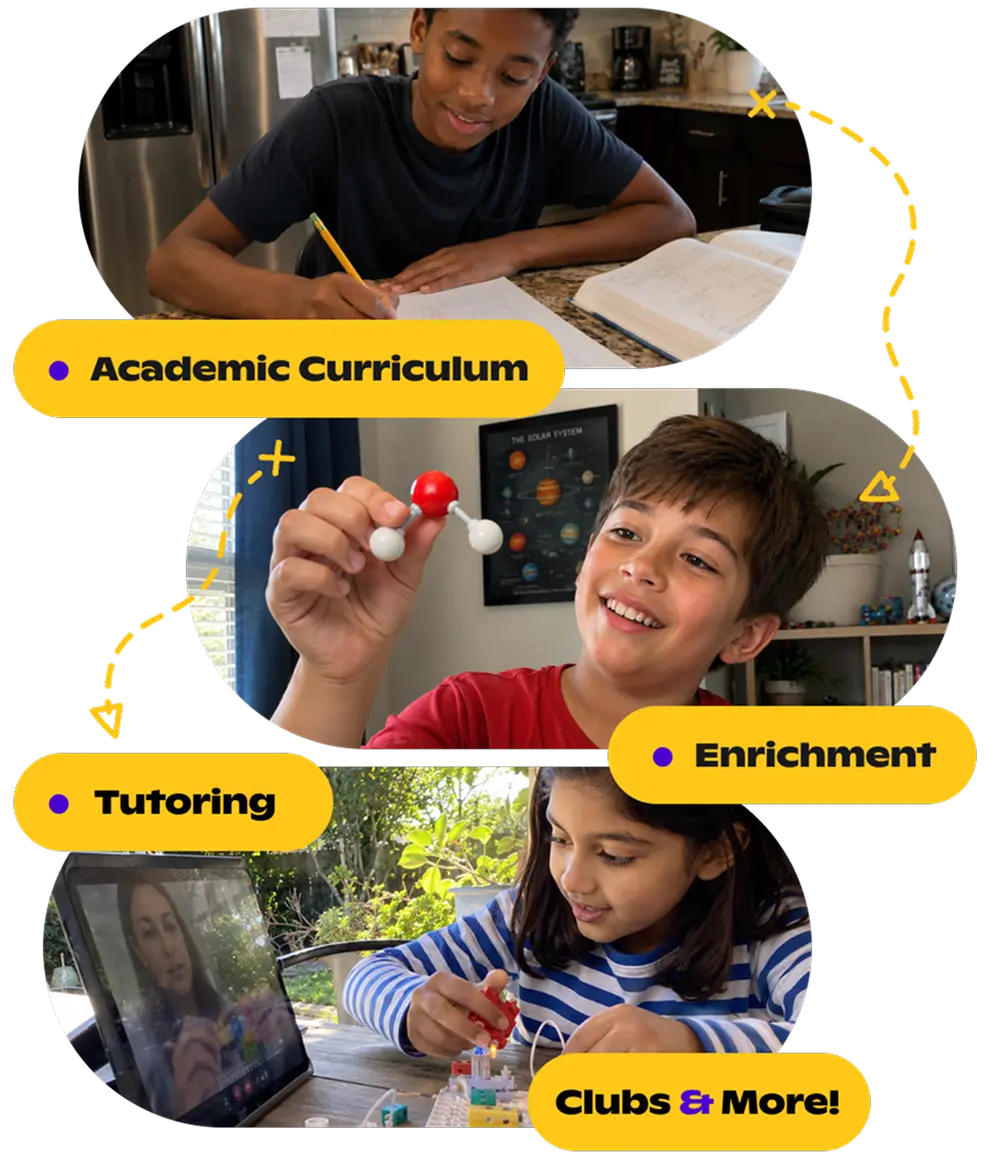
If you've chosen to homeschool your child, you may have encountered the well-meaning but sometimes worrying question: "But what about college?" It's natural to wonder whether homeschooling will open or close doors when it comes to higher education. The good news is that homeschoolers absolutely can go to college, and for families who choose this path, many do so with impressive results.
Colleges across the country, from community colleges to Ivy League universities, welcome homeschool applicants and often value the independence, self-motivation, and unique perspectives these students bring. Platforms like Outschool offer flexible online classes that can help your learner explore new subjects, build academic skills, and gain experience with structured coursework, all of which can support a smooth transition to college when the time comes.
College isn't the only path to a successful future, and not every homeschool family sees it as a necessary next step. Many homeschoolers thrive in vocational training programs, apprenticeships, creative careers, or entrepreneurial ventures that don't require a traditional four-year degree. The beauty of homeschooling is the freedom it gives families to prepare their children for whatever future aligns with their individual strengths, interests, and goals.
This guide focuses on the college pathway because it's a common question families have, and because understanding your options can help you make informed decisions. Whether your child ultimately chooses higher education or pursues a different direction, knowing that the college door is open and how to walk through it can be empowering.
The short answer to whether homeschoolers can attend college is a resounding yes. Colleges and universities across the United States have developed admissions processes specifically designed to evaluate homeschool applicants fairly alongside their traditionally schooled peers.
Research shows that approximately 74% of homeschooled students go on to attend college, compared to about 46% of the general population in the same age range. Homeschooled students have been accepted at more than 900 colleges and universities, including highly selective institutions like Harvard, Stanford, MIT, and Cornell.
What's more, homeschoolers tend to perform well once they arrive on campus. Here's what the research shows:
These outcomes make sense when you consider the skills homeschooling naturally develops. Students who learn at home often become strong, independent learners, skilled at managing their time and pursuing their interests with focus and determination. These are exactly the qualities that help students thrive in a college environment.
Understanding what admissions officers expect can help you feel more confident as you guide your learner through the application process. While requirements vary by institution, most colleges evaluate homeschool applicants using a combination of academic records, test scores, and personal qualities.
Creating a thorough transcript is one of the most important steps in preparing for college. Your transcript should provide a comprehensive view of your child's high school education, listing courses completed, grades earned, and credits received for each school year.
As a homeschool parent, you have the flexibility to create this transcript yourself. Many colleges accept parent-prepared transcripts, though some may request additional documentation like course descriptions, reading lists, or samples of student work. If you're using an accredited homeschool program or umbrella school, they may provide transcripts on your behalf.
The key is to start documenting early. Consider mapping out your child's high school journey before ninth grade begins, and update records regularly as courses are completed.
Standardized test scores
While many colleges have adopted test-optional policies in recent years, standardized tests like the SAT and ACT remain valuable for homeschool applicants. These scores provide admissions officers with a common benchmark to evaluate academic readiness, which can be especially helpful when a student's coursework doesn't follow a traditional school profile.
Some colleges that are test-optional for traditionally schooled students may still require or strongly recommend test scores from homeschoolers. Before your child applies, check each school's admissions page or contact their office directly to understand their specific requirements.
Beyond college admissions, strong test scores can also help your learner qualify for merit-based scholarships, making the investment in test preparation worthwhile.
Letters of recommendation help admissions officers understand your child's character, work ethic, and potential. While parents are typically not the best choice for these letters, homeschoolers have many other options.
Consider asking for recommendations from tutors, co-op instructors, coaches, mentors, employers, or community leaders who have worked closely with your child. If your learner has taken dual enrollment courses at a community college, a professor from one of those classes can provide an excellent academic reference. Online class instructors, including those from platforms like Outschool, may also be willing to write recommendations based on their experience with your student.
Colleges want to see that applicants are well-rounded individuals with interests and commitments beyond academics. Homeschoolers often have unique opportunities to pursue extracurriculars that align with their passions, whether that's participating in community sports leagues, volunteering, starting a small business, or diving deep into creative pursuits.
Document these activities as part of your child's high school record. A portfolio showcasing projects, achievements, and growth over time can be a powerful addition to a college application, helping your learner stand out in a competitive admissions pool.
There are several strategies homeschool families can use to build a strong academic foundation and demonstrate college readiness. These pathways not only enhance applications but also help students develop skills they'll use throughout their college careers.
Dual enrollment allows homeschooled students to take college-level courses while still in high school, earning credit that counts toward both their diploma and future degree. This is one of the most effective ways to demonstrate academic readiness to colleges.
Community colleges are a popular choice for dual enrollment because they're accessible, affordable, and offer a wide range of courses. When homeschoolers succeed in these college-level classes, admissions officers at four-year institutions see clear evidence that the student can handle rigorous coursework. Many universities also waive SAT or ACT requirements for applicants with a significant number of dual enrollment credits.
Beyond the academic benefits, dual enrollment helps students experience college-style learning before they leave home, building confidence and time management skills that ease the transition later.
Advanced Placement courses offer another way for homeschoolers to demonstrate mastery of college-level material. While homeschoolers can't take AP courses through a traditional high school, they can study AP content independently or through online programs and then sit for AP exams at local testing centers.
Strong AP scores show colleges that your learner can handle challenging academics. Many institutions also award college credit for high AP scores, potentially allowing students to skip introductory courses or even graduate early.
Supplementing your homeschool curriculum with online classes can provide valuable structure and outside accountability. Live classes with real instructors give students experience with deadlines, classroom discussions, and feedback from someone other than a parent.
These experiences help colleges see that your child has learned in diverse settings and can adapt to different teaching styles, qualities that will serve them well in higher education.
Not every college is the same, and finding the right fit matters just as much as getting accepted. Homeschool families have the advantage of knowing their learner deeply, which can help guide the search for a school that matches their child's goals, learning style, and personality.
Community colleges offer an accessible starting point for many students. They typically have:
Four-year colleges and universities vary widely in their size, culture, and approach to homeschool applicants. Some institutions, like Patrick Henry College, actively recruit homeschooled students and have built communities that welcome them. Many public universities have dedicated homeschool admissions counselors who can guide families through the process.
For students aiming at highly selective colleges, early planning is essential. These institutions look for:
Homeschoolers who have pursued unique opportunities, whether through travel, entrepreneurship, research, or creative projects, often have stories that stand out.
The shift from homeschool to college involves more than academic readiness. Helping your child prepare socially and emotionally can make the transition smoother and more enjoyable.
Ways to build independence before college:
The homeschool advantage in college:
Many homeschooled students find that their years of self-directed learning actually give them an advantage in college. They're often comfortable:
These are all skills that professors and advisors appreciate.
Parents exploring the homeschool-to-college pathway often have similar questions. Here are answers to some of the most common concerns families share.
In most cases, homeschooled students do not need a diploma from an accredited institution. Parents can issue their own diplomas upon completion of high school requirements. What colleges typically request is a transcript documenting the student's coursework and academic record, along with any other materials specified in their admissions requirements.
Not at all. Many colleges actively seek homeschool applicants because of the unique qualities they bring. According to the National Center for Education Statistics, homeschooled students often score higher on standardized tests than their traditionally schooled peers. Admissions officers recognize that homeschoolers tend to be self-motivated, curious, and capable of independent learning.
Yes. Homeschooled students have been accepted at all eight Ivy League schools, as well as other highly selective institutions like MIT and Stanford. Success at this level requires careful planning, strong academics, meaningful extracurricular involvement, and compelling application essays that highlight the student's unique journey.
Requirements vary by college. While many schools are now test-optional, some still require or recommend standardized test scores from homeschool applicants. Even at test-optional schools, strong SAT or ACT scores can strengthen an application by providing outside validation of academic ability. Check each college's admissions page for their specific policy.
Homeschoolers can request recommendations from anyone who knows them well in an academic or professional capacity, except for parents. Good options include co-op teachers, tutors, dual enrollment professors, coaches, employers, community leaders, or mentors. Building relationships with adults outside the family throughout high school makes this process easier when application time arrives.
The question isn't really whether homeschoolers can go to college. The answer to that is clear: they can, and they often excel. The real question is how your family will prepare for this exciting next step in a way that honors your child's unique strengths and interests.
With thoughtful planning, careful documentation, and opportunities to build academic and social skills along the way, your homeschooler can approach college admissions with confidence. Whether they're dreaming of a local community college, a state university, or a prestigious research institution, the path from homeschool to higher education is wide open.
If you're looking for ways to enrich your child's learning and help them explore new subjects before college, Outschool's live online classes offer a flexible, engaging option. From SAT and ACT prep to writing workshops and college admissions support, these classes can help your learner build skills and confidence for whatever comes next.