Families are enrolling in robotics classes at twice the rate they were a year ago. Not because it's trendy — because parents are starting to see the difference between learning to write code and learning to build something that moves, responds, and works.
Robotics is hands-on technology education. And right now, it's one of the fastest-growing subject areas in online learning.
Here's what you need to know before your kid starts.
Why robotics is different from coding
Traditional coding classes teach syntax — the language of computers. Robotics teaches systems thinking: how sensors read the world, how logic drives motion, how physical constraints interact with software decisions.
Kids who study robotics aren't just learning to write programs. They're learning why programs matter, what happens when they fail, and how to iterate until something actually works.
That's a different kind of education. And it's proving far more durable in an era where AI can write basic code on demand.
What age can kids start?
Earlier than most parents expect.
- Ages 5–7: Unplugged or block-based robotics (think: programmable toys, simple cause-and-effect machines). No prior experience needed.
- Ages 8–11: Entry-level robotics kits (LEGO Mindstorms, Scratch-based control). Kids start connecting physical builds to code logic.
- Ages 12+: Intermediate and advanced tracks — Arduino, Raspberry Pi, competitive robotics, real-world engineering challenges.
The sweet spot for most kids starting from scratch is ages 8–10. They have enough fine motor control and logical reasoning to see real results quickly, which keeps them engaged.
What to look for in a robotics class
Not all robotics classes are the same. Before enrolling, ask:
Does it involve physical building, software, or both?
Pure software robotics classes (simulation-based) can be valuable, but if your kid is drawn to hands-on work, look for classes that combine building and programming. The physical feedback loop — does it move? did it work? — is a big part of what makes robotics stick.
What materials does the class require?
Some classes require specific kits (LEGO Mindstorms, VEX, Arduino). Others supply a materials list or work with household items for younger kids. Check this before booking.
What's the class size?
Robotics involves a lot of debugging and troubleshooting. Smaller classes (under 6 kids) give teachers more time to work through individual problems — which matters more in robotics than in almost any other subject.
Does it build toward something?
The best robotics classes have a project arc — kids build toward a finished thing they can demonstrate. Look for classes with a clear deliverable, not just open-ended exploration.
Types of robotics classes
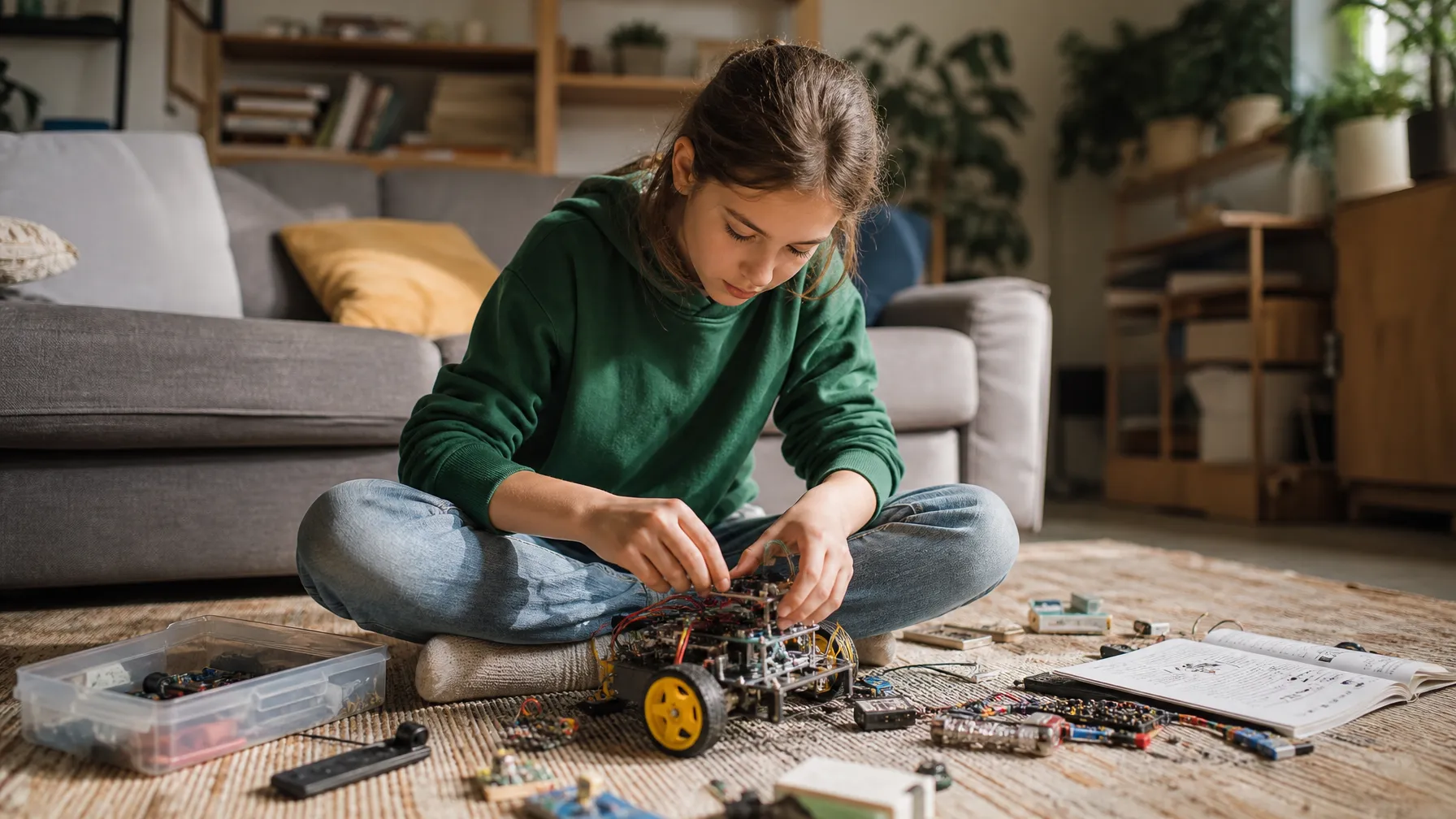
Hardware-focused: Kids build physical robots using kits or components. Great for tactile learners and kids who want to see their work move.
Software-focused: Kids program simulated or pre-built robots to complete challenges. Lower barrier to entry, no kit required.
Competitive prep: Structured around formats like FIRST Robotics, VEX, or FTC. Designed for older kids (10+) who want to compete. Highly motivating for the right kid — intense for others.
Project-based: Themed builds (underwater robots, Mars rovers, automated sorting machines). Great entry point for kids who need narrative context to stay engaged.
Browse robotics classes on Outschool →
$20 off your first class WITH promo code: blog
Build the Education your Kid Deserves
Discover thousands of live classes taught by expert teachers, across academics and enrichment.
Browse classesWhat kids actually learn
Beyond the mechanics, robotics builds skills that transfer across nearly everything else kids will do:
- Systems thinking: How parts interact. What breaks when one thing changes.
- Debugging mindset: How to locate a problem, form a hypothesis, test a fix.
- Persistence: Robotics doesn't work the first time. Kids learn to iterate without giving up.
- Applied math and physics: Forces, ratios, geometry — in context, not in isolation.
These aren't soft skills. They're foundational to engineering, product design, scientific research, and almost any technical field.
How to start without buying expensive equipment
You don't need a $300 kit to test whether your kid is interested.
Start with a software-based intro class. Simulation-based robotics costs nothing extra and gives you a clear read on whether your kid connects with the subject before you invest in hardware.
If they love it, most good robotics teachers will tell you exactly which kit to buy for the next level — so you're not guessing.
Frequently asked questions
Does my kid need coding experience first?
Not for beginner classes. Many robotics intro classes teach the coding concepts alongside the building. Some kids find it easier to learn coding through robotics than through a traditional coding class.
Is robotics more for boys?
No. Enrollment across gender lines is broad, and the evidence on girls' engagement with robotics is strong when classes are framed around building and problem-solving rather than competition. Look for project-based formats if you're introducing it to a child who isn't already self-identified as a "tech kid."
What if we can't afford the equipment?
Start software-side. Plenty of excellent robotics classes use free simulation tools. Once your kid is invested, the equipment conversation is much easier to have.
Try a class and see what happens. Browse robotics classes for your kid →


.svg)
.svg)