Third grade marks a turning point, where science transforms from simple observations into genuine investigation. At this stage, young learners begin asking "why" and "how" with the persistence of true scientists. This is the year when abstract concepts like forces, life cycles, and weather patterns become tangible through hands-on exploration, setting the foundation for critical thinking skills that extend far beyond the science classroom.
Creating a meaningful third grade science curriculum at home doesn't need a fancy lab or expensive equipment. It requires intention, creativity, and the right resources to guide your journey. Outschool's curated science classes and homeschool resources provide additional support and expert guidance to complement your curriculum.
What topics are covered in a third grade science curriculum?
Third grade science is all about curiosity: helping your child ask questions, explore big ideas, and discover how the world works. At this age, kids begin connecting what they see every day to scientific concepts like motion, weather, and life cycles. With hands-on activities and simple investigations, your child learns by doing, building both confidence and a genuine love for discovery.
Here's what your third grader will explore in science this year:
- Life science: Study of living organisms, including life cycles, ecosystems, and adaptations.
- Physical science: Exploration of forces, motion, simple machines, and magnetism through experiments.
- Earth and space science: Understanding weather patterns, climate, rock formation, and the solar system.
- Scientific inquiry: Skills for asking questions, making observations, and drawing conclusions from data.
How to make third grade science lessons hands-on and engaging
Your home becomes the perfect science laboratory with both creativity and everyday materials, where interactive learning naturally supports visual, kinesthetic, and neurodiverse learners alike. Experiential activities significantly improve student engagement, conceptual understanding, and problem-solving skills across all learning styles.
- Start with simple kitchen experiments using everyday materials, like baking soda volcanoes for chemical reactions and floating tests to explore density.
- Transform your outdoor space into a living lab with nature walks, where kids collect leaves, observe weather patterns, and discover simple machines in play.
- Incorporate storytelling and games into science by creating scenarios about forces, using story dice prompts, or turning data collection into fun challenges.
- Encourage student-led investigations that build confidence by allowing kids to design experiments, like testing insulators or exploring friction with toy cars.
- Use creative documentation to cater to different learning styles, such as science journals, stop-motion videos of plant growth, or 3D models of concepts like the water cycle.
- Connect with expert-led experiences through online learning classes, explore science experiments, or browse curriculum options for homeschoolers.
Best resources for teaching third grade science at home
Finding the best resources for teaching third grade science at home becomes simple when you know where to look. The right combination of digital platforms, hands-on materials, and community connections can transform your kitchen table into a vibrant learning laboratory.
- Online classes: Live and self-paced options that fit your schedule; great for structured, NGSS-aligned lessons and expert support.
- Public library: Free books, databases, maker spaces, and often STEM kits or events for kids.
- Interactive simulations: Click-and-try science models that make abstract ideas (motion, magnets, energy) feel concrete for third graders.
- Science centers & museums: Hands-on exhibits and workshops that turn big ideas into memorable, real-world experiences.
- State standards & guides: Find your state's guidelines to set clear learning goals, then adapt activities to your child's pace and interests.
- Printable activities & kid-friendly explainers: Ready-to-use activities, articles, and visuals to reinforce topics like weather, ecosystems, and energy.
Third grade science curriculum: Frequently asked questions (FAQs)
These questions come up in nearly every homeschooling family's science journey, and the good news is that each one has a flexible solution. If you're overwhelmed by the thought of logistics, scheduling, and necessary accommodations, remember that your instincts as a parent, combined with your child's natural curiosity, create the perfect foundation for science learning success.
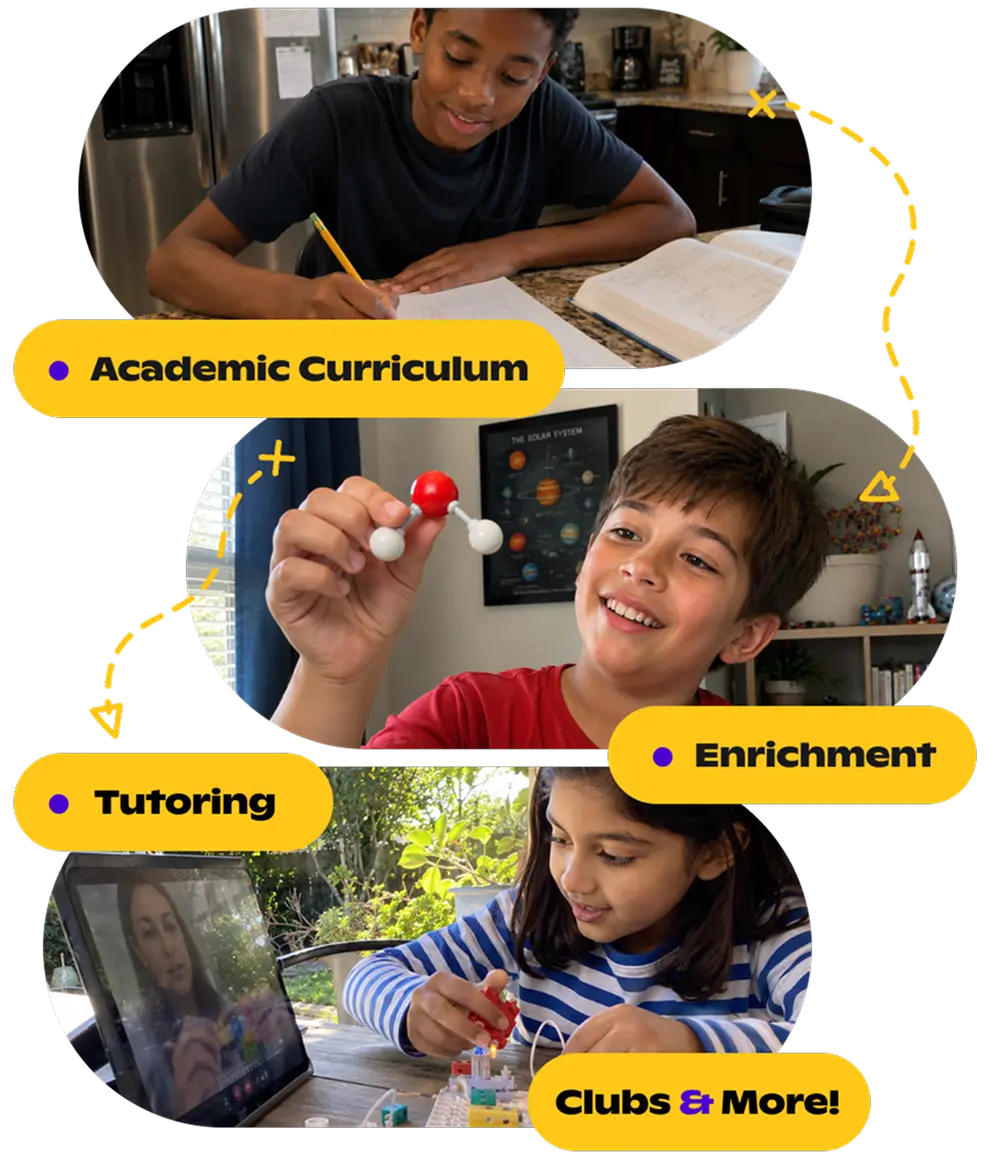
$20 off your first class WITH promo code: blog
Build the Education your Kid Deserves
Discover thousands of live classes taught by expert teachers, across academics and enrichment.
Browse classesHow do I assess my child's progress in science at home?
Assessing progress at home can be a straightforward process. Notice how your child explains what they’ve learned or applies ideas in everyday life. Let them show understanding creatively, through drawings, videos, or even homemade science storybooks. Try using a traffic-light system where your child marks lessons as green (got it!), yellow (some questions), or red (need help).
What if my child has unique learning needs or interests, such as neurodiversity or different learning styles?
Every child experiences science differently, and that’s what makes learning exciting. For neurodiverse learners, flexibility and creativity are key. Studies show that hands-on activities, flexible pacing, and strengths-based approaches help neurodiverse kids thrive in STEM.
Offer options for how your child shows what they know, through building, drawing, storytelling, or movement. You can also explore resources for neurodiverse students designed to celebrate different ways of thinking.
How much time should we spend on science each week?
There is no one-size-fits-all when it comes to homeschool hours. Every family finds their own perfect rhythm. The beauty of homeschooling lies in adapting to your child's natural rhythms and interests. Some weeks might involve daily 20-minute nature observations, while others feature longer investigation projects.
Can I integrate science with other subjects, like math or art?
Absolutely. Integration reflects how we naturally utilize multiple skills in real life to solve problems, making learning more engaging and efficient. Consider exploring unit studies approaches that weave science themes through multiple subjects while maintaining clear learning goals for each area.
What if my child struggles with or dislikes science?
Science resistance often stems from past experiences or the misconception that science is only for certain types of learners, but every child is naturally curious about their world. You can always start with your child's existing interests, whether that's animals, cooking, building, or even video games, and find the science connections within those passions.
How do I know if my curriculum aligns with educational standards?
Most state education departments provide free access to their science standards online, and you can use these as a general guide while maintaining the flexibility to adapt to your child's interests and pace. Focus on the big ideas rather than checking off every specific requirement. Remember that homeschooling allows you to go deeper into topics that fascinate your child while ensuring they develop strong scientific thinking skills along the way.
Fuel discovery with a thoughtful third grade science curriculum
Your child's natural curiosity deserves to flourish through hands-on experiments, real-world connections, and engaging discussions that bring scientific concepts to life. Whether your learner thrives in interactive group settings, prefers self-paced exploration, or needs accommodations for diverse learning styles, the path to scientific discovery should feel joyful and accessible.
Outschool offers flexible homeschool science classes that combine expert instruction with the freedom to learn at your family’s pace. From NGSS-aligned lessons to creative experiments led by passionate teachers, every class is designed to keep learners engaged and inspired. Whether your child loves group learning or prefers one-on-one support, you’ll find options that fit your schedule and goals.



.svg)
.svg)