At a glance
- What it is: A curriculum that uses the outdoors as a primary learning environment, weaving academics into nature observation, hands-on projects, and seasonal rhythms.
- Age range: Works for preschool through high school, though most packaged programs target PreK through fifth grade.
- Cost range: Free (Ambleside Online) to ~$600/year (Oak Meadow full-grade package). Most programs fall between $15 and $100 per subject.
- Best for: Families whose kids thrive with movement, sensory input, and real-world context rather than extended desk time.
What makes a curriculum "nature-based"
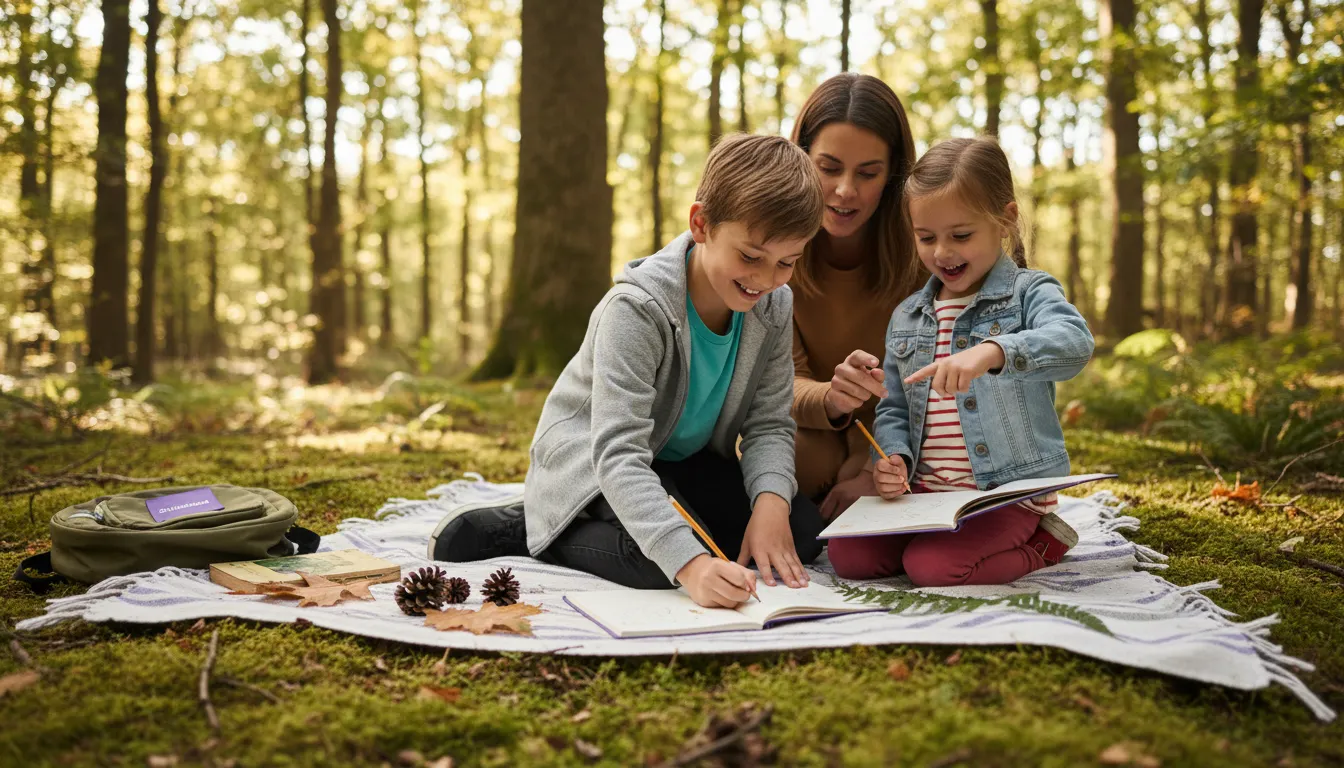
A nature-based curriculum treats the outdoors as a classroom, not just a recess break. Math might involve measuring rainfall or mapping a trail. Science grows out of observing insects, soil, or seasonal changes firsthand. Writing happens in a nature journal after a walk through the woods.
The common thread across every program in this category is that learning connects to the natural world in a structured, intentional way. Some programs are fully nature-integrated across every subject. Others focus on nature study as a standalone science spine. Either way, kids spend real time outside, and what they observe there becomes the material they read, write, and calculate about.
Research supports the approach. A 2019 study published in Frontiers in Psychology found that lessons taught in natural settings led to measurably better classroom engagement afterward, with teachers needing to redirect kids half as often following outdoor instruction [1].
Five approaches families blend
Most nature-based homeschoolers don't follow a single philosophy. They pick and combine elements from several traditions:
- Charlotte Mason nature study: Careful observation, nature journaling, sketching plants or insects, revisiting the same outdoor spot across seasons. Emphasizes attention and personal connection to the natural world.
- Forest school / wildschooling: Child-led, curiosity-driven learning outdoors in all weather. Building shelters, tracking animals, free exploration. Academic skills emerge through counting, storytelling, and mapping.
- Montessori-inspired: The environment itself is the teacher. Kids engage through their senses, with subjects overlapping rather than taught in isolation. Measuring garden beds for math, caring for plants for biology.
- Project-based outdoor learning: Extended, real-world projects that grow from a kid's interests. A water-quality study, a bird census, a community garden plan. Encourages persistence, research skills, and critical thinking.
- Place-based education: Learning centered around local community and geography. Neighborhood history, local ecosystems, visits to farms or conservation areas. Keeps learning rooted in where the family lives.
The programs below draw from one or more of these approaches. Understanding them helps you spot which curriculum will feel like the best fit for your family.
7 nature-based programs compared
1. Blossom and Root
Approach: Charlotte Mason and Waldorf-inspired, secular, creativity-driven
Grades: PreK through eighth grade (Early Years through Level 7+)
Cost: ~$35-70 per level (digital PDF); individual subjects also available
Format: Downloadable PDF curriculum with weekly lesson plans
Blossom and Root is one of the most popular nature-based curricula among secular homeschoolers. Each level integrates nature study, literature, science, art, and language arts around seasonal themes. Kids keep nature journals, read living books, and complete hands-on projects tied to the outdoors. The curriculum is designed for one level to span a full school year, and the pacing is gentle enough to adapt for multiple ages.
Watch for: Blossom and Root is literature-heavy, which works well for strong readers but can feel slow for kids who prefer building and doing over reading. It also doesn't include a standalone math program, so you'll need to pair it with a separate math curriculum.
Best for: Families who want a full, secular, nature-integrated curriculum with a gentle pace and beautiful book lists.
2. Oak Meadow
Approach: Waldorf-inspired, creative, nature-integrated
Grades: K through 12
Cost: ~$300-600 per grade for the full curriculum package; individual coursebooks ~$80-120
Format: Print-based coursebooks with optional enrollment in their accredited distance-learning school
Oak Meadow is one of the few nature-based curricula that spans all the way from kindergarten through high school. The early grades are heavily nature-focused, with lessons built around seasonal rhythms, outdoor exploration, storytelling, and handwork. Upper grades shift toward more structured academics but maintain a creative, project-based approach. For families drawn to Waldorf homeschooling, Oak Meadow provides a structured version of that philosophy.
Watch for: Oak Meadow is the most expensive option on this list, and the Waldorf pacing in early grades can feel too slow for kids who are ready for more academic rigor. The high school courses are solid but less nature-centric than the elementary levels.
Best for: Families who want a single, all-in-one curriculum from K through 12 with a Waldorf philosophy and the option for accredited enrollment.
3. Wild Learning (Wild Math and Wild Reading)
Approach: Nature-based, hands-on, single-subject
Grades: PreK through fifth grade
Cost: ~$30-45 per subject per year (digital)
Format: Downloadable PDF with outdoor lessons, hands-on activities, and nature connections
Wild Learning offers standalone math and reading curricula that teach core skills through outdoor activities and nature connections. Wild Math uses real-world measuring, counting, and pattern-finding in natural settings. Wild Reading uses nature as the context for phonics, decoding, and comprehension practice. Both are designed to be used alongside other curricula, not as a complete program.
Watch for: Wild Learning only covers math and reading through fifth grade, so you'll need other resources for science, history, and upper grades. The outdoor activities require access to outdoor space and decent weather, which can limit consistency in some climates.
Best for: Families who want to add a nature layer to their existing reading or math curriculum without committing to a full program swap.
4. Harbor and Sprout
Approach: Nature-based, gentle structure, research-based
Grades: PreK through Level 2 (ages 3-9)
Cost: ~$50 per subject (digital PDF); ~$129 per subject (print)
Format: Comprehensive core curriculum in math, language arts, handwriting, and literature
Harbor and Sprout is a newer curriculum that has built a strong following among families with younger kids. The lessons are immersive and beautifully designed, with nature woven into every subject. Math involves counting and sorting natural objects, language arts uses nature-themed stories and journaling, and seasonal themes connect all subjects throughout the year.
Watch for: Harbor and Sprout currently only goes through Level 2 (roughly second grade), so families will need to transition to a different curriculum for upper elementary. The print versions are high quality but significantly more expensive than the digital PDFs.
Best for: Families with preschool through early elementary kids who want a visually beautiful, open-and-go nature curriculum with strong structure.
5. Exploring Nature With Children
Approach: Charlotte Mason-style nature study
Grades: All ages (designed to be used family-style)
Cost: ~$15-19 (digital PDF)
Format: 48-week guided nature study with themed walks, book lists, poetry, art connections, and extension activities
Written by Lynn Seddon, Exploring Nature With Children is a complete year-long nature study curriculum organized by season. Each week includes a themed nature walk with detailed guidance, references to the Handbook of Nature Study, a curated book list, a poem, a related piece of art, and extension activities for kids. It's entirely self-contained, so parents don't need to hunt through multiple resources to plan a nature walk.
Watch for: This is a nature study spine, not a full curriculum. It covers science observation and some writing and art connections, but you'll still need separate math, language arts, and history programs. The book lists lean toward classic titles that may need library access.
Best for: Families who want a low-cost, Charlotte Mason-aligned nature study program to pair with whatever other curriculum they're already using.
6. Ambleside Online
Approach: Charlotte Mason, literature-rich, with weekly nature study built in
Grades: Year 0 (PreK) through Year 12
Cost: Free
Format: Online curriculum guide with weekly schedules, book lists, and detailed scope and sequence
Ambleside Online is a free, community-maintained Charlotte Mason curriculum that includes nature study as a core weekly component. Every year level includes scheduled nature walks, nature journaling, and outdoor observation alongside literature, history, science, and math. The curriculum relies heavily on living books and narration rather than textbooks and worksheets.
Watch for: Ambleside Online includes some hymns and Bible readings in its weekly schedules. Many secular families simply skip those portions, but it's worth knowing before you start. The curriculum also requires significant parent involvement in sourcing books (many are free online or available through the library, but the lists are long). There's no hand-holding: you get a schedule and book list, not step-by-step lesson plans.
Best for: Families who want a free, full Charlotte Mason curriculum with nature study woven in, and who are comfortable doing their own lesson planning from a detailed schedule.
7. Outschool
Approach: Live, teacher-led classes across nature science, outdoor STEM, nature journaling, and more
Grades: PreK through high school
Cost: Varies by class (most range from $10-25 per session)
Format: Live online small-group classes and 1:1 tutoring
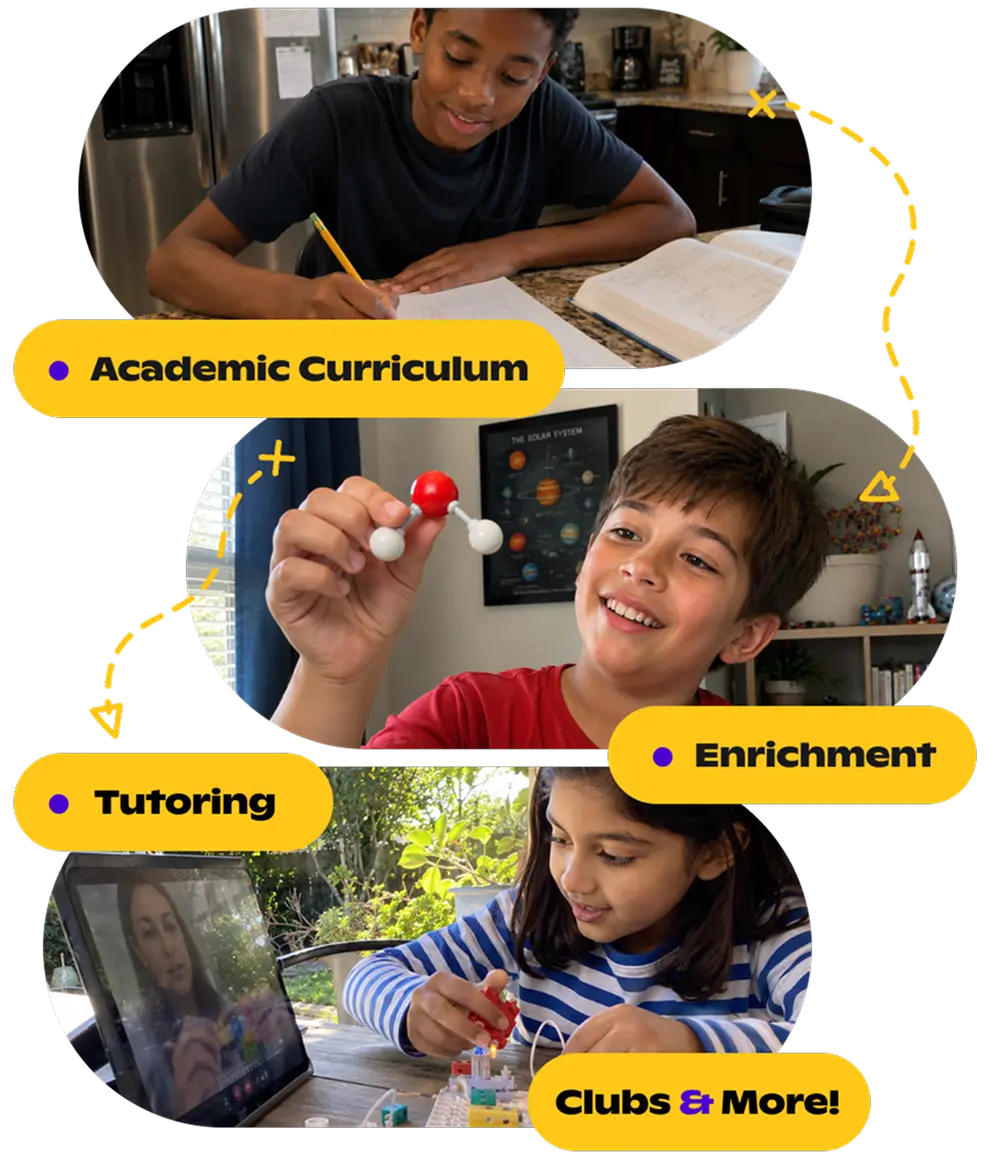
Outschool offers hundreds of live science classes, nature journaling workshops, and outdoor STEM sessions taught by vetted teachers. Kids can take a single class on bird identification, join an ongoing nature observation club, or work with a tutor on science fair projects. Because classes are live and interactive, kids get the social connection and teacher feedback that self-paced nature curricula can't provide.
Watch for: Outschool is a la carte, not a boxed curriculum. You'll choose individual classes rather than following a single scope and sequence. That flexibility is a strength for families who want to supplement, but it means more planning if you're building a full program from scratch.
Best for: Families who want live teacher support for nature and science topics, whether as a supplement to their print curriculum or as the science spine of their homeschool. Useful for subjects like biology, ecology, and earth science where teacher-guided discussion adds depth.
How to choose by age
The right nature-based program depends partly on where your kid is developmentally:
- Preschool and kindergarten (ages 3-6): Look for sensory-rich, play-based programs with minimal seat work. Harbor and Sprout's Little Sprouts and Kindergarten levels, Blossom and Root Early Years, and Ambleside Online Year 0 all fit here. At this age, nature study is the curriculum. Let kids dig, splash, collect, and sort.
- Early elementary (ages 6-9): Kids are ready for nature journaling, simple data collection, and structured outdoor projects alongside their reading and math. Blossom and Root Levels 1-3, Wild Math, Harbor and Sprout Level 1-2, and Exploring Nature With Children all work well.
- Upper elementary (ages 9-12): Nature study can connect to more rigorous science, geography, and research skills. Blossom and Root Levels 4-6, Oak Meadow's upper elementary, and Ambleside Online Years 4-6 provide that bridge. Live science classes on Outschool can supplement with labs and discussion.
- Middle and high school (ages 12+): Oak Meadow is the only boxed nature-based curriculum that extends through high school. Ambleside Online goes through Year 12. For other families, this is often where Outschool's live biology, earth science, and environmental science classes fill the gap alongside a Charlotte Mason or Montessori framework.
Planning a nature-based homeschool week
A nature-based week doesn't need to be complicated. Most families follow a rhythm like this:
- 2-3 mornings: Focused academics indoors (math, language arts, reading). Use your chosen curriculum's lesson plans.
- 2-3 afternoons: Outdoor time. Nature walks, journaling, specimen collection, garden work, or outdoor projects tied to your curriculum's current theme.
- 1 day: Field trip, co-op, or extended outdoor project. Visit a nature center, hike a new trail, or work on a longer-term project like a weather station or bird census.
The key is consistency over perfection. A 20-minute nature walk three times a week builds more learning than an ambitious Saturday field trip once a month. Many families find that starting with a simple nature journal routine, where kids sketch and write about one thing they noticed outside, creates a foundation everything else builds on.
Frequently asked questions
Can a nature-based curriculum meet state homeschool requirements?
Yes. Nature-based curricula cover the same core subjects (reading, writing, math, science, social studies) that state requirements expect. The delivery method is different, but the academic content is there. Check your state's specific homeschool requirements for any documentation or testing obligations.
What if we live in a city without much green space?
Nature-based learning works in urban environments. Parks, community gardens, window boxes, sidewalk cracks where weeds grow, pigeons, squirrels, cloud patterns, and weather tracking all count. The goal is observation and connection to the natural world, not wilderness access. Many urban homeschoolers combine local park time with online ecology classes for broader context.
Is nature-based homeschooling only for elementary-aged kids?
No. The approach works through high school, though it looks different at older ages. Younger kids explore and observe. Older kids conduct field research, analyze data, and connect observations to formal science concepts. Oak Meadow and Ambleside Online both extend through high school. Outschool offers live science classes for teens that include outdoor observation components.
Do I need to be outdoorsy myself to teach this way?
You don't need to be a naturalist. Programs like Exploring Nature With Children and Blossom and Root provide detailed guidance for each nature walk and outdoor activity. You're learning alongside your kid, and that's part of what makes the approach work. Start with 15 minutes outside with a notebook, and build from there.
Can I combine a nature-based curriculum with a more traditional one?
Absolutely, and most families do. A common approach is to use a traditional math or language arts program for core skills and layer in a nature-based science spine like Exploring Nature With Children or Outschool science classes. Wild Learning's single-subject programs are designed specifically for this kind of blending.
What about bad weather days?
Most nature-based curricula include indoor alternatives or extensions for each outdoor lesson. Some families adopt the forest school philosophy of "there's no bad weather, only bad clothing" and go outside in rain and snow (with appropriate gear). Others shift to indoor nature activities: reading living books, watching nature documentaries, working on nature journal entries from memory, or studying specimens collected on previous walks.
Can I use ESA or scholarship funds for nature-based curriculum?
In many states, yes. Education savings account (ESA) funds and scholarship programs can cover curriculum materials, online classes, and tutoring. Outschool classes are approved through multiple state ESA programs. Check your state's specific approved expense list, as rules vary.
Sources
[1] Kuo, M., Barnes, M., & Jordan, C. (2019). Do lessons in nature boost subsequent classroom engagement? Refueling students in flight. Frontiers in Psychology, 10, 2253. https://www.ncbi.nlm.nih.gov/pmc/articles/PMC6288296/


.svg)
.svg)