Every August, back-to-school supply lists start appearing — specific notebooks in specific colors, a particular brand of pencils, folders color-coded by subject. If you're homeschooling, none of that applies. You don't need to buy what a classroom of 30 kids needs, and you don't have to match anyone else's list.
But you do need some things. A well-stocked learning environment — one where your kid can sit down and work without you scrambling for supplies every day — makes a real difference in how smoothly your school year starts.
Here's what actually matters, what's optional, and what you can safely skip.
The non-negotiable basics
These are the supplies that almost every homeschool family uses, regardless of curriculum style or the age of their kids.
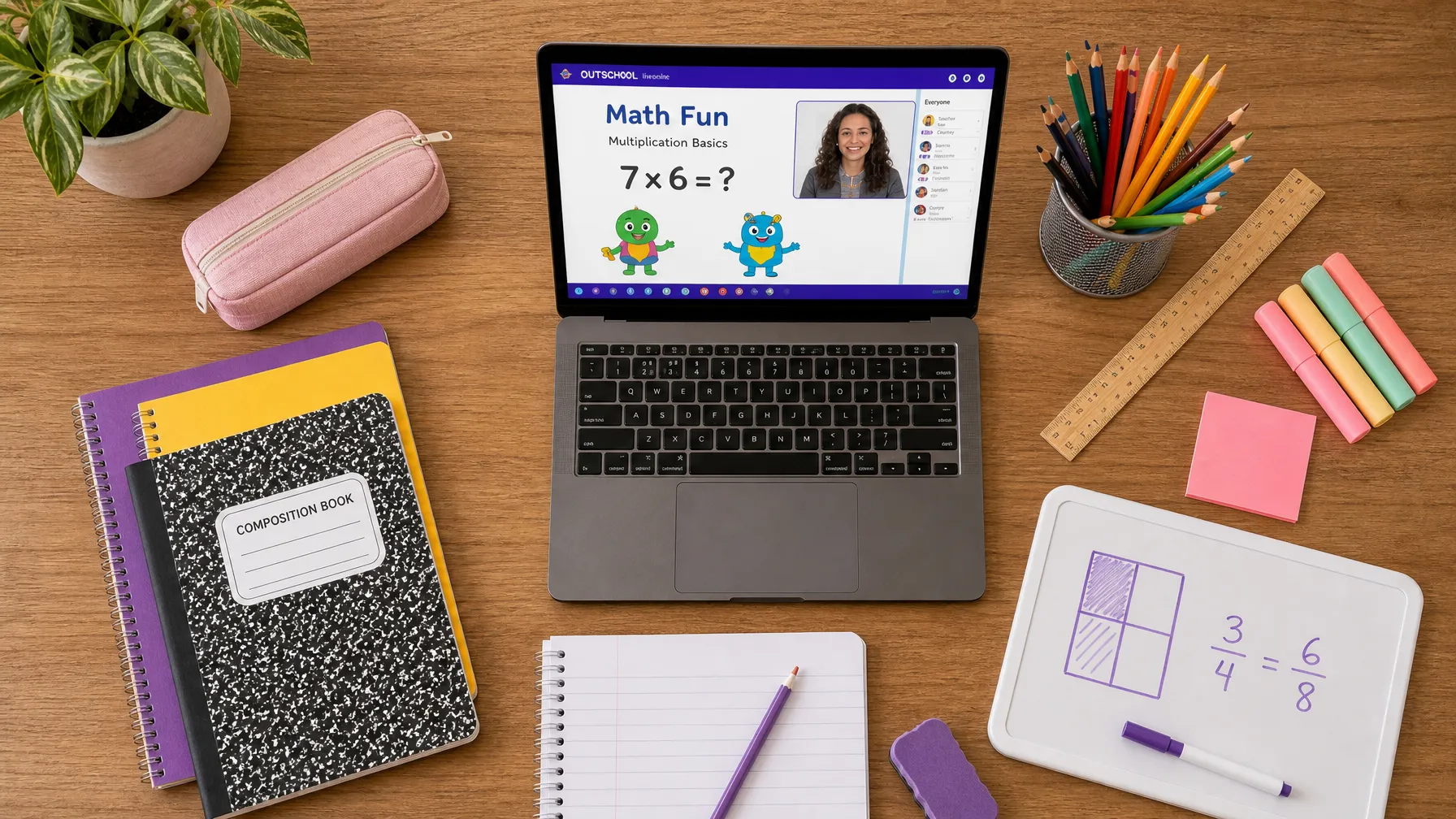
Paper and notebooks: A few wide-ruled composition notebooks or spiral notebooks for each child handle most writing and note-taking. Graph paper notebooks are worth having for math. Printer paper in bulk is genuinely useful if your curriculum uses printables.
Pencils, pens, and erasers: Mechanical pencils hold up better for regular writing than standard pencils for most kids over age 7. Colored pencils are used constantly for labeling diagrams, timelines, maps, and projects.
A dedicated binder or folder system: Even the most relaxed homeschool generates paper — completed work, reference sheets, notes. A simple system for organizing it keeps things from becoming chaos.
Dry-erase board or whiteboard: A portable whiteboard is one of the most-used items in many homeschool households. Math explanations, spelling practice, quick vocabulary drills, and drawing diagrams — it gets used daily in most families.
A good ruler, scissors, and tape: Projects, maps, and art happen constantly. Having dedicated school supplies that live in one spot saves more time than you'd expect.
Tech setup
For families using any online curriculum or classes, a solid tech setup matters:
- A reliable device for each kid doing online work. Sharing a device across multiple kids works in theory and creates friction in practice.
- Good headphones with a microphone. Essential for live online classes on Outschool or any video-based instruction. Over-ear headphones tend to hold up better than earbuds for younger kids.
- A stable internet connection. If your connection regularly drops or buffers during video calls, this is worth addressing before the school year starts.
- A printer. If you're using any curriculum that requires printed materials, a basic home printer saves trips to the office supply store on a weekly basis.
Subject-specific supplies
For math: Manipulatives matter more than most parents expect. Base-10 blocks, fraction tiles, a set of dice, and pattern blocks support mathematical understanding in ways that worksheets alone can't.
For science: A hand lens/magnifying glass, a set of measuring tools, and a basic chemistry kit (baking soda, vinegar, food coloring, litmus paper) cover the majority of elementary science experiments. Don't buy a lot of science supplies until you know your curriculum.
For writing and language arts: Grammar workbooks, a dedicated writing journal, and a physical dictionary or thesaurus are used regularly.
For history and geography: A pull-down map or laminated world map on the wall is used constantly. A blank timeline strip gives history a visual anchor across the year.

$20 off your first class WITH promo code: blog
Build the Education your Kid Deserves
Discover thousands of live classes taught by expert teachers, across academics and enrichment.
Browse classesWhat you probably don't need
Separate folders in five colors. Unless your curriculum specifically uses a color-coding system, color-coded folders create organization overhead without much benefit.
A formal desk for each child. Many families start with elaborate desk setups and end up doing everything at the kitchen table. Buy furniture after you've been doing this long enough to know what you need.
A full curriculum for every subject before you start. Buying 6 subjects of curriculum in July before you know how your kid learns, what approach works, and how much time you have is one of the most common first-year mistakes. Start with math and language arts, add everything else gradually.
A lot of educational games and toys. A few well-chosen games (Blokus, Zingo, Bananagrams, a good deck of cards) are genuinely useful. A shelf full of untouched "educational" toys is not.
Laminator, binding machine, teacher supply store haul. Tempting when you're feeling enthusiastic in August. Almost none of it gets used.
Setting up your learning space
You don't need a dedicated classroom. What you need is a space where your kid can work without too many distractions, supplies are accessible without asking for help, and there's enough surface area for the day's materials.
Most families use the kitchen table as the primary work area and add a bookshelf or rolling cart for supplies and books. Natural light helps. A comfortable chair at the right height for your kid matters more than the table itself.
For online classes and video calls, a spot with a neutral background, good lighting (facing a window rather than with a window behind them), and minimal background noise makes a significant difference in the quality of your kid's experience.
The supplies that change everything
If you're going to splurge on anything, these are the things homeschool parents most often say made the biggest difference:
- A good read-aloud chair or couch spot — where your family gathers for shared reading
- A library card (free, infinite books, and most libraries have downloadable audiobooks and ebooks now)
- One or two excellent online courses — live instruction from a teacher your kid connects with, covering a subject you want outside support on
For subject-specific curriculum browsing, check out online homeschool classes on Outschool by grade and subject. The class pages for math, reading, writing, and science show what's available without you needing to commit to anything.
The best-equipped homeschool is the one that functions. Start simple, add what you actually need, and skip the rest.


.svg)
.svg)