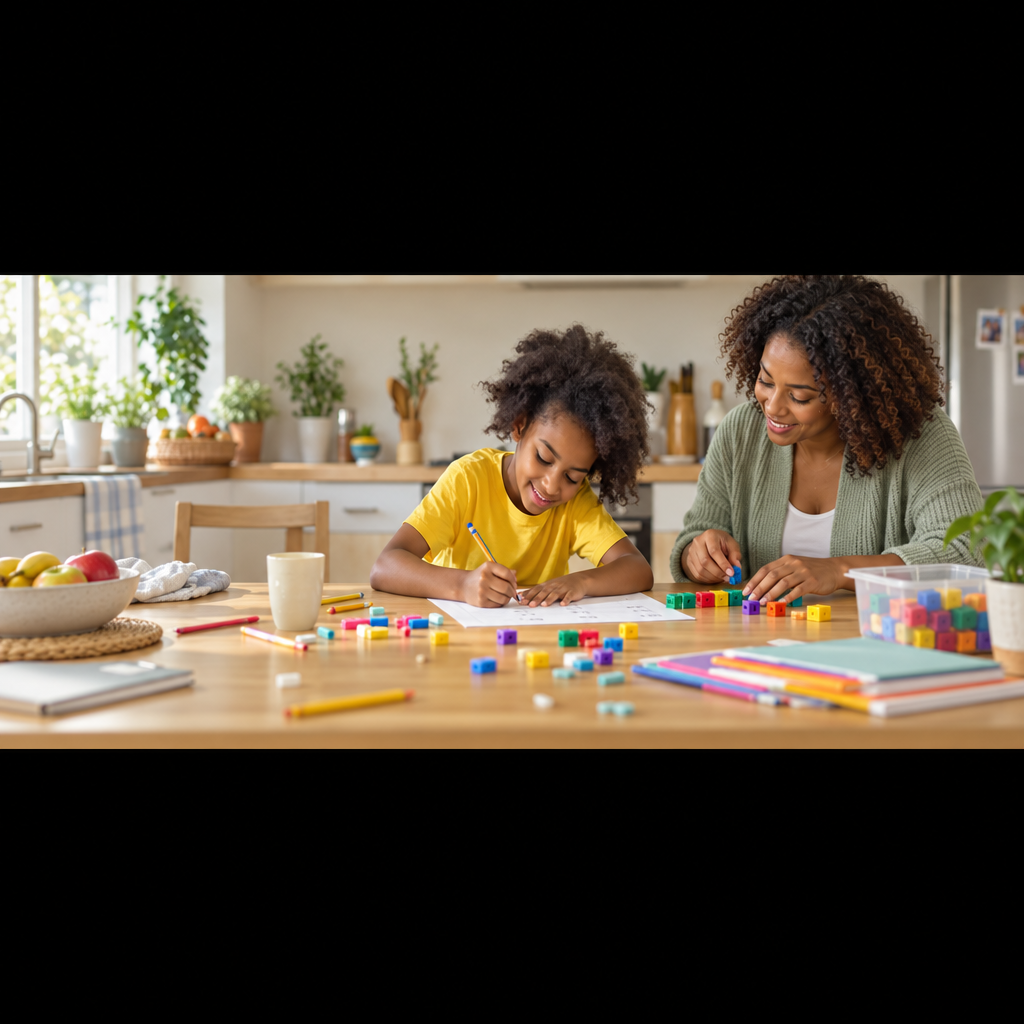
Most families find kindergarten to be one of the most joyful years in their homeschool journey — and one of the most uncertain. There are big questions about what to teach, how much structure to add, and whether your five-year-old is "on track." The honest answer is that kindergarten is more flexible than it often feels, and most children this age learn best through a blend of short focused lessons, hands-on play, and plenty of time to simply explore.
One of the greatest advantages of homeschooling at this age is that you can follow your child's energy — stopping when they're done, pushing further when they're engaged. That responsiveness is worth building into your approach from the start.
What do you actually teach in kindergarten?
The core of a kindergarten curriculum covers reading and phonics, math, writing and handwriting, science, social studies, and social-emotional learning. You don't need a subject for every hour of the day. Most kindergartners do best with short, focused sessions — 10 to 20 minutes each — with plenty of time for play, exploration, and creative work woven throughout.
Reading and phonics
This is the heart of kindergarten. Your job is to build the foundation: letter recognition, phonemic awareness (the ability to hear individual sounds in words), and early phonics. A structured phonics program that explicitly teaches letter-sound relationships in a specific, cumulative order makes the biggest difference here. Secular options popular in the homeschool community include All About Reading, Logic of English, and the Barton Reading and Spelling System — all teach phonics in a carefully sequenced order rather than randomly. The goal is building a foundation strong enough that your child can decode new words independently.
Math
Kindergarten math is about building number sense: counting, comparing quantities, recognizing shapes, understanding patterns, and beginning addition and subtraction with small numbers. Hands-on materials — blocks, counting bears, a simple number line — work better at this age than worksheets. Secular programs with strong homeschool track records include Singapore Math, Math-U-See, and RightStart, all of which use physical manipulatives and prioritize understanding over memorization. See our elementary homeschool math curriculum guide for a full breakdown of how to choose and sequence a math program.
Writing and handwriting
At kindergarten, writing means two things: learning to form letters correctly and expressing ideas on paper, even if it's a sentence with invented spelling. Both matter. Handwriting Without Tears is popular with homeschool families because it uses a multi-sensory approach designed specifically for the fine motor stage most five-year-olds are in — tactile, low-pressure, and genuinely engaging. Don't rush composition: dictating a sentence and watching you write it is a completely valid writing activity at this age. For a broader look at teaching writing at this level, see our elementary homeschool writing curriculum guide.
Science and social studies
Kindergarten science is mostly nature study and hands-on observation. A nature journal, a few simple experiments, and regular time outdoors covers the bases. If your child is obsessed with dinosaurs, that's your science curriculum. If they love building, that's math and engineering. Social studies at this level is about the immediate world — family, community helpers, maps, and how things work around them.
Social-emotional learning
SEL belongs alongside academic subjects, not after them. Helping kindergartners name their emotions, navigate disagreement, and build the self-regulation to work through something challenging is foundational work at this age. Many Outschool classes weave SEL into their structure intentionally — it's a natural part of how good live instruction works with this age group.
Art and music
Art and music aren't extras. For kindergartners, they develop fine motor skills, creativity, and the kind of sustained focus that carries into academic work. Build them into your regular week and weave them into other subjects wherever you can — visual art reinforces reading comprehension, and movement activities support math pattern recognition.
How much time does kindergarten homeschool take?
Most kindergartners do well with 1 to 2 hours of structured learning per day — spread out, not consecutive. A 20-minute phonics session, a 15-minute math activity, and some time for a read-aloud and a project is a full kindergarten day. Breaks between activities matter: five-year-olds process better when they have movement and downtime between focused sessions.
The rest of the day is learning too. Play is how kindergartners build language, spatial reasoning, social skills, and the ability to focus. Following your child's energy — stopping when they're done, pushing further when they're engaged — is one of the real advantages of homeschooling at this age.
Choosing a curriculum approach for kindergarten
There's no single right curriculum. Most families land somewhere in one of these approaches:
All-in-one curriculum packages
Complete curriculum packages bundle reading, science, social studies, and read-alouds together around a theme or time period. They take planning off your plate and work well for families who want clear structure. The tradeoff is that not every component will fit every child. When comparing options, check whether the curriculum is secular — some of the most widely marketed packages have religious content embedded throughout, which may or may not align with your family's approach.
Subject-by-subject picks
Some families prefer to choose the best program for each subject separately — a phonics program they love, a math curriculum that clicks, a science kit for hands-on experiments. This takes more upfront coordination but gives you flexibility to swap out what isn't working without replacing everything.
Play-based and interest-led
Families who lean toward unschooling or a play-based philosophy often skip packaged curriculum entirely, relying on read-alouds, nature study, games, and following their child's curiosity. This works beautifully for many kindergartners — especially kids who resist sitting still.
Hybrid: structured core plus live classes
Many families use a lean at-home curriculum for core subjects and fill in the rest with live online classes through Outschool. This works particularly well for subjects where a parent doesn't feel confident, or where a child wants more social interaction. Browse kindergarten reading classes and kindergarten math classes to see what's available.
How Outschool fits into your kindergarten year
Even the most well-planned kindergarten curriculum has gaps. Maybe you're not confident teaching phonics. Maybe your kindergartner wants more interaction with other kids. Maybe they're ahead in math and need something more challenging — or behind in reading and need extra support.
Outschool's live, small-group classes are a natural fit alongside whatever you're doing at home — not a replacement for it, but an extension. Wild and Unstructured Learning runs classes rooted in the idea that kids learn best when they're following their own curiosity. For kindergartners who shut down with too much structure, this kind of environment can be what keeps them engaged and coming back. Browse kindergarten reading classes and kindergarten math classes to find options that match how your family learns.
Building a kindergarten routine that actually works
Structure matters at this age — but flexibility matters more. A loose daily rhythm tends to work better than a rigid schedule, especially in the first weeks while everyone figures out what works.
A simple starting point:
- Morning: Phonics or reading (20–25 minutes)
- Mid-morning: Math (15–20 minutes)
- Late morning: Read-aloud, then free play or outside time
- Afternoon: Art, science, Outschool class, or a project based on what your kid is into
Adjust as you go. Some days will be shorter. Some days your kindergartner will be on a roll and you'll keep going. That responsiveness — being able to stop when they're done and push further when they're engaged — is one of the biggest advantages of homeschooling at this age.
Browse kindergarten reading classes and kindergarten math classes on Outschool to find something that fits where your kid is right now.


.svg)
.svg)