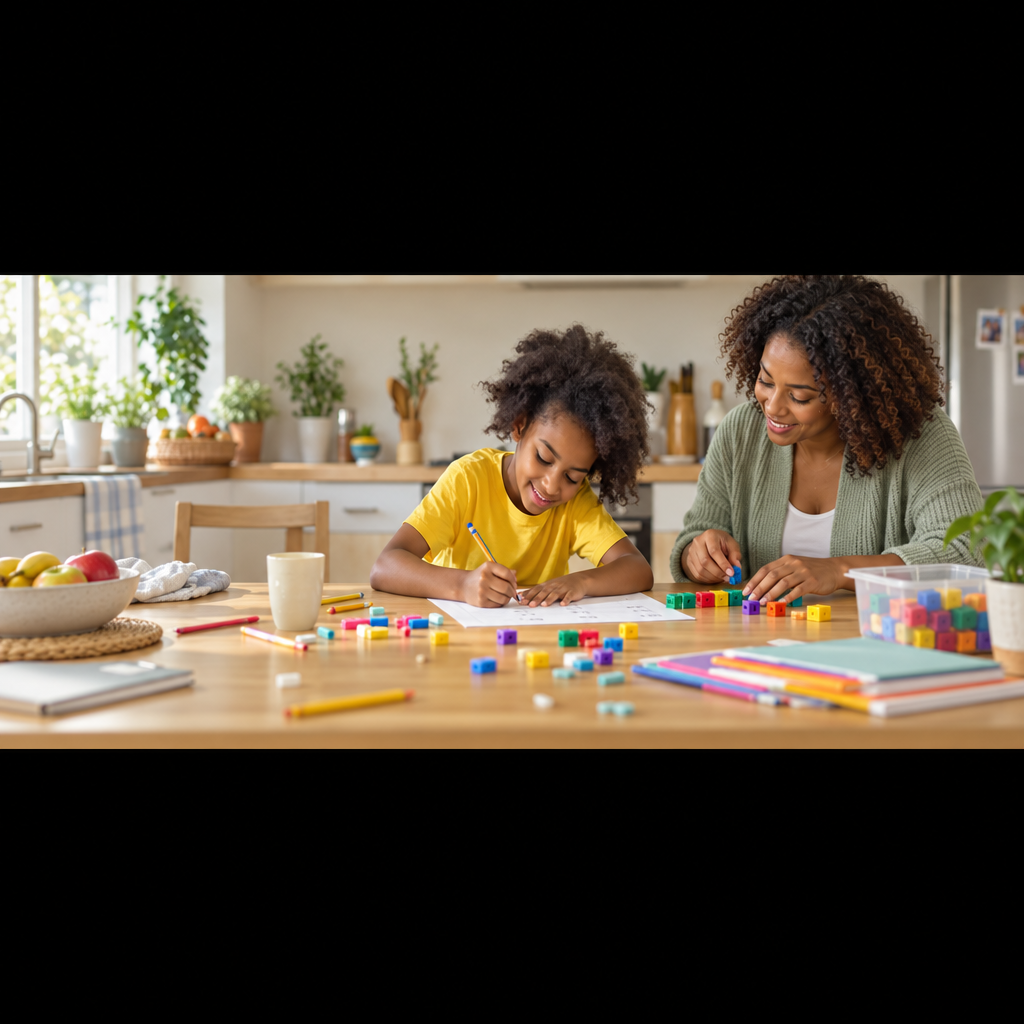
Learning Spanish is about so much more than just learning vocabulary and grammar. It's about opening doors to new people and places and learning to explore new worlds through language. When children learn another language, they gain access to communities beyond their own backyard. Through language, their eyes open to the world in a new way, which can connect them to countries, cultures, and people who they may not otherwise know.
Many homeschool parents want to offer that gift to their child, but are unsure where to begin. They wonder about lesson plans, may doubt their own Spanish-speaking or teaching abilities, or have questions about what age to start teaching another language.
Language learning doesn't need to be an academic burden. A thoughtful homeschool Spanish curriculum will bring clarity and structure to your lessons. This article explains how to choose the right program for you, how to find the requirements of your state, and how to create a consistent plan that works for your family. Use the ideas below and watch your child grow into a confident, capable, and curious language student.
What Is a Homeschool Spanish Curriculum?
A homeschool Spanish curriculum provides a framework for your child to understand, speak, read, and eventually write in Spanish. A strong Spanish program will focus on communication, comprehension, and cultural connection. It will not simply be memorizing lists of words. Children will learn how Spanish works, the patterns, rules, and real-life usage.
In the early years, Spanish learning may include songs, stories, and simple conversations. As children mature, lessons expand to include grammar, reading, writing, and cultural studies. A well-designed curriculum provides structure while still leaving room for curiosity and personal interests.
What Spanish instruction can include
Effective Spanish instruction will allow children to see, hear, and utilize the language often. This typically includes listening activities, speaking practice, role-playing, and language games.
Research shows that language learners benefit most from regular exposure to meaningful communication rather than isolated drills. At home, this might look like listening to Spanish songs, watching short videos of conversations, repeating phrases, or practicing conversation through role play with family members or friends.
Children will begin to learn grammar naturally through context. They notice patterns and sentence structure, which builds long-term understanding.
Homeschool Spanish instruction vs. in-school Spanish instruction
Homeschool Spanish instruction differs from in-school instruction because it can be more personalized and flexible. At home, families can take their time, focus on a topic or location that sparks their interest, and move at a more personalized pace.
Your child might spend a week learning how to greet a friend and use those phrases during play or out in the world. The following week might focus on ordering food and reading a menu, and they practice while they cook a Mexican meal. This flexibility allows language to grow gradually over time, making it feel like a life skill rather than a separate subject.
Are Homeschoolers Required to Complete Foreign Language or Spanish Credits?
Your homeschool requirements will depend on where you live and your child's grade level. Each state sets its own homeschool guidelines, and some include foreign language as part of graduation requirements. Other states leave the choice up to parents.
It is essential to review the laws in your state to understand what applies to your family. High school students who plan to attend college are often expected to earn one or two foreign language credits as part of their transcript.
Even when Spanish is not formally required, many families choose to include it because of the long-term benefits. Research shows that learning a second language supports cognitive flexibility, memory, and communication skills.
Types of Homeschool Spanish Curricula
Spanish instruction will look different in every home. Some families prefer formal lessons, while others lean into learning through music, conversation, and games. Many families will blend a few common approaches into a program that works for them, which is one of the many benefits of learning a new language as a homeschooler.
Immersion-based programs
These programs focus on surrounding your child with the spoken word. Children learn through listening and speaking, much as they did when learning their first language. With immersion-based programs, Spanish becomes part of daily life.
Families may label household items, listen to Spanish music, and practice greetings while running errands. This approach works well for younger learners and families who want learning Spanish to feel natural rather than academic. This is an ideal choice for a family that can visit a Spanish-speaking country and live the language experience firsthand.
Grammar-focused programs
A grammar-centered curriculum emphasizes sentence structure, verb conjugation, and written exercises. These programs are often used for middle or high school students who need to improve their reading and writing skills.
Online and live class programs
Live online classes allow students to interact and communicate with fluent teachers and peers. These programs often include conversational practice, listening activities, and guided instruction. These programs can be ideal for parents who do not feel confident teaching Spanish on their own.
Book-based curricula
Book-based programs provide step-by-step lessons, reading passages, and exercises as they guide you through the learning. These programs work well for families who appreciate a clear structure and predictable routine.
Topics Covered in Homeschool Spanish Curricula
Spanish grows in stages. Early experiences focus on listening and speaking, and over time, children begin to read, write, and fully understand the language and how it works. A quality homeschool program will support the natural progression over time while leaving room for curiosity and cultural exploration.
For preschoolers
For preschoolers, learning Spanish may include play or sensory exploration. Children can move to the music, sing songs, and learn to speak simple phrases.
The goal is not mastery but comfort in both hearing and using the language. A preschooler might learn colors by naming toys or practice greetings during pretend play.
For elementary school students
Elementary learners begin connecting spoken words with printed text. They learn basic vocabulary, simple sentences, and common phrases.
This may look like reading a short story together after lunch or labeling household items in Spanish.
For middle school students
Middle school students begin to understand grammar. They learn verb tenses, sentence structure, and expanded vocabulary through reading and conversation.
Cultural studies become more meaningful, and enrichment activities may explore traditions, holidays, and geography of Spanish-speaking countries.
As your homeschooler's skills grow, our 7th grade homeschool Spanish curriculum guide covers what to expect as grammar and cultural studies deepen.
For high school students
High school Spanish focuses on communication, accuracy, and cultural literacy. Students read longer texts, write paragraphs, and hold extended conversations.
Many will begin working toward foreign language credits and may keep a portfolio of written work, recordings, and projects to document learning.
What You Should Look for in a Homeschool Spanish Curriculum
Learning a new language works best when the materials are simple, and the schedule is consistent. Students develop stronger long-term language skills when instruction focuses on meaningful communication, cultural understanding, and gradual skill-building rather than on memorization alone. Keeping that in mind, the right curriculum should fit naturally into your day and help build your child's confidence and fundamental language skills.
Real communication
A strong homeschool Spanish curriculum gives your child frequent opportunities to speak, hear, and use Spanish in meaningful ways. Programs that focus solely on memorizing vocabulary lists or filling in worksheets will rarely lead to lasting language skills. The goal is for your child to eventually express ideas in Spanish.
Layered skill building
Good programs grow with your child. Picture a ladder of learning that begins with listening and ends with complete language fluency. The step-by-step approach will prevent frustration and allow skills to develop over time.
Cultural connection
Spanish is a living language, tied to real people, places, and traditions. The best curricula will include stories, geography, and cultural richness. Connect the learning to real-world experiences for a deeper, more personal connection.
How Spanish Can Fit Into Your Homeschool Day
Many homeschoolers find that the most meaningful language learning happens when it becomes part of everyday life rather than being an arbitrary assignment in a lesson block.
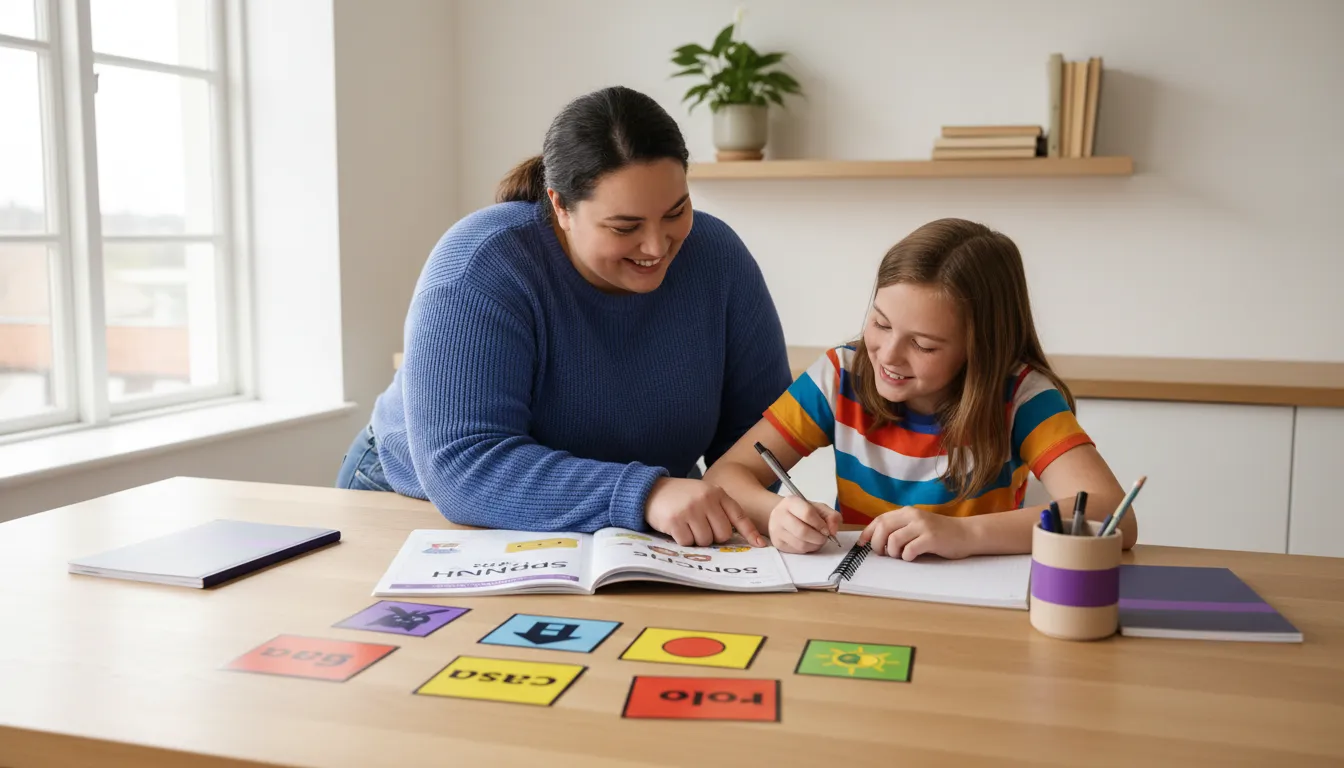
A morning routine might include greeting each other in Spanish, singing a short song, or listening to a Spanish story during breakfast. During school time, a student might practice vocabulary with visual cards or watch a short video on South American culture. In the afternoon, parents could include Spanish in pretend play, cooking, or outings.
Incorporate short, consistent practices. Ten minutes of focused listening, speaking, or reading a few days a week can lead to steady progress over time.
How to Create a Homeschool Spanish Curriculum
You do not need to be fluent in Spanish to include it in your homeschool. Follow the steps below to create a simple and effective program.
Step one: Choose your focus
Decide what language learning will look like in your home. Some families focus on speaking and listening first, while others want a balance of conversation and reading. Choose one primary goal to start with, such as everyday phrases, daily-life vocabulary, or simple conversations.
Step two: Create a listening routine
Regular exposure to spoken Spanish will build comprehension. Create playlists of songs, stories, or conversations and listen during car rides or quiet time. Frequent, meaningful exposure supports stronger language development.
Step three: Incorporate speaking opportunities
Try incorporating Spanish words in a fun, low-pressure way. Practice greetings, role-play ordering food, or play simple question-and-answer games. Speaking regularly helps children build confidence and comfort with the language.
Step four: Keep records and reflect
Keep samples of writing, recordings of spoken practice, or simple notes about what your child has learned. Keeping clear records helps you see growth over time.
Popular Homeschool Spanish Curricula
Many families will blend home learning with outside instruction for extra support and structure. These resources fit naturally into a homeschool rhythm and will increase communication skills and comprehension.
Outschool's online classical curricula and classes
Outschool offers a wide range of small-group Spanish classes taught by experienced educators. Families can explore courses for children from preschool through high school. Many classes emphasize speaking and listening alongside reading and writing, helping students use Spanish as a communication tool. Outschool also offers one-on-one tutoring for learners who benefit from a slower pace, extra practice, or targeted support.
Museum and public learning resources
Many museums and cultural institutions offer free and low-cost materials that can enrich your Spanish study. Public libraries also provide Spanish children's books, audiobooks, music, and language apps that can easily become part of the weekly routine.
Frequently Asked Questions: Homeschool Spanish Curricula
When's the best age to start teaching Spanish at home?
Children can begin hearing and using Spanish at any age. Early exposure often supports stronger pronunciation and comprehension, but it is never too late to start.
Do you have to be fluent in Spanish to teach it at home?
No. Many families successfully guide their children's Spanish learning with audio programs, live classes, and videos. Learning alongside your child can model curiosity and persistence, while outside instructors and resources can provide accurate language input.
A World of Possibilities
Learning Spanish is more than a life milestone; it is a way to connect children with their neighbors, explore cultures, and understand the world outside of themselves. Language learning builds empathy while strengthening memory and problem-solving skills. When you make Spanish part of your homeschool, you are giving your child a powerful way to connect with people, places, and opportunities.


.svg)
.svg)