How to start homeschooling in California
California gives families genuine flexibility to shape their child's education. The state recognizes five legal ways to homeschool, and the path most families follow starts with a few clear steps:
- Choose your legal option. Decide among a home-based private school, a private school satellite program (PSP), a credentialed private tutor, a public school independent study program, or a non-classroom-based (NCB) public charter school.
- File or enroll. If you're running a home-based private school, file the Private School Affidavit (PSA) with the California Department of Education during the filing window. If you choose a PSP, charter, or independent study program, complete their enrollment process instead.
- Plan your subjects. Cover the core subjects California expects: English, math, science, social studies, health, fine arts, and physical education.
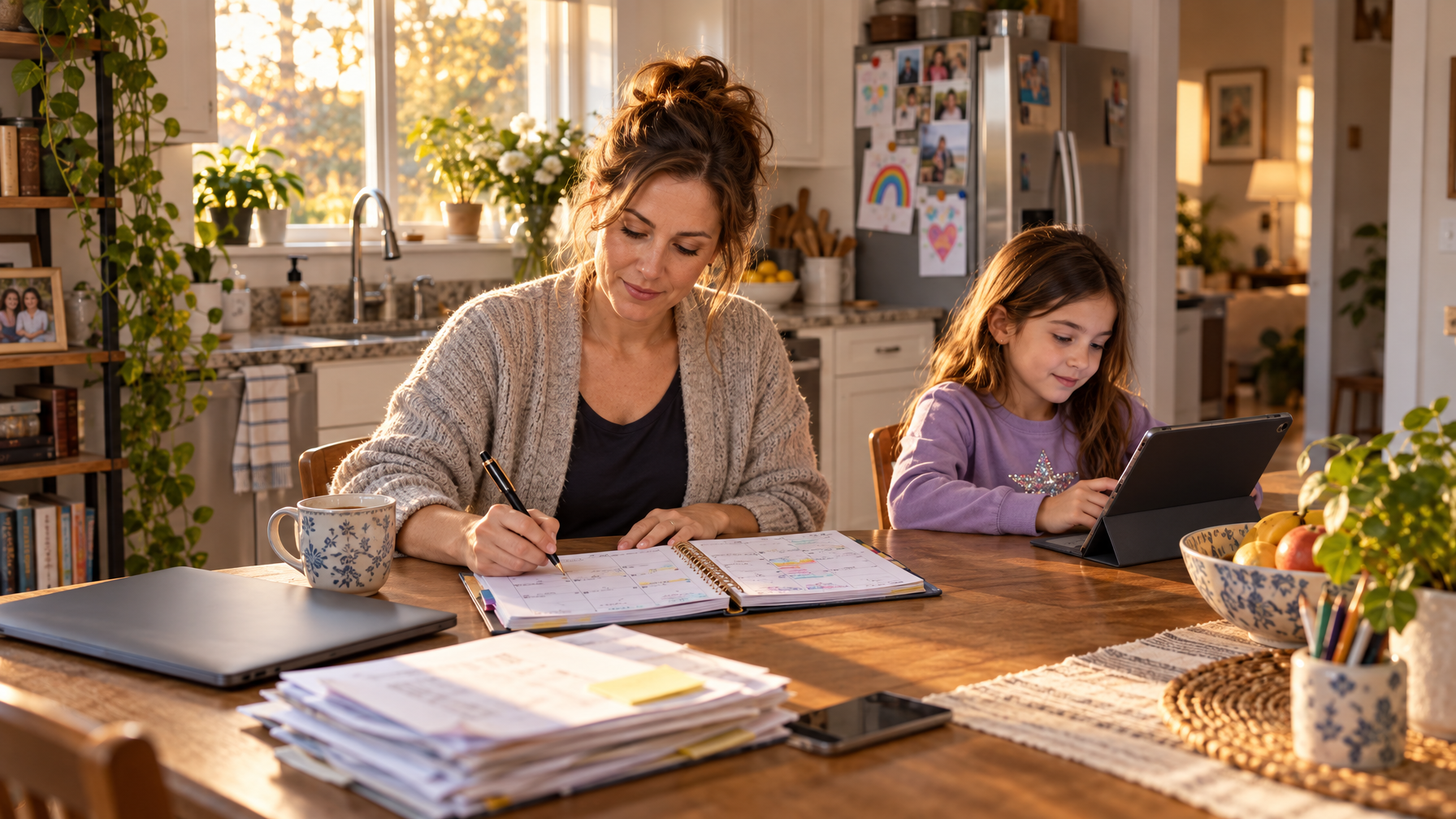
- Set up recordkeeping. Start an attendance log and a folder for course lists, work samples, and your affidavit or enrollment paperwork. Our homeschool record keeping guide walks through what to save each week.
- Build your learning plan. Choose curriculum, add classes or tutoring for subjects you'd rather outsource, and connect with a local homeschool community.
The five legal ways to homeschool in California
Each option has its own rules, costs, and level of independence. All of them satisfy California's compulsory education requirements for kids ages 6 through 18.
1. Establish a home-based private school
This is the most popular route for families who want full control over curriculum, schedule, and teaching approach. You file a Private School Affidavit (PSA) with the state each year and maintain attendance logs and course lists. The statutory filing window runs October 1 through 15, though the online system stays open from August 1 through June 30 to accommodate families who start mid-year.
Advantages: complete independence over what and how you teach. No required testing, no public school oversight, and no mandated curriculum.
Trade-off: no public funding. You cover all curriculum, materials, and class costs out of pocket.
2. Enroll in a private school satellite program (PSP)
PSPs let you teach at home while connected to an established private school. The PSP files the affidavit on your behalf and typically provides curriculum guidance, recordkeeping support, and sometimes in-person community events. Think of it as homeschooling with a safety net and a bit of structure.
Best for: families who want independence but appreciate having an experienced school handle the administrative side.
3. Hire a credentialed private tutor
You can hire a California-credentialed teacher to instruct your child at home. The tutor must hold a valid credential for the grade level they teach, and instruction must cover core subjects for at least three hours a day, 175 days a year, between 8am and 4pm.
Best for: families who want professional instruction without a traditional school setting, or who need targeted support in specific subjects.
4. Join a public school independent study program
Some public districts run independent study programs that let kids learn at home with support from school staff. These programs provide lesson plans, teacher check-ins, and often materials. You follow the school's requirements but get more flexibility than a classroom schedule, and some programs allow your child to attend campus for certain classes or activities.
Best for: families who want a structured path with professional teacher support and no curriculum costs.
5. Enroll in a non-classroom-based (NCB) or hybrid public charter school
California has many public charter schools offering home-based and hybrid options. NCB charters typically provide curriculum, teacher support, enrichment, and annual instructional funds families can spend on approved secular curriculum, supplies, classes, and enrichment. Annual allotments typically range from $2,500 to $3,800 per student, though the exact amount varies by charter.
Best for: families who want the flexibility of homeschooling with public school funding and teacher support.
Which option fits your family?
If you're weighing these five paths, this quick filter helps:
- Want total independence and can cover costs? Home-based private school (Option 1).
- Want independence with administrative support? PSP (Option 2).
- Want a professional teacher in your home? Credentialed tutor (Option 3).
- Want free curriculum and teacher check-ins? Independent study (Option 4).
- Want flexibility plus funding for materials and classes? NCB charter (Option 5).
Many families start with one option and shift to another after a year or two as their needs change. Moving between options is straightforward, so the initial choice doesn't have to be permanent.
Requirements for homeschooling in California
Whichever route you choose, here's what to keep up with through the year.
Enrollment paperwork
Home-based private school families file the PSA every year. Charter and independent study programs handle their own enrollment. If you hire a private tutor, you don't file an affidavit, but you need to verify the tutor's valid California teaching credential.
Attendance and instruction
California's compulsory education law requires homeschooled students to maintain a daily attendance record. Private schools and tutors track absences and ensure lessons cover core subjects, generally taught in English. Private tutors must provide at least three hours of instruction daily for at least 175 days a year during regular school hours.
For a practical breakdown of how many hours most families spend by grade level, our homeschool hours by grade guide covers typical ranges and state minimums.
Required subjects
Families who homeschool privately choose or create their own curriculum, but it must cover the same general subjects taught in public schools: English, math, science, social studies, fine arts, health, and physical education. California's content standards and curriculum frameworks are a helpful planning reference, though you're free to build interest-led lessons around them.
If you're starting from scratch, our step-by-step guide to building a homeschool curriculum walks through the process.
Recordkeeping
Beyond attendance logs, private homeschoolers keep copies of each year's affidavit, course lists, and basic teacher records (names and addresses). It's smart to also save lesson plans, report cards, and work samples, even when not strictly required. They come in handy if your child returns to public school or applies to college.
Testing and assessments
California does not require standardized testing for private homeschoolers. Charter and public school independent study programs may include required assessments as part of their policies. Some families choose to test on their own to benchmark progress. For high schoolers, our California graduation requirements guide covers credits and diploma pathways.
Does California have an ESA or homeschool funding?
California does not have a state-run Education Savings Account (ESA) program, so families who homeschool independently cover their own costs. The main workaround: families who enroll in a public homeschool charter school typically receive annual instructional funds ($2,500 to $3,800 per student) for approved learning resources, including curriculum, supplies, and enrichment classes. If your charter lists Outschool as an approved vendor, you can use those funds to register for classes.
Starting in 2027, a new federal option may help some California families. The Federal Scholarship Tax Credit (FSTC) creates a dollar-for-dollar tax credit for donors who contribute to Scholarship Granting Organizations (SGOs). Those SGOs then distribute scholarships to eligible K-12 families earning up to 300% of their area's gross median income. The FSTC is a donor credit, not a direct family benefit, but it could expand scholarship availability in California once SGOs begin operating in 2027.
For a broader overview of ESA programs nationwide, see our guide to education savings accounts.
Homeschool with Outschool
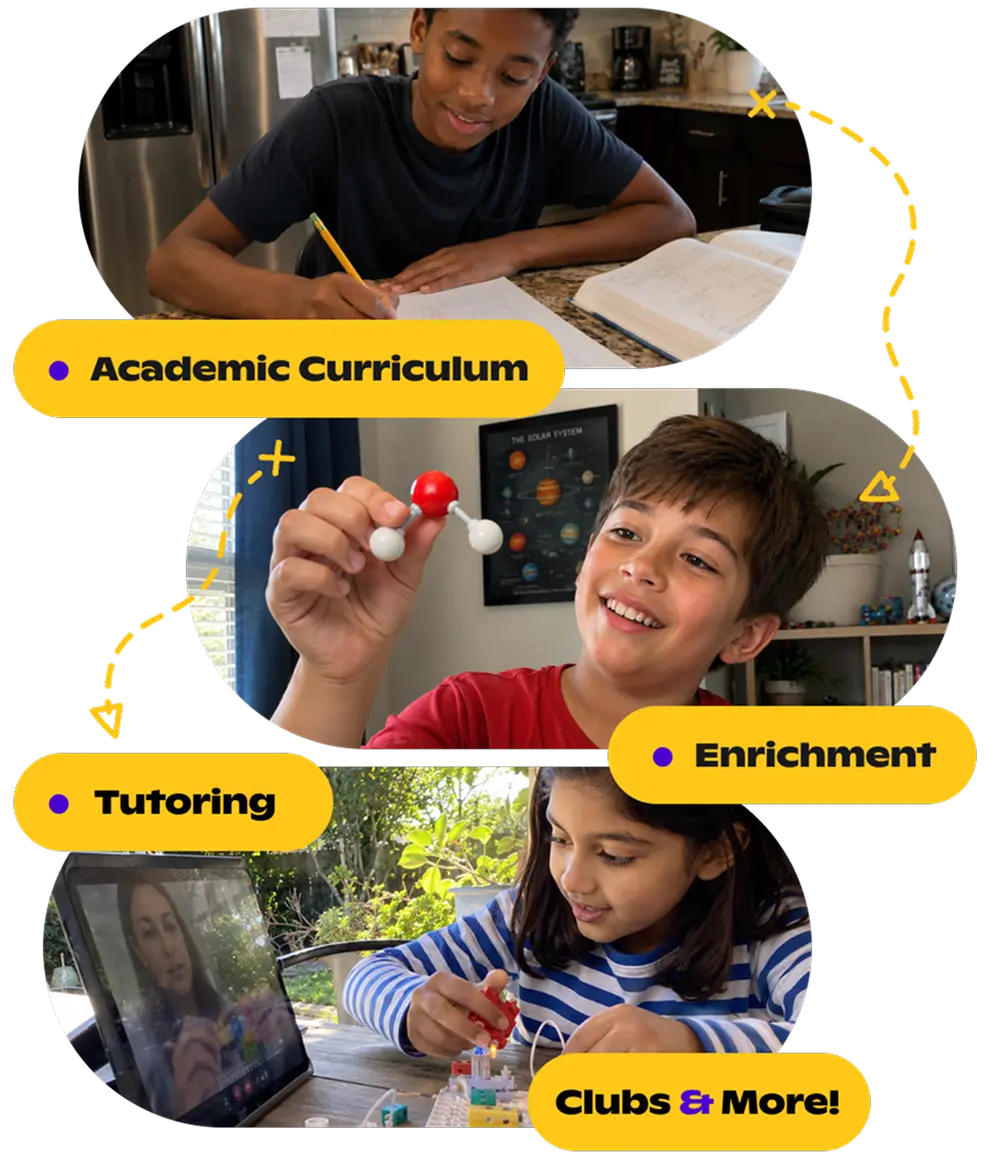
Families often homeschool in California because they want learning that flexes with their child's pace and their family's daily rhythms. Outschool brings that to life with live, interactive classes led by passionate teachers. You can build a full curriculum, outsource a hard-to-teach subject, or add enrichment to brighten the week.
Many California families use Outschool to:
- Join live classes that invite participation and peer connection
- Fit learning into busy days with flexible scheduling
- Explore a wide range of subjects, from core math and science to unique electives
- Give kids a chance to meet and learn with peers from across the state and country
- Keep class details and work samples for their homeschool portfolio
When a subject calls for one-on-one attention, academic tutoring on Outschool pairs your child with a teacher who can meet them right where they are.
Find support through California homeschool communities
Homeschooling feels more manageable when you connect with families on the same path. A few statewide organizations to know:
- California Homeschool Network: legal updates, events, and resources for independent homeschooling families statewide.
- Homeschool Association of California: guidance, advocacy, and an annual conference.
Local groups, from Southern California co-ops to Bay Area park-day communities, open the door to group activities, field trips, and friendships. If you're new to the homeschool community, our guide to homeschool co-ops explains how they work and how to find one near you.
Frequently asked questions
What are the legal ways to homeschool in California?
Families can start a home-based private school, join a private school satellite program (PSP), hire a credentialed private tutor, enroll in a public school independent study program, or sign up with an NCB or hybrid public charter school. Each has its own steps, but all are recognized ways to learn at home in California.
Do I need to file any forms to homeschool in California?
If you set up a home-based private school, you file a Private School Affidavit with the California Department of Education each year. Charter and independent study programs guide you through their own enrollment paperwork instead.
What subjects do homeschooled students need to study?
Cover the same core subjects taught in public schools: English, math, science, social studies, fine arts, health, and physical education. California's content standards are a useful starting point, and you're free to build interest-led learning around them.
Does California require homeschoolers to take standardized tests?
No state tests are required if you homeschool through your own private school. If your child is in a public charter or independent study program, testing may be part of the program's requirements.
Does California have an ESA or homeschool funding?
There's no state ESA for independent homeschoolers. Families who want funding can enroll in a public homeschool charter, which usually provides annual instructional funds ($2,500 to $3,800) for approved resources. Starting in 2027, the Federal Scholarship Tax Credit may create additional scholarship opportunities through donor-funded SGOs.
Can my child return to public school after homeschooling?
Yes. Families can re-enroll whenever they choose. Each district sets its own policies for grade placement and credit transfer, so check with your local school ahead of time.
Can I homeschool my child part-time in California?
Independent study programs and some NCB charters allow hybrid arrangements where your child attends campus for certain classes and learns at home for the rest. If you homeschool through a private school (Option 1 or 2), you have full control over the schedule and can supplement with online classes or local programs as you see fit.
Your California homeschooling journey starts here
Choosing to homeschool in California opens the door to a more personal way of learning, one that grows with your family. With flexible paths, clear requirements, and supportive communities, you have what you need to build an education that fits your child. Browse homeschool classes on Outschool to add live instruction and new subjects as you go.


.svg)
.svg)