If you are planning to teach your homeschooled 7th grader Spanish, you may be wondering where to begin and what to prioritize, especially if you aren’t a Spanish speaker yourself.
At this stage, the goal is not necessarily fluency, but building a strong foundation. You ultimately want your student to understand basic Spanish vocabulary, sentence structure, and simple phrases. A 7th grader is also developmentally ready to connect language to culture, and that connection can open an important door of curiosity.
This article will discuss the topics 7th grade Spanish typically covers, how learning at home compares to a classroom setting, the types of curricula available, and how to blend resources to create the ideal plan for your family.
Overview: 7th Grade Spanish Curriculum for Homeschool Learners
A 7th grade Spanish curriculum typically starts with the basic communication skills. Beginners often focus on understanding and producing simple words and memorized phrases related to familiar topics such as greetings, family, food, school, and daily routines.
At this level, vocabulary, basic grammar, and listening and speaking practice are the three pillars of learning. Ideally, your homeschool program of choice will weave these pillars together into a meaningful language practice. For example, students might learn present-tense verb forms while practicing short conversations about their daily schedule.
Cultural exposure is also important. Understanding traditions, geography, and everyday life in Spanish-speaking communities helps connect language to the greater world.
Seventh grade is about building confidence and consistency. If students can introduce themselves, ask simple questions, and understand basic responses by the end of the year, that is a win.
Learning 7th grade Spanish at home vs. in school
In a traditional school setting, students move through a textbook chapter by chapter, completing vocabulary lists, grammar exercises, quizzes, and speaking activities. Time is limited to a class period, and conversation practice may be brief depending on class size.
At home, the rhythm can look different. Instead of covering one vocabulary list per week, you can slow down when needed. If verb conjugations feel confusing, you can spend extra days practicing. If pronunciation needs help, you can replay the audio and practice together as often as needed.
Homeschoolers can also offer 10 to 15 minutes of daily listening and speaking practice each day, which builds stronger retention than a single weekly session.
Conversation can also feel less intimidating at home. Instead of speaking in front of a whole class, your child may practice first with you, record themselves, or participate in a small online class. Techniques like these can gradually reduce anxiety and build confidence.
Topics Taught in 7th Grade Spanish for Homeschoolers
A strong 7th grade homeschool Spanish curriculum balances vocabulary, grammar, listening, speaking, reading, and culture. Here are the core topics most programs cover and what they can look like in a homeschool setting.
Greetings and basic communication
Students learn how to introduce themselves, ask and answer simple questions, and exchange basic information. Topics often include name, age, nationality, and preferences.
At home, this might look like role-playing simple conversations, such as meeting a new friend.
Present tense verbs and sentence structure
Seventh grade is when students are introduced to present-tense verbs and simple sentence formation. Students learn how the subject and verb are connected in a sentence and how to form basic questions.
The grammar patterns in Spanish can be confusing and frustrating for students, so introducing them gradually and incorporating regular practice is helpful. Using short, meaningful sentences in repetition often works well for this age group.
Everyday vocabulary themes
Common vocabulary themes include family, food, school, hobbies, numbers, weather, and daily routines. Vocabulary can be practiced in a discussion to incorporate context and connect to life.
For example, instead of memorizing food words separately, students might describe what they eat for breakfast or order a meal from a restaurant menu.
Cultural exposure
Learners explore traditions, geography, music, celebrations, and daily life in Spanish-speaking countries. Cultural exploration might include cooking a traditional dish, listening to music from a Spanish-speaking country, or learning about a regional holiday.
Common Types of 7th Grade Spanish Curricula
Once you understand what should be taught, the next decision is how to deliver the material. Homeschool families typically choose from the approaches below, or create a blended model, depending on their comfort level.
- All-in-one textbook programs: These programs provide structured lessons that combine vocabulary, grammar, exercises, quizzes, and sometimes audio support. Textbook programs follow a clear weekly schedule, which works well for parents who want steady progression.
- Conversational or immersion programs: These curricula focus on listening and speaking. Students practice speaking in real-world situations. They may role-play an introduction, or even visit a Spanish-speaking country and communicate with local residents. This method often feels more natural for beginners and builds confidence quickly.
- Online or live instruction: Online Spanish classes are common in homeschool settings. You can choose from weekly lessons with homework, live conversation practice, or culture studies. Live classes can be very helpful for pronunciation and conversation, especially if you do not speak Spanish. Many families use online classes as their primary instruction and reinforce vocabulary at home.
Elements to Watch for in a 7th Grade Spanish Curriculum
Before choosing your program, consider the elements below.
Age-appropriate scope
Your 7th grader is most likely a beginner. If that’s the case, the curriculum chosen should focus on simple communication and familiar topics. If lessons quickly move into complex verb tenses or long writing assignments, your child may get frustrated. Look for gradual progression and clear reinforcement.
Balanced skill development
Strong Spanish programs are balanced. They can combine listening, speaking, reading, and writing. If a curriculum focuses only on vocabulary or fill-in-the-blank worksheets, then speaking skills are less likely to develop.
National language standards emphasize communication across multiple modes, not just memorization. Make sure audio components and speaking practice are built into the curriculum.
Parent involvement and support
Some programs expect you, as the parent, to model pronunciation. Others provide built in audio components so your child can hear native speakers. If you need it, make sure that pronunciation support is provided. A live online class can also help with language modeling.
Documentation and requirements
Review your state's homeschool laws to understand the world language expectations in your area. Typically, keeping vocabulary lists, writing samples, audio recordings of speaking practice, or completed assignments is enough documentation.
How to Build a 7th Grade Spanish Curriculum for Homeschool Learners
Seventh grade is a great time to dive into Spanish. At this age, learners can think more analytically, spot patterns in grammar, and understand that language connects to real people and real cultures.
Step one: Start with a clear goal
Before choosing anything, decide what success looks like for your child. Do you want your learner to hold simple conversations, or are you preparing them for high school Spanish?
Most 7th graders are ready to learn about verbs, basic vocabulary, and conversational skills. Remember to include cultural studies and audio exposure. You can make a list of everything you want to accomplish by the end of the year, and use your goals as your guideposts.
Step two: Incorporate vocabulary and grammar
Teaching vocabulary in themed units will likely increase retention because the information is organized rather than presented randomly. Encourage your child to use the vocabulary words in sentences and short phrases.
Grammar instruction can be focused and brief. Short daily practice with repetition will increase understanding of verb tenses. You can make it fun by incorporating games, songs, or online activities.
Step three: Prioritize speaking
There are many wonderful resources available for speaking practice. You can utilize videos, online lessons, and apps to turn speaking practice into an engaging activity. Some apps are gamified to make the process a self-competition, which adolescents typically enjoy.
Step four: Incorporate culture
Incorporating culture brings language to life. Include geography, traditions, and current events from Spanish-speaking countries. Incorporate cooking videos, music, or simple recipes. Cultural exposure can build motivation and global awareness.
What a 7th Grade Spanish Routine Can Look Like at Home?
A simple four-day week might look like this.
- On day one, your child learns new vocabulary for family members such as madre, padre, hermano, and hermana. They listen to a short audio clip, identify the words they hear, and write two or three basic sentences using tengo to say who is in their family.
- On day two, the focus shifts to grammar. Your learner asks and answers simple questions, such as "¿Tienes hermanos?", to build speaking confidence while reusing new vocabulary.
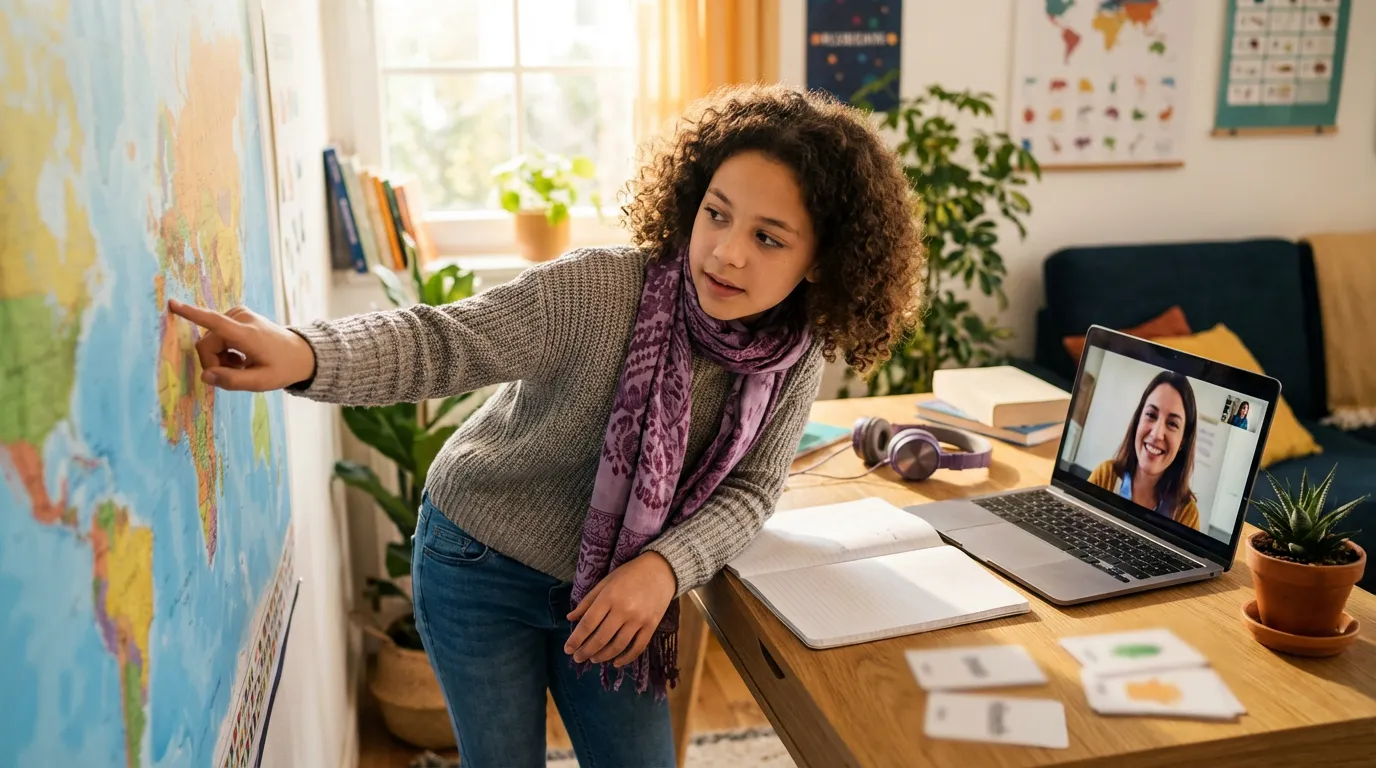
- On day three, you begin by finding Mexico on a map and researching a few cultural traditions, then you have your learner compare those traditions to your own family.
- On day four, your learner labels a family photo or draws a simple family tree in Spanish, and writes a short paragraph incorporating what they have learned this week.
This kind of routine keeps lessons focused, varied, and manageable while building all four skills over a single week.
Popular Homeschool Spanish Curricula for 7th Graders
Once you’ve decided how you want Spanish structured, the next step is choosing specific resources. Homeschool families typically combine structured lessons, audio recordings, and conversation practice.
Outschool’s online curricula and classes
For families who want guided instruction, Outschool offers a wide range of middle school Spanish classes. These include beginner courses on vocabulary and grammar, as well as conversational Spanish classes that emphasize speaking and listening.
Live classes can be helpful for students who appreciate real-time interaction. Seventh graders can benefit from hearing peers speak and then practicing dialogue with them. Because pronunciation modeling is built in, online classes can be reassuring for parents who do not speak Spanish.
Free language and culture resources
Many institutions provide free materials that can enrich your curriculum. For example, the Library of Congress’ Hispanic Reading Room offers Spanish-language texts and cultural materials. Your local museums and cultural centers may offer videos and educational resources that highlight traditions and daily life in Spanish-speaking communities as well.
Frequently Asked Questions: 7th Grade Homeschool Spanish Curricula
Parents often have practical concerns when beginning a language program at home. Here are answers to common questions.
Do parents need to speak Spanish to teach it at home successfully?
No. Many homeschool Spanish programs include audio modeling, pronunciation guides, and structured lessons that can support your language journey. Online classes can also provide the modeling you may be looking for. Consistency and willingness to practice together matter more than prior fluency.
How can progress in Spanish be assessed for homeschool records?
Progress can be documented through vocabulary logs, written assignments, completed workbook pages, or recorded speaking samples. The American Council on the Teaching of Foreign Languages (ACTFL)’s proficiency guidelines emphasize functional communication at the novice level. Keeping a record of speaking, listening, reading, and writing practice demonstrates steady development.
How can Spanish practice be reinforced outside of formal lessons?
Daily exposure will always strengthen learning. Labeling household items in Spanish, listening to simple songs, watching short Spanish videos, or practicing greetings during meals can naturally reinforce vocabulary. Making Spanish a part of your daily routine, in an engaging way, will strengthen the development of language.
Building Confidence Through Language
7th grade Spanish is about building a foundation and a bit of confidence. Spanish can become a steady and enjoyable part of your homeschool routine. You can practice during meals, label items around the house, listen to music in the car, or cook a simple recipe from a Spanish-speaking country. Learning a second language at this age also supports memory, problem-solving, and cultural awareness. It helps learners see the world from a new perspective and builds communication skills they can use later in travel, work, and relationships.
The goal is not to become fluent in one year, but to be comfortable in some communication, spark curiosity about the world, and challenge the young brain.
Sources
American Council on the Teaching of Foreign Languages. ACTFL Proficiency Guidelines 2012. ACTFL, https://www.actfl.org/resources/actfl-proficiency-guidelines-2012.
American Council on the Teaching of Foreign Languages. NCSSFL-ACTFL Can-Do Statements. ACTFL, https://www.actfl.org/resources/ncssfl-actfl-can-do-statements.
American Council on the Teaching of Foreign Languages. World-Readiness Standards for Learning Languages. ACTFL, 2015, https://www.actfl.org/educator-resources/world-readiness-standards-for-learning-languages.
Cartwright-Lacerda, Christi, and Nicoleta Filimon. “Three Tips for Productive Writing in World Languages.” Educational Leadership, ASCD, https://www.ascd.org/el/articles/three-tips-for-productive-writing-in-world-languages.
Center for Applied Linguistics. “Principles of Second Language Learning.” CAL, https://www.cal.org/publications/guiding-principles-3/.
Library of Congress. “Hispanic Reading Room.” Library of Congress, https://www.loc.gov/rr/hispanic/.


.svg)
.svg)