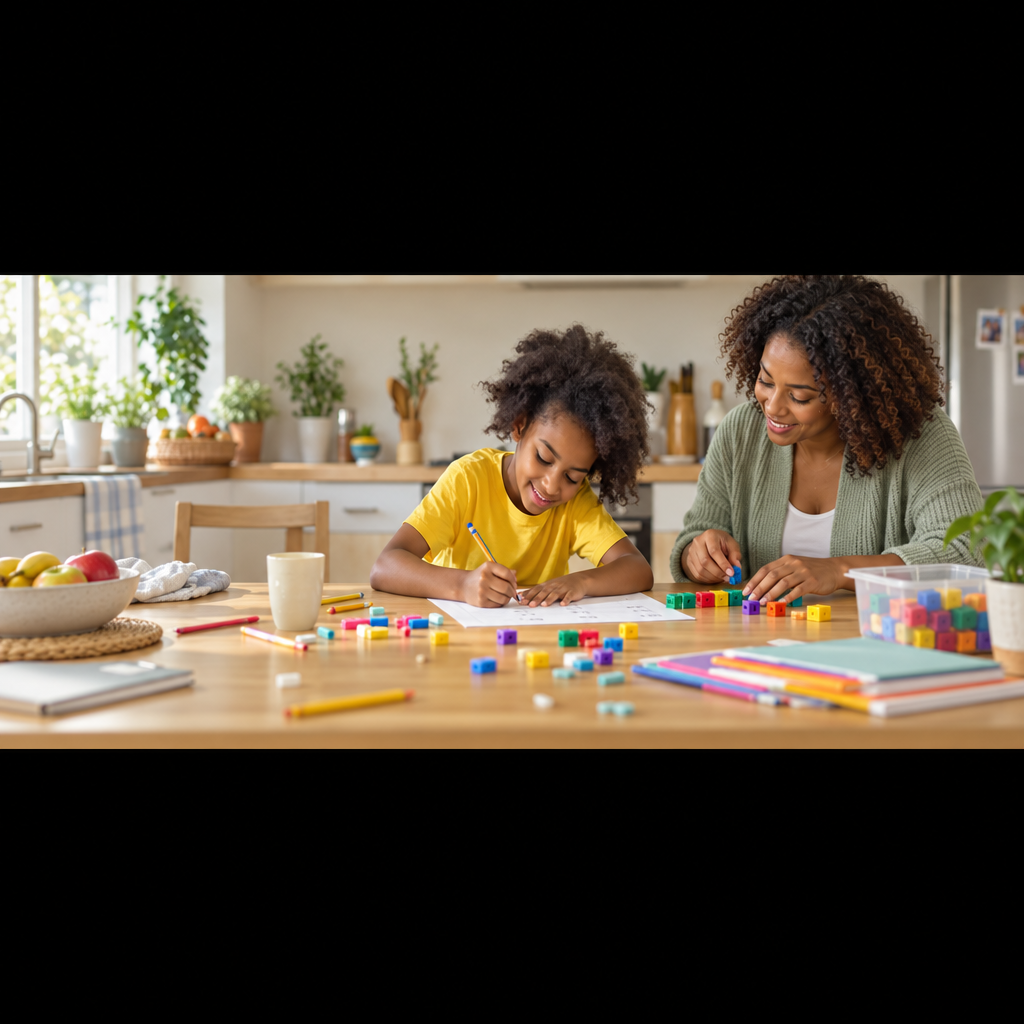
Seventh grade can seem like a time when a child’s confidence can bloom, and during this pivotal year, healthy habits can meaningfully shape both their physical and emotional well-being. Things like sleep, nutrition, and movement can now be taught in a more intentional and connected way. Your child is likely ready to connect their habits to their well-being. In a homeschool setting, your influence over these habits is great. You set the routine, you implement the house rules, and you model wellness techniques.
A strong 7th grade homeschool health and physical education (PE) curriculum can blend movement with thoughtful health education. It supports physical fitness, builds decision-making skills, and helps adolescents understand their changing bodies. In this article, we will walk through what middle school health typically includes, how homeschooling reshapes the approach, and how to choose or build a program that works for your family.
What is a 7th Grade Health or Physical Education (PE) Curriculum?
A 7th grade health and PE curriculum is more than just daily exercise, but can be a formal introduction to how the body works and how healthy choices impact how you feel.
National health and physical education standards for middle school include several core areas: building movement skills, understanding fitness components, developing decision-making skills, and applying health knowledge in real-life situations.
At this age, students are ready to understand why habits matter and how their choices affect their bodies. Research on adolescent development shows that executive function and self-regulation skills continue to develop during early adolescence. Health and PE instruction can support this process.
Learning health and PE at home vs. in school
In a traditional school setting, PE often follows a set schedule and activity rotation. For example, you may find that it’s one week spent on basketball, one week on volleyball, and so on. Schools assess children’s fitness using standardized measures, and health classes are typically taught separately with structured lessons and assessments.
At home, on the other hand, you might build a movement routine around what your child loves to do. These can be things like hiking, swimming, dancing, or biking. The emphasis is on personal progress and consistency, and personal goals can evolve and breathe. Health education at home has the potential to be more conversational, with discussions on sleep, stress, and safety. You can tie the learning into your everyday life by taking mindful breaks or setting a sleep schedule that works best for you.
Topics Taught in 7th Grade Health and PE Curricula for Homeschoolers
A well-rounded health and PE program for seventh graders will typically address both physical development and health topics. Most strong plans teach the following topics.
Components of physical fitness
Students learn about cardiovascular endurance, muscular strength, flexibility, and body composition. National physical education standards emphasize helping students understand and apply these components in practical ways.
At home, this might mean creating a simple weekly fitness plan that includes walking or jogging and light stretching. Your child can track heart rate or perceived exertion to build awareness of how hard they are pushing their bodies.
Basic anatomy and body systems
Seventh graders are ready to understand how muscles, bones, and the cardiovascular system work together during exercise. The knowledge will support safer movement as they begin to challenge their bodies and make informed choices.
At home, you might have your child label the major muscle groups or watch a video on how oxygen circulates through the body during exercise.
Nutrition and hydration
Students learn how nutrients and hydration fuel the body. At home, this could include planning healthy meals, discussing portion sizes, and cooking together while discussing the contents and nutrients of the meals.
Mental and emotional health
Learning how to manage stress and emotions is typically part of a middle school health curriculum. In a homeschool setting, you may discuss how movement affects mood, practice mindfulness techniques, and identify healthy ways to manage pressure.
Types of 7th Grade Health and PE Curricula
Homeschool families have several flexible curriculum options, each with varying levels of structure and parental involvement.
- All-in-one health and PE programs: These programs combine physical activity with structured health lessons. They often include everything you need for tracking, planning, and discussions. This format works well if you are looking for reduced planning time and consistency in topics.
- Activity-based fitness plans: Some families prefer to focus on physical fitness and integrate health discussions informally. These programs may center around a seasonal sport or daily activity goals. This approach works well for active families who spend a lot of time outdoors or on the move. It does require you to be intentional about health topics so they are not overlooked.
- Online or video-based instruction: There are online courses available with guided workouts, health topic instruction, and group discussion. You can find classes focused on specific physical fitness routines, as well as on nutrition, stress management, and personal goal setting. This works well for parents who are unsure about teaching health lessons and for learners who appreciate peer interaction.
What to Look for in a 7th Grade Health and PE Curriculum
Not all programs fit every home. Before making your final choice, consider the elements below.
Age-appropriate content
Seventh graders are ready to understand how their choices affect their health, but they still benefit from support and guided instruction. Look for content that explains concepts clearly without overwhelming them, and make sure you are available to answer questions. Many middle school health topics can be personal and even sometimes scary, and having a trusted parent nearby is one of the gifts of homeschool.
Balance between movement and education
Ideally, you want your program to be consistent in both physical activity and health lessons. National physical education standards state that students should not only be physically competent but also understand the benefits of physical activity.
Flexibility and adaptability
Choose a program that adjusts to weather, travel, or energy levels. Activities should also be adaptable for physical ability.
You should be able to find a program that does not require specialty equipment and can be implemented easily at home.
Documentation for homeschool records
Health and PE learning may need to be documented depending on the homeschool laws in your state. Review the requirements to clarify what you need to cover and keep a record of. Simple activity logs, goal sheets, or reflection notes may be examples of documentation.
How to Build a 7th Grade Health and PE Curriculum for Homeschool Learners
If you would like to build your own 7th grade health and PE plan, all you need is a clear framework and to follow these simple steps.
Step one: Start with core categories
Begin by outlining the major areas you would like to cover this year, for example, physical fitness, nutrition, stress management, personal safety, and goal setting. Planning by category helps keep your year organized and balanced. You might choose to rotate one physical-focused category with one health-focused category to keep your program consistent.
Step two: Create a weekly movement plan
National guidelines recommend that adolescents engage in about 60 minutes of daily physical activity, including aerobic and muscle-strengthening exercises. This can include walking, biking, hiking, or sports practice.
You can try to choose activities your child enjoys. If your 7th grader does not appreciate competitive sports, then try other activities, like martial arts or strength training.
Step three: Schedule one structured health lesson per week
In addition to daily movement, planning one health lesson per week may be helpful. You can keep the lessons practical and connect them to your child’s everyday life. For example, your child may need to increase daily hydration, so you help them set a personal goal and track their water intake.
Step four: Incorporate goal setting and reflection
Seventh grade is an ideal time to teach self-monitoring. Have your child set small goals and keep track of progress. Review them monthly and discuss what worked and what could be adjusted. This can help build executive function and self-regulation.
What Building a Health and PE Routine at Home Can Look Like
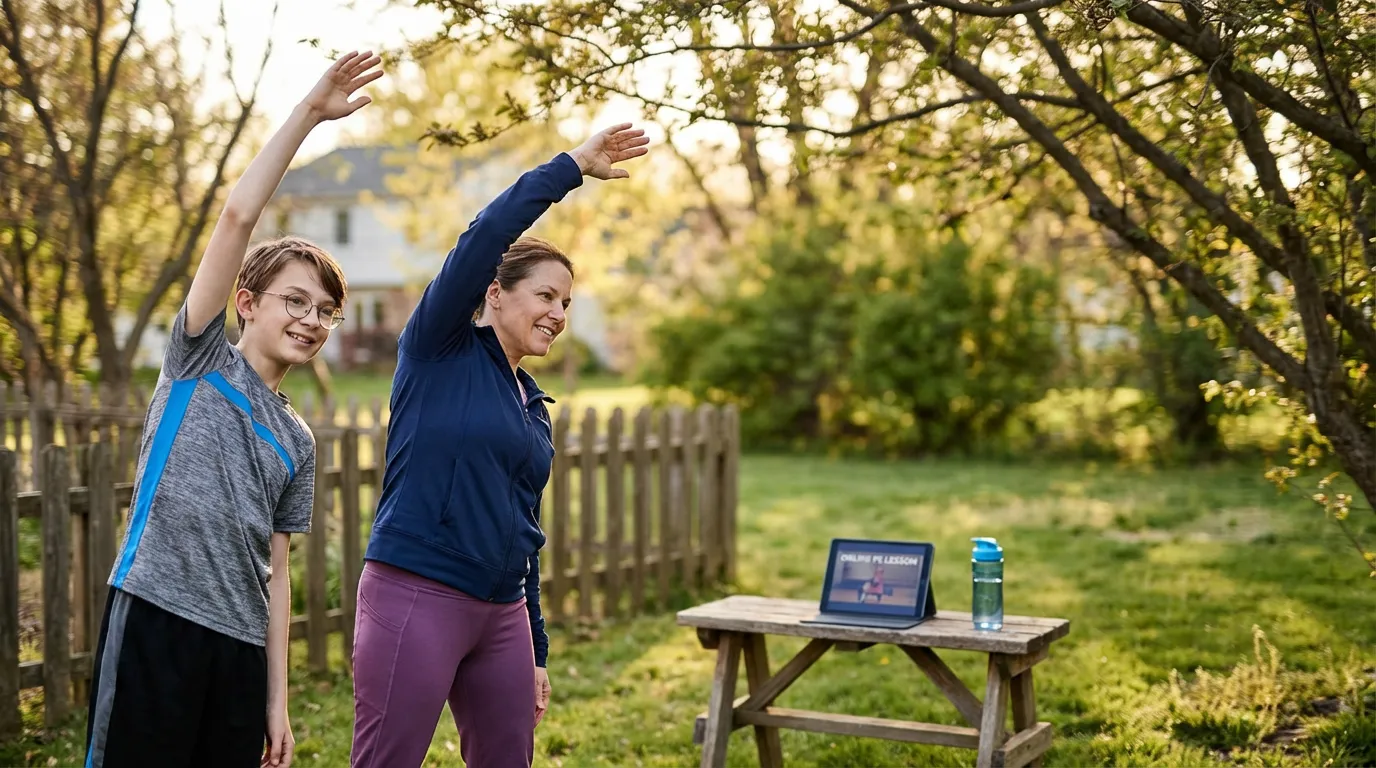
A typical week might include three to five days of movement, mixed between cardio, strength, and flexibility. For example, on Monday, it could be a long walk outside, Tuesday might include bodyweight strength exercises, Wednesday could be focused on stretching or yoga, and community sports practices might take place on weekends.
Health lessons do not have to be done daily, and you may choose to teach health one day per week or a few days per month. A simple health lesson could include discussing the stress and pressure of teenage life and making a poster of mindfulness techniques to try. You can remember to include a reflection at the end of a health lesson, so your student has the opportunity to ask questions and self-assess.
Adjusting to the seasons is one of the many advantages of homeschooling. In the spring and fall, you may focus on outdoor activities and outings, while winter may lean more toward indoor activities, like strength training or flexibility work.
The goal is not to turn your living room into a gym class. It is to integrate consistent movement and thoughtful health education into daily life in a way that feels sustainable.
Popular Homeschool Health and PE Curricula for 7th Graders
Once you have a sense of structure, the next step is selecting resources. Homeschool families often blend movement plans, structured health lessons, and occasional outside instruction to create a balanced program.
Outschool’s online curricula and classes
For families who want guided instruction outside of the home, Outschool offers a range of health and physical education classes. These include fitness-focused classes such as strength training, conditioning, yoga, or dance, as well as health-focused courses on nutrition, mental wellness, and life skills. Outschool offers both live and recorded classes, which is helpful for many families. Some parents use these classes as their primary health curriculum, while others use them to supplement their at-home blended plan.
Online instruction can be especially helpful for topics that feel more complex, such as nutrition science or stress management. This allows your child to hear information from an expert while you are still present to support them and answer questions.
Free Institutional and community resources
Many national organizations provide free, high-quality materials that can strengthen a homeschool health plan.
For example, the Centers for Disease Control and Prevention (CDC) offers adolescent health guidelines and activity recommendations. You can also check with your public health department, as they often publish educational materials. Community recreation centers, libraries, and other community centers may also offer sports programs or fitness classes.
Frequently Asked Questions: 7th Grade Homeschool Health and PE Curricula
Teaching health and PE at home can feel overwhelming, especially if you disliked these subjects when you were in middle school. Here are some answers to common questions.
How can health and physical education be documented for homeschool requirements?
Documenting your health and PE journey can be simple: keep an activity log of exercise, save goal-setting sheets, and keep reflections from health lessons. Pictures of participation in sports or group fitness classes can also count as documentation.
How can health and PE be adapted for different fitness levels or abilities?
Health and PE at home can and should be specific to your child and their ability. Activities can be scaled in duration or complexity. Begin new activities gradually and build intensity over time; focus on personal growth rather than comparison.
Do homeschool families need special equipment or space for 7th grade physical education?
No. Many programs rely on walking, jogging, cycling, bodyweight exercises, stretching, and community activities. A small indoor open space or access to outdoor areas is typically enough. Equipment such as resistance bands or light weights can be used to enhance workouts, but is not required.
Building Lifelong Healthy Habits
Seventh grade is an important year for building healthy habits. A balanced curriculum can easily support both physical activity and overall wellness. With movement routines, quality discussions, and simple documentation, families can build skills that extend far beyond middle school.
Health and PE at home does not need to be complicated. When thoughtfully structured, it becomes part of daily life rather than a separate subject. Your child will have increased confidence, awareness, and long-term well-being.
Sources
Centers for Disease Control and Prevention. “FastStats – Adolescent Health.” CDC, https://www.cdc.gov/nchs/fastats/adolescent-health.htm.
Centers for Disease Control and Prevention. “Health Benefits of Physical Activity for Children.” CDC, 4 Dec. 2025, https://www.cdc.gov/physical-activity-basics/health-benefits/children.html.
Centers for Disease Control and Prevention. “Mental Health | Adolescent and School Health.” CDC, 29 Nov. 2024, https://www.cdc.gov/healthy-youth/mental-health/index.html.
Centers for Disease Control and Prevention. “Physical Activity Guidelines for School-Aged Children and Adolescents.” CDC, 3 July 2024,https://www.cdc.gov/physical-activity-education/guidelines/index.html?.
Centers for Disease Control and Prevention. “Physical Education | Physical Activity | Healthy Schools.” CDC, 13 Aug. 2024, https://www.cdc.gov/physical-activity-education/data-policy/index.html.
Centers for Disease Control and Prevention. “What Counts for Children and Teens | Physical Activity Basics.” CDC, 8 Jan. 2024, https://www.cdc.gov/physical-activity-basics/adding-children-adolescents/what-counts.html.
National Health Education Standards. National School Health Education Standards. SUNY MCC, https://courses.lumenlearning.com/suny-mcc-childdevelopment/chapter/national-school-health-education-standards/.
SHAPE America. National Standards & Grade-Level Outcomes for K–12 Physical Education. SHAPE America, https://www.shapeamerica.org/standards/pe/new-pe-standards.aspx.


.svg)
.svg)