If your family has been approved for the Texas Education Freedom Account (TEFA) program and you're new to homeschooling, you may be wondering how to actually begin building a homeschool plan using TEFA funds.
Building a homeschool plan does not require having every detail figured out on day one. The process often involves choosing the right learning resources for your children, creating a workable routine for your family, and learning to make adjustments along the way.
Start with your child's learning needs
Before choosing curriculum, classes, or educational programs, start by thinking about your child's actual learning needs and personality.
Consider questions such as:
- Does your child learn best through reading, hands-on activities, videos, discussion, or movement?
- What topics or interests naturally capture your child's attention?
- What does your family's day-to-day schedule realistically look like?
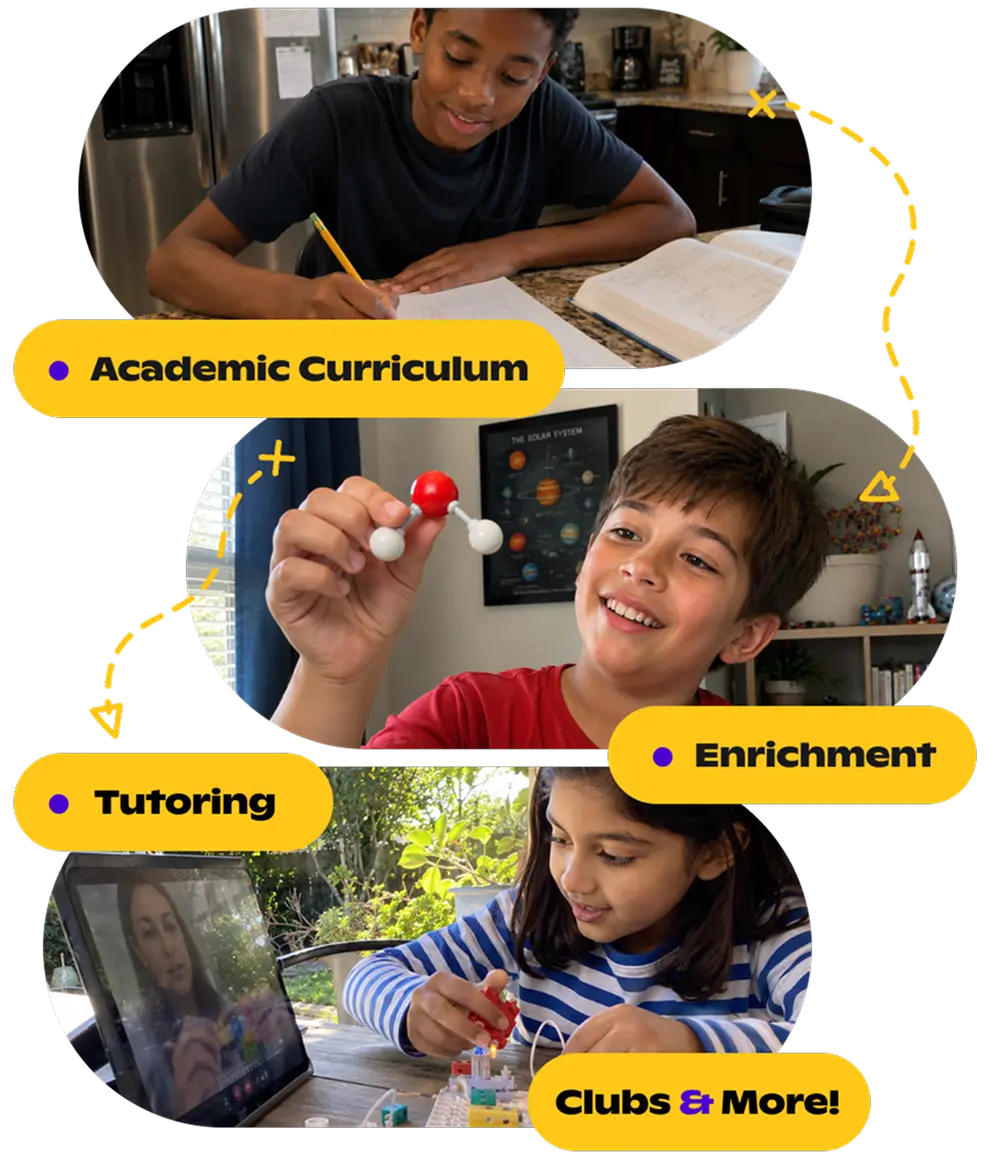
The answers to these questions can help guide your educational choices throughout the school year, including curriculum, tutoring, live classes, and enrichment opportunities.
Many families also find it helpful to look at grade-level learning expectations as a starting point while still allowing room for flexibility based on their child's individual pace and needs.
Choose your learning tools and resources
Homeschooling does not have to look only one way. Many families use a combination of educational tools and learning formats throughout the year.
Some common options include:
- Textbook-based learning: includes traditional curriculum, workbooks, and printed educational materials that families use at home.
- Online or self-paced learning: pre-recorded lessons, educational apps, and online programs that kids complete independently at their own pace.
- Live virtual learning: interactive online classes taught in real time through platforms such as Outschool, where kids can learn with live teachers and small groups from home.
You may decide to use a combination of educational tools and learning formats throughout the year, depending on the needs of your child.
Decide on your approach as a parent
One of the biggest misconceptions about homeschooling is that parents need to personally teach every subject themselves. In reality, homeschooling can include a combination of parent-led instruction, independent learning, tutoring, virtual classes, and outside educational support.
As you build your homeschool plan, think about:
- Which subjects you feel comfortable teaching
- Which subjects may benefit from outside instruction or tutoring
- How much structure your family prefers
- What type of daily schedule feels realistic for your household
You may choose to teach most subjects yourself, or you may decide to build a schedule that relies more heavily on virtual classes, tutors, or self-paced learning programs.
TEFA funds can help your family access educational support in areas where additional flexibility or instruction may be helpful. These funds are managed through Odyssey, the online platform where you can access your TEFA account and manage approved educational purchases using TEFA funds.
You can also browse the Odyssey marketplace to find approved providers, classes, tutoring services, curriculum options, and other educational resources that support your homeschool plan. Check out our step-by-step guide to how Odyssey works and how to make approved educational purchases using your TEFA funds.
$20 off your first class WITH promo code: blog
Build the Education your Kid Deserves
Discover thousands of live classes taught by expert teachers, across academics and enrichment.
Browse classesBuild your weekly schedule
Your homeschool schedule does not need to recreate a traditional school day in order to be effective.
Your homeschool schedule may include:
- Core academic subjects during the times of day when your child is most alert and focused
- Independent work during quieter parts of the day
- Virtual classes, tutoring, or enrichment activities scheduled throughout the week, fitting within your family's schedule
- Flexible breaks and movement throughout the schedule
You may prefer a highly structured routine, or you may find that a more free-flowing day works better for your household. Your homeschool schedule can evolve over time as you learn what works best for your child and your family.
Match your plan to your TEFA budget
As you begin planning your homeschool year, it can help to think intentionally about how TEFA funds will be used across curriculum, classes, tutoring, and other educational support. For a detailed breakdown of academic, enrichment, and balanced budget approaches, see our guide to making the most of your TEFA $2,000 homeschool allowance.
Keep in mind that reserving part of your budget for mid-year adjustments can make it much easier to make changes to your homeschool plan later in the year if your child's needs or interests change.
Plan for flexibility
Remember: your first homeschool plan does not need to be perfect on day one.
As the school year progresses, you may decide to change curriculum, adjust your schedule, add tutoring, reduce activities, or try new educational approaches altogether.
Re-evaluate your plan regularly throughout the school year to determine what is working well and where adjustments may be helpful. Homeschooling often works best when you give your family room to adapt, learn, and make changes along the way. For more guidance on choosing your homeschool approach, see our complete guide to homeschool curricula.
This article is for informational purposes only and is not legal or financial advice.



.svg)
.svg)