My neighbor signed her nine-year-old up for an online science class last fall. Before the first session, she spent twenty minutes describing it to me and I still wasn't sure what I was picturing. A video? A tutor on a call? Something in between? She couldn't quite explain it either, and that's when it hit me: for a lot of families, "online classes for kids" is a phrase that means a dozen different things depending on who's saying it.
If you've been curious but haven't pulled the trigger yet, this guide is for you. We're going to walk through what live online classes actually look like, what kids realistically get out of them, how to figure out if your child is ready, and what separates the options worth trying from the ones that aren't. No sales pitch, just the practical picture.
Quick takeaways
- Live online classes are real-time, interactive sessions, not pre-recorded videos
- Class sizes vary widely; smaller groups tend to feel more like an activity than a lecture
- Kids as young as 5 or 6 can participate, with the right format and subject
- Screen time concerns are real but manageable when the session is interactive and time-bounded
- You don't need special equipment; a laptop or tablet and a reliable internet connection cover most classes
- Most platforms let you pay per class, so there's no commitment required to start
What "online classes for kids" actually means
The term gets used loosely, so it helps to split it into two very different things:
Pre-recorded content is what most families picture first. This is the Khan Academy model: a video library your kid watches on their own schedule. There's no live teacher, no other kids in the room, and no back-and-forth. It's useful for drilling math facts or reviewing a concept, but it's not really a "class" in the way most of us mean it.
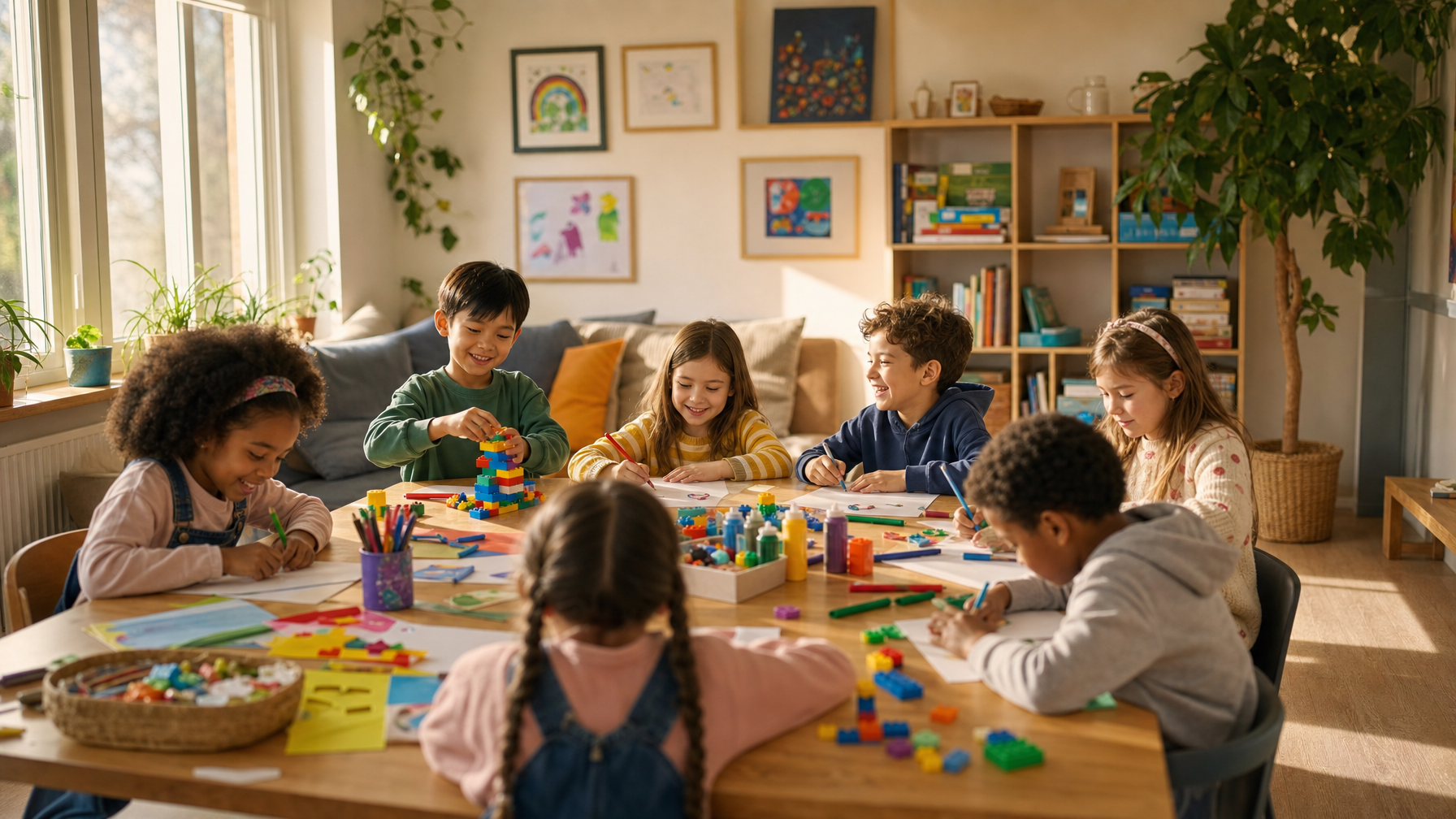
Live online classes are something else entirely. A real teacher shows up at a scheduled time. There are other kids in the session. Everyone can see and hear each other (usually through a camera, though some kids keep theirs off). The teacher asks questions, kids respond, discussions happen. It looks and feels much closer to a small-group class at a co-op or community center, just hosted on a screen.
When parents ask "what are online classes for kids," they're usually asking about the live version, because that's the one they can't quite visualize. That's what this guide covers.
What a live class actually looks like, start to finish
Here's a concrete walk-through, because the mental image matters.
About five minutes before the session starts, your kid clicks a link (usually from an email or a class dashboard). They land in a video call, similar to a Zoom or Google Meet setup. The teacher is already there, maybe chatting with a few kids who showed up early. Other kids start joining. Most classes have somewhere between 3 and 18 participants, though that varies a lot by subject and platform.
The teacher starts the session. Depending on the subject, this might look like:
- A creative writing teacher prompting everyone to share one sentence they wrote as a warmup
- A chess teacher walking through a position on a shared board while kids follow along
- A science teacher doing a live demo kids can replicate at home with materials they grabbed beforehand
- A history class where kids debate a real event as assigned historical figures
The class runs 30 to 55 minutes, usually. There's a real ending: the teacher wraps up, gives any follow-up notes, and the call closes. Your kid is done. There's no lingering in a hallway, no pickup logistics. They either go back to whatever they were doing before, or they have three minutes of feelings to process (my kid, every time she tries something new).
That's the basic shape of it. The content varies wildly, but the format is consistent.
What subjects are actually available
This is where most parents are surprised. Live online classes for kids cover far more ground than academics. Yes, there are math, reading, and writing classes. But there are also classes in:
- Minecraft engineering and game design
- Drawing, watercolor, and digital art
- Mythology, true crime history, and ancient civilizations
- Chess, debate, and public speaking
- Creative writing, screenwriting, and storytelling
- Marine biology, astronomy, and chemistry experiments at home
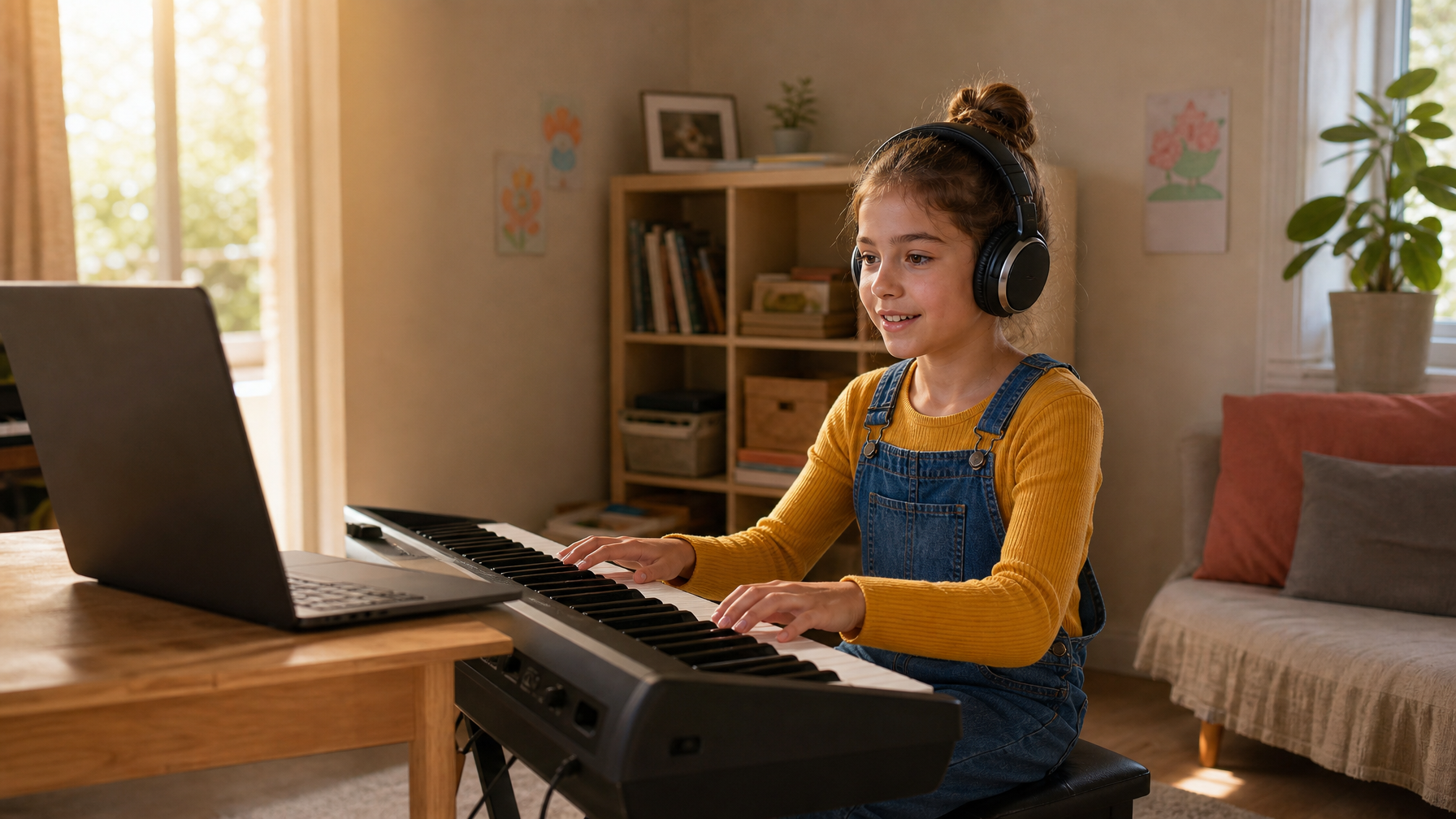
- Piano, music theory, and songwriting
- Robotics, coding, and app building
- Cooking, baking, and food science
- Social skills, friendship skills, and self-regulation for kids who need extra support
The breadth matters because it changes how kids relate to online learning. A child who resists anything that feels like "school" often has no resistance whatsoever to a 45-minute class on video game design with 6 other kids who love the same thing.
What kids actually get out of it

Beyond the subject matter, there are a few things that tend to show up consistently across different families' experiences.
They find their people
One of the underrated things about live online classes is that kids are grouped around a shared interest, not a shared zip code. Your kid who is deeply into ancient Rome might be the only one in your neighborhood who cares about that topic. In an online class, they might be one of eight kids who all showed up specifically because they love it. That changes the social dynamic completely.
They build comfort with speaking up
Small live classes give kids a chance to practice contributing to a conversation in a lower-stakes setting than a classroom of 30. Some families find that kids who are quieter in traditional settings get noticeably more confident after a few sessions in a small online group. The format rewards participation without forcing it, which is a different experience than most classroom environments.
They learn at their actual level
Most online class listings describe the age range and the assumed knowledge level. A parent can choose a class matched to where their kid actually is, not to where their grade level says they should be. An advanced eight-year-old who's already burned through elementary math has options that aren't typically accessible in a traditional school setting.
They explore interests you can't always facilitate yourself
Not every parent knows enough about marine biology or Python coding to teach it. Online classes solve this cleanly: find a teacher who knows the subject, let them run the class. This is especially useful for homeschooling families who want to cover subjects outside their own expertise.
Is my child ready for online classes? A real checklist
Age is less important than fit. Here's what actually predicts a smooth first experience:
- Can they sit focused for 30-40 minutes? That's about how long most classes run. Shorter formats exist for younger kids (20-minute classes are common for ages 5-7).
- Are they okay with being seen on camera? Most classes don't require cameras to be on, but participation is easier when kids can engage. For camera-shy kids, starting with a camera-off policy and warming up gradually works well.
- Can they follow instructions from an adult they've never met? First sessions sometimes require a little patience while the teacher figures out the group dynamic. Kids who can roll with a few minutes of "getting started" friction tend to settle in quickly.
- Is the subject genuinely interesting to them? This is the single biggest factor. A child dragged into a class they don't care about will have a worse time than a child who chose their own class about something they love.
Most families find that having their child look at class listings themselves, pick something that sounds interesting, and then register together works better than a parent surprising them with a class that seems educational. Interest-led really does change the outcome.
Common parent questions (and honest answers)
Is this just more screen time?
It's worth being direct: yes, it's screen time. But the kind of screen time matters. A 40-minute live class where your kid is talking, listening, responding, drawing, building, or problem-solving with a small group of peers is a different cognitive experience than 40 minutes of passive video watching. Most families who track screen time separately count interactive learning sessions differently from entertainment, and that framing seems reasonable.
If screen time is already a concern in your household, starting with one class per week and watching how your child's mood and energy look afterward is a useful calibration. Many parents are surprised that their kids are energized, not drained, after a subject they actually chose.
What if my child is shy or has social anxiety?
Small class sizes help significantly. In a group of 4 to 8 kids, there's less noise, less chaos, and less pressure to perform. Kids with social anxiety often do better in online formats because they can control some of their environment: familiar surroundings, a parent in the next room if needed, the ability to step away if something goes sideways.
A lot of families with kids who struggle in traditional group settings have found online classes to be a lower-pressure first step toward social participation. It won't work for every kid, but it's worth trying a single session before assuming it's not a fit.
Do I have to stay in the room the whole time?
For younger kids (roughly 5-8), yes, the first few sessions. After that, most kids don't need a parent right next to them, though staying nearby in case of technical issues is practical. For older kids (9 and up), most can handle a session independently once they've done it once or twice. The teacher manages the class; you don't need to co-teach or monitor the content in real time.
What if my kid hates the first class?
That happens. It usually comes down to one of three things: the subject wasn't quite the right fit, the class size felt overwhelming, or the teaching style didn't click. The fix is to try a different class before writing off the format entirely. Different teachers run sessions very differently, and a bad fit on the first try says more about that specific combination than about online learning broadly. If you want to think through what might help, this guide to common online learning challenges covers the most frequent sticking points families run into.
How do I know if a teacher is qualified?
This depends a lot on the platform. On well-established platforms, teachers go through an application and review process before they can list classes. Reading teacher reviews from other parents is usually the most useful signal. A teacher with 50 reviews averaging 4.8 stars has a demonstrated track record that a credential alone doesn't give you.
For skill-based classes like art, music, or coding, relevant experience and examples of their work often matter more than formal credentials. For academic subjects where you care about rigor, looking at the class description and any sample materials can tell you a lot about the teacher's approach.
What's the difference between a live class and online tutoring?
Tutoring is one-on-one: one teacher, one kid, focused on that kid's specific gaps or goals. A live class is group-based: one teacher, multiple kids, structured around shared learning of a topic. Both have their place. Tutoring tends to be better for targeted academic support ("my kid is struggling with fractions"). Live classes tend to be better for enrichment, exploration, and community ("my kid wants to learn animation and meet other kids who like it too").
What to look for when comparing platforms and classes
Not all online class platforms are the same. Here's what's worth comparing:
Class size
Smaller classes (under 10 kids) tend to feel more interactive and give each kid more airtime. Larger classes (20+) can be fine for lecture-style content but aren't ideal for discussion or hands-on participation. Check the listed class size before booking.
Single sessions vs. multi-week formats
Single sessions are low-commitment and great for trying a new subject or teacher. Multi-week classes (4, 8, or 12 sessions) allow for deeper progression and more continuity. For a curious kid trying something new, starting with a one-time class makes sense. For a kid who's passionate about a subject, a longer format tends to go further.
Age range on the listing
Classes listed as "ages 8-12" or "ages 10-14" usually reflect the teacher's sense of the right developmental fit. Going outside that range by a year or so can work depending on your kid's maturity and experience, but it's worth reading the class description carefully to understand what's expected. A class labeled "no experience needed" is genuinely different from one that assumes a foundation.
Price and commitment structure
Many platforms charge per class with no subscription required. That's the lowest-commitment way to start. If you find a teacher and format your kid loves, recurring options or multi-class bundles are usually available. Starting pay-per-class means you're only out a small amount if the first session isn't a hit.
Parent reviews
The written reviews are worth reading, not just the star rating. Parents who've been through it will tell you whether the teacher was engaging with younger kids, whether the class stayed on topic, whether the pacing was right, and whether their kid wanted to come back. That texture is more useful than any marketing description.
What about homeschooling families specifically?
Online classes fit homeschool schedules in a way that in-person options often don't. Most classes are available during school hours, after school, and on weekends. If your family schedules flexibly, you'll find options at essentially any time of day.
Homeschooling parents also tend to use online classes in a few distinct ways:
- To cover subjects outside their own expertise. A parent who is confident teaching history but less confident with chemistry can bring in a specialist teacher for the science component.
- To add enrichment on top of a core curriculum. A child working through a structured math program might also take creative writing classes twice a week for balance.
- To provide social connection. Homeschool co-ops and park days are great, but they're not always available every week. Online classes give kids consistent interaction with peers around shared interests.
- To try before committing to a full curriculum. A few classes in a subject can tell you a lot about whether your child wants to go deeper before you invest in a full program.
Practical tips for a smooth first class
A few things that make the first session go better:
- Test the tech the day before. Log in to the platform, check that the camera and microphone work, and make sure the link opens without issues. Five-minute tech scrambles right before class are avoidable.
- Set up in a quiet spot. Not necessarily silent, but free from competing noise and visually calm enough that the teacher can see your child clearly if the camera is on.
- Have any materials ready. Some classes list supplies (paper, pencils, specific items for a science experiment). Gather those beforehand so the class can start smoothly.
- Let your child lead the vibe. If they want to sit on the floor with a pillow, great. If they want their stuffed animal nearby, fine. The physical setup can be whatever makes them comfortable.
- Debrief afterward, not during. Let the class breathe. After it's over, ask what they thought, what the teacher was like, whether there was a kid they'd like to talk to again. That debrief conversation is often where you find out whether this is something worth continuing.
What Outschool is and how it fits in
Outschool is a live class marketplace where independent teachers run their own classes across hundreds of subjects, and parents browse and book the ones that fit their child. Classes run live on video, happen in small groups, and cover everything from academic subjects to art, gaming, social skills, and more.
Because teachers run their own classes, there's a wide range of styles, sizes, and formats. Some teachers specialize in neurodivergent learners. Some run one-time workshops. Some build multi-week progressions. The breadth means there's usually something that matches your specific kid, not just a generic age group.
There's no subscription required to start. You browse, find a class your kid is interested in, and book it. If it works, you book more. If it doesn't, you try a different teacher or subject. That flexibility is intentional: the goal is to find the right fit, not to lock you into a program before you know if it works for your family.
FAQ
What age can kids start online classes?
Most platforms offer classes for kids as young as 4 or 5, with formats designed for short attention spans (20-25 minutes). The right age depends more on your individual child's focus and interest level than a strict rule. A curious 5-year-old can thrive in a short art or storytime class. A less-focused 8-year-old might do better starting at 9 or 10 when they're more ready for a group dynamic.
Do online classes count toward homeschool requirements?
In most U.S. states, homeschool requirements focus on subject areas covered and time logged, not on the specific delivery method. Live online classes typically count toward instructional time. That said, requirements vary by state, so checking your state's specific homeschool law is always worth doing before logging hours.
What equipment do kids need for online classes?
A laptop or tablet with a camera and microphone covers 95% of classes. A reliable internet connection matters more than device quality. Some classes list specific software (like a particular coding environment), but most run in a standard video call platform accessible from any browser. You don't need anything special to start.
How do I know if an online class is worth it?
The clearest signal is whether your kid wants to come back. After a first session, if they're talking about what they learned, asking when the next class is, or immediately looking for more classes with the same teacher, that's a good outcome. If they're indifferent, look at whether it was the subject, the teacher, or the format. Usually one change fixes it.
Are online classes good for kids who struggle in traditional school settings?
Many families find that kids who struggle in traditional settings do significantly better in small live online classes. The smaller group size reduces social overwhelm. The flexible physical environment (they're at home) lowers baseline anxiety. The interest-based format means kids are engaged rather than managed. It's not a universal fix, but for kids who find large classrooms stressful, online small-group classes are worth trying.
Can my child take online classes even if they attend traditional school?
Yes, and many families do exactly that. Online classes are a practical way to supplement what traditional school can't cover: an interest in astronomy, a passion for creative writing, a desire to learn an instrument. After-school and weekend options are widely available, and there's no conflict with a traditional school schedule.
Ready to see what's out there?
The best way to understand whether online classes work for your kid isn't to research them more. It's to try one. Pick something your child is genuinely curious about, find a class that matches their age and interest level, and book a single session. One class is enough to tell you whether the format clicks.
Outschool has thousands of live classes across hundreds of subjects, with new sessions added regularly. Browse the full class library to see what's available for your child's age group and interests, with no commitment required beyond that first class.



.svg)
.svg)