Fall enrollment season arrives quietly at first — a signup link here, a tryout notice there — and then suddenly your calendar has seven commitments in a week your child hasn't agreed to yet. For many families, this is just how it goes. More activities feels like more opportunity.
But there is a growing body of research suggesting that for a meaningful share of kids, the opposite is true. And back-to-school season, when rosters fill fastest, is exactly the wrong time to make scheduling decisions under pressure. This checklist is designed to help you pause before fall locks in.
What the research actually says
A 2024 National Education Association analysis found that time in structured enrichment activities, including tutoring, sports, school clubs, and homework, is creating "too much stress" for a significant portion of students, particularly when participation is driven by parent expectations rather than child interest. [1] The American Psychological Association's October 2024 report on achievement culture documented elevated rates of anxiety and depression among children in heavily scheduled environments, noting that the issue crosses income levels. [2]
The consistent finding across this research: child-driven motivation produces developmental benefits; parent-driven scheduling pressure often produces the opposite.
That is not an argument against structured activities. Kids benefit from sports, music, classes, and extracurriculars. The question is whether the specific mix in your household is working for your specific child, and whether you have enough information to know.
Signs your child might be overscheduled
Use this list as a diagnostic, not a verdict. One or two items occasionally is normal. A cluster of them consistently through the school year is a signal worth taking seriously.
Physical and behavioral signs
- Complains of stomachaches or headaches on activity days
- Frequently exhausted or difficult to wake on school mornings
- Has meltdowns or mood crashes after back-to-back commitments
- Has stopped asking to see friends outside of scheduled activities
Emotional and motivational signs
- Used to enjoy an activity but now shows dread or resistance before it
- Expresses fear of disappointing you or making mistakes
- Has no interest in anything that isn't on the official schedule
- Cannot describe a single thing they did "just because"
Logistical signals (the parent side)
- You cannot remember the last time your family had an unscheduled afternoon
- Meals are consistently eaten in the car or rushed
- You feel anxious when a week has open space in it
- Your child's schedule is built around activities they chose more than two years ago
The activity audit: four questions to ask about each commitment
Before fall rosters fill, run each current or planned activity through these four questions.
- Who wants this more, you or your child? Interest that originates with a parent and is maintained by inertia is different from interest your child returns to independently. Be honest about the difference.
- What does your child say when they talk about it? Listen for pride, specific details, and future-thinking ("I want to try...") versus obligation language ("I have to go to...") and vague or absent commentary.
- What does it require on either side of it? An activity that requires two hours of travel, prep, and recovery time has a real cost that the stated commitment time doesn't capture.
- What would your child do with that time if this wasn't scheduled? The answer matters, but neither outcome is automatically a reason to add or cut. It is data.
$20 off your first class WITH promo code: blog
Build the Education your Kid Deserves
Discover thousands of live classes taught by expert teachers, across academics and enrichment.
Browse classesThe back-to-school activity checklist
Run through this before signing up for fall.
- Each activity on the list was chosen or enthusiastically confirmed by my child this year, not just rolled over from last year
- There is at least one unstructured afternoon per week with no scheduled commitments
- My child can name something they genuinely look forward to in each activity
- Dinner happens at a table more nights than not
- My child has time with friends or family that isn't part of a structured program
- My child has not said they are "tired all the time" in the past month
- At least one activity on the list was my child's idea, not mine
If you checked fewer than five of seven, the schedule may be worth revisiting before fall commitments lock in.
What to do if your child is overscheduled
The goal isn't to strip activities away but to make deliberate choices before the schedule calcifies for another year.
Start with a keep-or-pause conversation with your child. Not "should we quit soccer?" but "if you could only keep two things this fall, which two would you choose?" Children often have clearer preferences than we expect, and the conversation itself is useful.
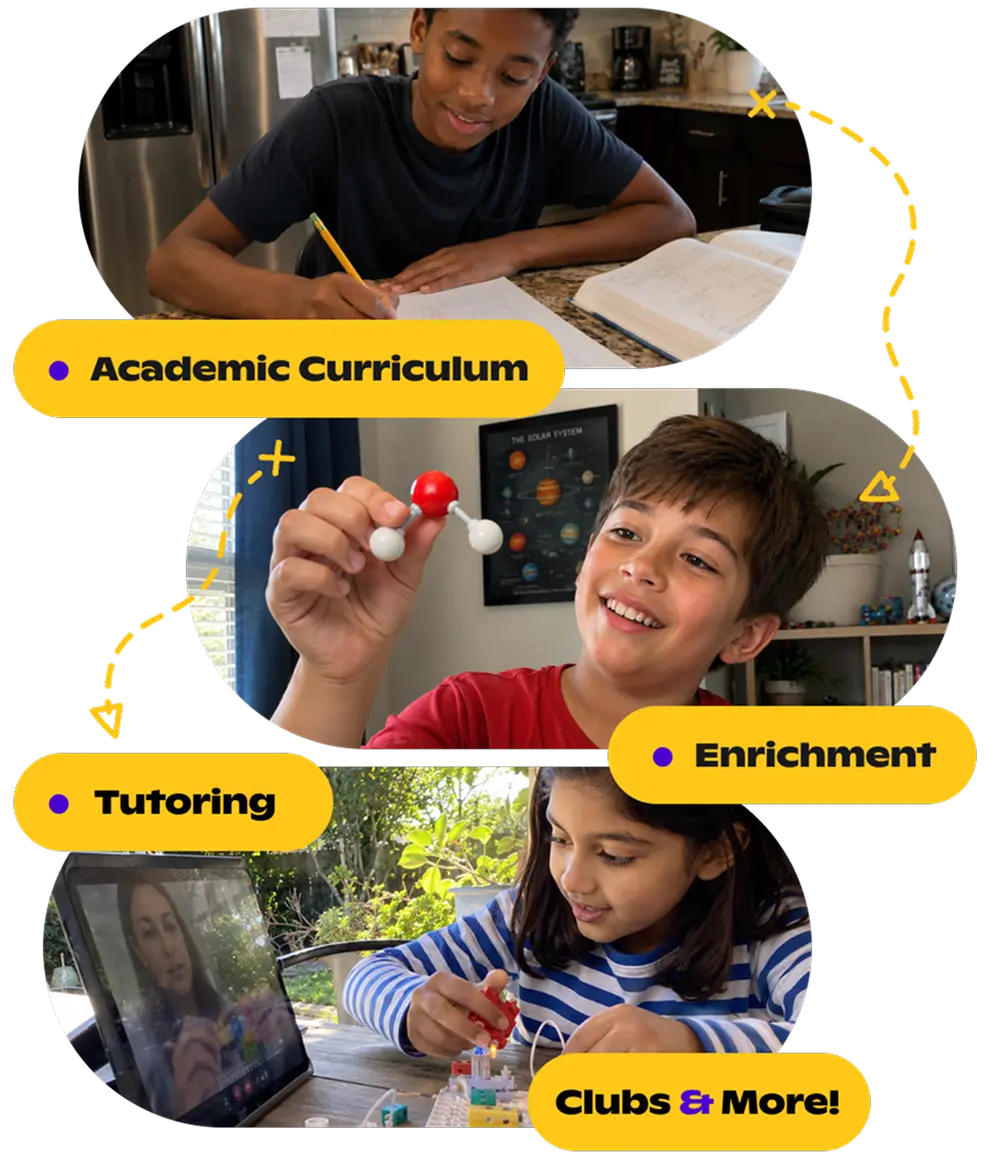
Consider swapping rigid commitments for flexible ones. Not all structured learning requires a fixed day, time, and physical location. Online classes and self-paced programs can fill the same developmental role as in-person extracurriculars for many subjects, from math enrichment and writing to art, coding, and world languages, while returning time and logistics to the family. Outschool offers live classes, one-on-one tutoring, and self-paced options in virtually every subject, taught by vetted, passionate teachers. Classes meet once a week or asynchronously, with no semester-long commitment. Browse by subject and age to see what's available for your child.
Protect one anchor of unstructured time per week. Research on free play is consistent: unstructured time where children direct their own activity builds self-regulation, creativity, and frustration tolerance. [3] A protected two-hour window on Saturday morning consistently outperforms a full weekend that gradually fills by default.
Build in an October check-in. Back-to-school decisions made in August feel permanent by October. They are not. Setting an explicit check-in point lets adjustments happen without drama.
Frequently asked questions
How many activities is too many for a child?
There is no universal number. Researchers point to warning signs rather than totals: chronic fatigue, loss of motivation, no unstructured time, and frequent meltdowns after back-to-back commitments are better indicators than a count. A child thriving in four activities with adequate downtime is in a better position than a child struggling in two.
What does research say about unstructured play?
Studies consistently show that child-directed free play builds self-regulation, creativity, and social problem-solving. The American Academy of Pediatrics has affirmed the developmental importance of unstructured play in its clinical guidance on the role of play in child development. [3] Researchers studying achievement culture note that many children today have limited experience choosing how to spend their time, which itself becomes a stressor when unstructured time appears. [2]
What if my child is asking for more activities than I think is manageable?
Child-initiated interest is a positive sign, but capacity still matters. A useful approach: let the child set priorities. "We have room for two after-school things this fall. Which two?" is a different conversation than a parent-imposed cut, and children who participate in the decision feel more ownership over the schedule.
Is it too late to adjust if I've already signed up for fall?
Most fall programs have some flexibility in the first few weeks. Check cancellation or pause policies for anything that hasn't started yet. The larger shift is usually about what you sign up for next season, so this checklist is most valuable now, before you finalize everything.
Sources
- National Education Association. "Study: Too Many Enrichment Activities Harm Mental Health." NEA Today, March 2024. nea.org
- Levine, M., & Wallace, J. "Perfectionism and the high-stakes culture of success: The hidden toll on kids." APA Monitor on Psychology, October 2024. apa.org
- Yogman M, Garner A, Hutchinson J, et al. "The Power of Play: A Pediatric Role in Enhancing Development in Young Children." Pediatrics, September 2018. publications.aap.org



.svg)
.svg)