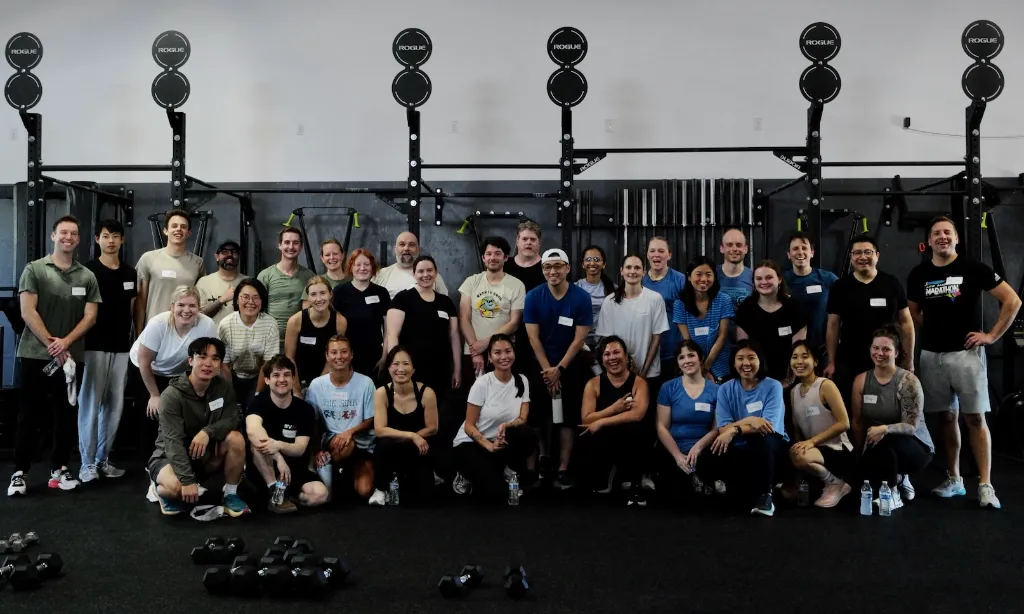
Last week, our team gathered in Sonoma.
We are a hybrid team; our employees are spread across the US, Canada, and South Korea. For some of us, this was the first time in the same room since November. In the months between, we'd welcomed new people and said goodbye to others. We'd navigated hard quarters and made difficult calls. And we'd done most of it from behind a screen.
So we came together with a clear intention: if we're going to build a team capable of withstanding real pressure — and solving hard problems over the long haul — we need to invest in the thing that makes that possible. Connection.
One of our employees described the week in a way I haven't stopped thinking about. She compared it to pressing play on an old tape recorder. Sometimes the button doesn't fully click into place. It looks like it's working, but something is just slightly off. During the offsite, she said, it finally clicked.
That's the feeling we were after. Not just productivity or alignment, but the kind of connection that creates resilience. We are mending the social fabric that holds a team together when things get hard. This is the reality of doing meaningful work.
Technology makes distributed work possible. Thoughtful agendas create the conditions for it. But the thing that makes a team feel like a team — the trust, the shorthand, the willingness to take a risk in front of each other — gets built in the moments between the agenda items. When laughter softens the room enough for someone to say the thing they've been holding back. When one person's half-formed idea becomes something better because someone else dared to build on it. We started with a physical outdoor team activity that asked people to move, problem-solve, and trust each other before the real work began. By the end of the week, we were cooking together at a pay-what-you-can culinary school in Sonoma that feeds the community while training the next generation of chefs. From a field in Sebastopol to a kitchen table in wine country, we were doing the same thing: showing up, contributing, and finding out what it feels like to build something together with no script.
Those moments are the glue. And in remote and hybrid companies, you have to be intentional about creating them.
What Superteams Actually Do
Before the offsite, our team read Ron Friedman's Harvard Business Review article, How to Build a Superteam That Keeps Getting Better. The research identifies something striking about the highest-performing teams: they don't just accomplish more. They actively make one another better, and they keep improving over time.
That landed for us because it reflects something we've believed for a long time. The strongest organizations aren't collections of individual stars. They're communities of people who challenge each other, share what they know, and are willing to sit inside a hard problem together — even when the answer isn't clear yet.
This is the kind of team we are building. Not a team of perfect people. A team of people with concentrated strengths — in creativity, execution, relationship-building, technical depth, problem-solving, communication — who bring those strengths to complement one another. People who believe that helping others grow is part of their own growth.
That composition is what makes a team more than the sum of its parts.
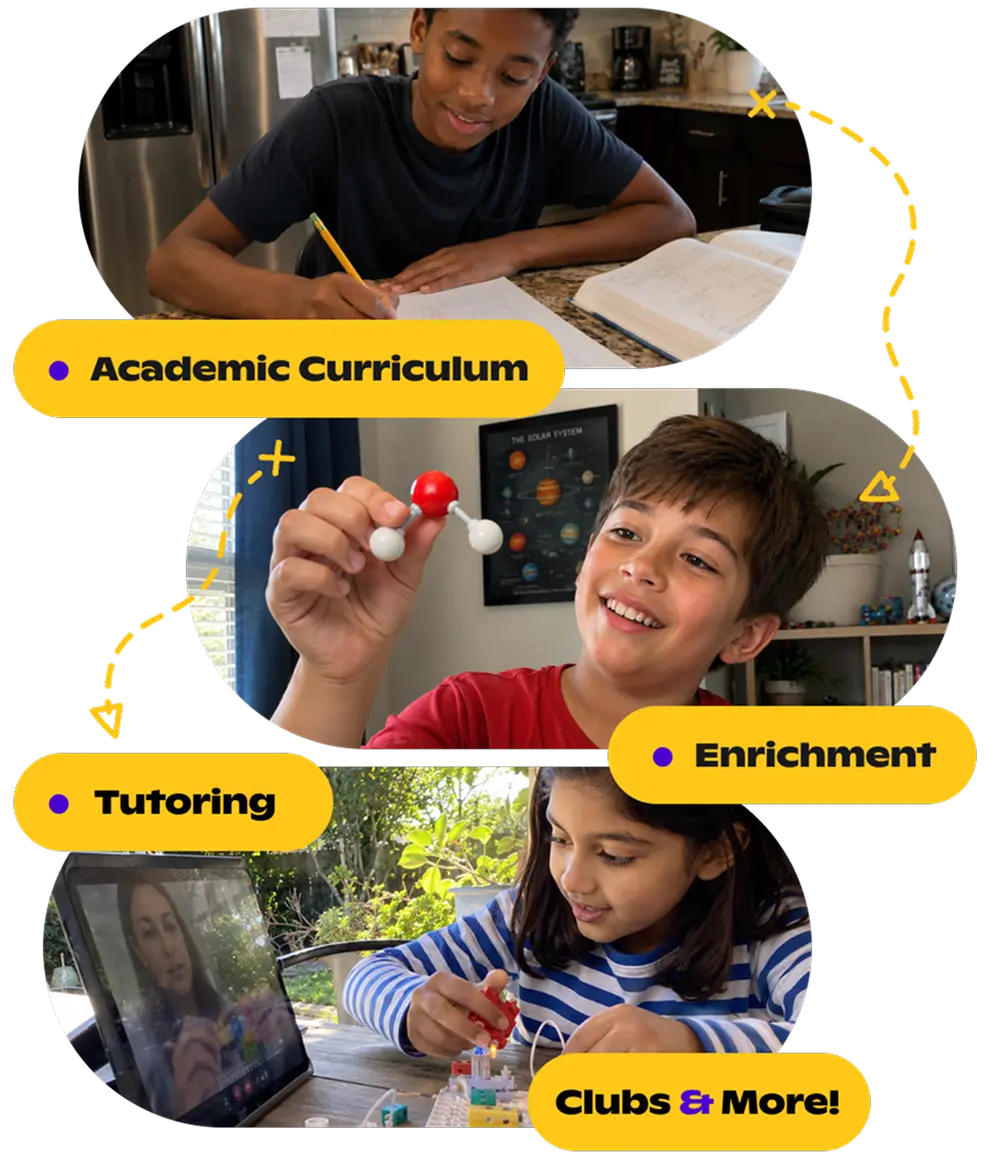
$20 off your first class WITH promo code: blog
Build the Education your Kid Deserves
Discover thousands of live classes taught by expert teachers, across academics and enrichment.
Browse classesMission as the Foundation
What ultimately connects our team isn't location. It isn't even a shared Slack channel or a quarterly offsite. It's purpose.
Every day, we're making it possible for families to build education that fits their kids instead of forcing their kids to fit education. We're giving teachers a way out of standardized curriculum and into teaching what they actually know. We're proving that interest-led learning works — and that it's becoming the norm, not the exception.
Our mission attracts people who want to disrupt how education works. It creates alignment around something bigger than quarterly metrics. And it gives us permission to take on hard problems — educator burnout, access gaps, the breakdown of standardized everything.
Building something meaningful is hard. It requires curiosity, experimentation, and a willingness to keep learning as fast as the problems evolve. It also requires a specific kind of courage: the courage to share an idea before it's fully formed. To challenge an assumption. To step into a hard problem without knowing how it ends.
We want people who have that courage and who want to work somewhere that asks for it.
Who We're Looking For
The research describes superteams as teams that continue to improve over time. In practice, that kind of sustained growth requires something simple — and rare. People who are willing to learn, willing to contribute, and willing to help one another become better than they could be alone. My experience has taught me that the strongest teams don't just do great work. They make one another better along the way. And then they show up ready to do it again.
We are expanding our team. We are looking for people who want to do meaningful work in a place that takes culture seriously — where connection isn't an afterthought and the hardest problems are the most interesting ones. If you are energized by challenge, motivated by mission, and want to build something alongside people who will make you better, we want to hear from you. Visit our careers page to check out our latest openings!


.svg)
.svg)