Round Rock in July does not do anything halfway. The heat rolled in early, stayed late, and reminded every single person in that exhibit hall why "hot as Texas in July" became a saying in the first place. And still, the room was full. Families came from across the state and beyond, some driving in from Arkansas, Kansas, Oklahoma, and as far as California and Florida, to spend a weekend figuring out what the coming school year could look like for their kids.
We spent three days at a booth in the middle of it, and we talked to hundreds of parents. Some were seasoned homeschoolers refining a system that already works. Many were brand new, standing at the very front edge of a big decision and feeling every bit of the weight that comes with it. If you were one of the people we met, thank you. And if you couldn't make it, here's what we came home thinking about.
"Overwhelmed" was the word we heard most
Over and over, when we asked families how they were feeling about the year ahead, the answer was some version of the same thing: overwhelmed. Not uninterested. Not unsure whether homeschooling was right for them. Overwhelmed by the sheer number of choices, the funding paperwork, the curriculum options, and the quiet pressure of being the one responsible for it all.
That feeling is worth naming, because it is the most normal thing in the world. Choosing an alternative to traditional school means trading a system that makes most of the decisions for you for one where you make them yourself. More freedom, more options, and yes, more to hold. The families who seemed most at ease were not the ones who had it all figured out. They were the ones who had given themselves permission to start small and adjust as they went.
If you're in the overwhelmed camp right now, you're in good company. Our guide to what the first week of homeschool actually looks like is a good, low-pressure place to begin, because it sets realistic expectations for a first week that almost never goes to plan.
Flexibility is the whole point, and it takes a minute to explain
A lot of the parents we talked to came in thinking about school the way they'd always known it: set packages, fixed hourly rates, a schedule handed down from somewhere else. So the first questions were often about price and format. How much does a class cost? How often does it meet? What does a week actually look like?
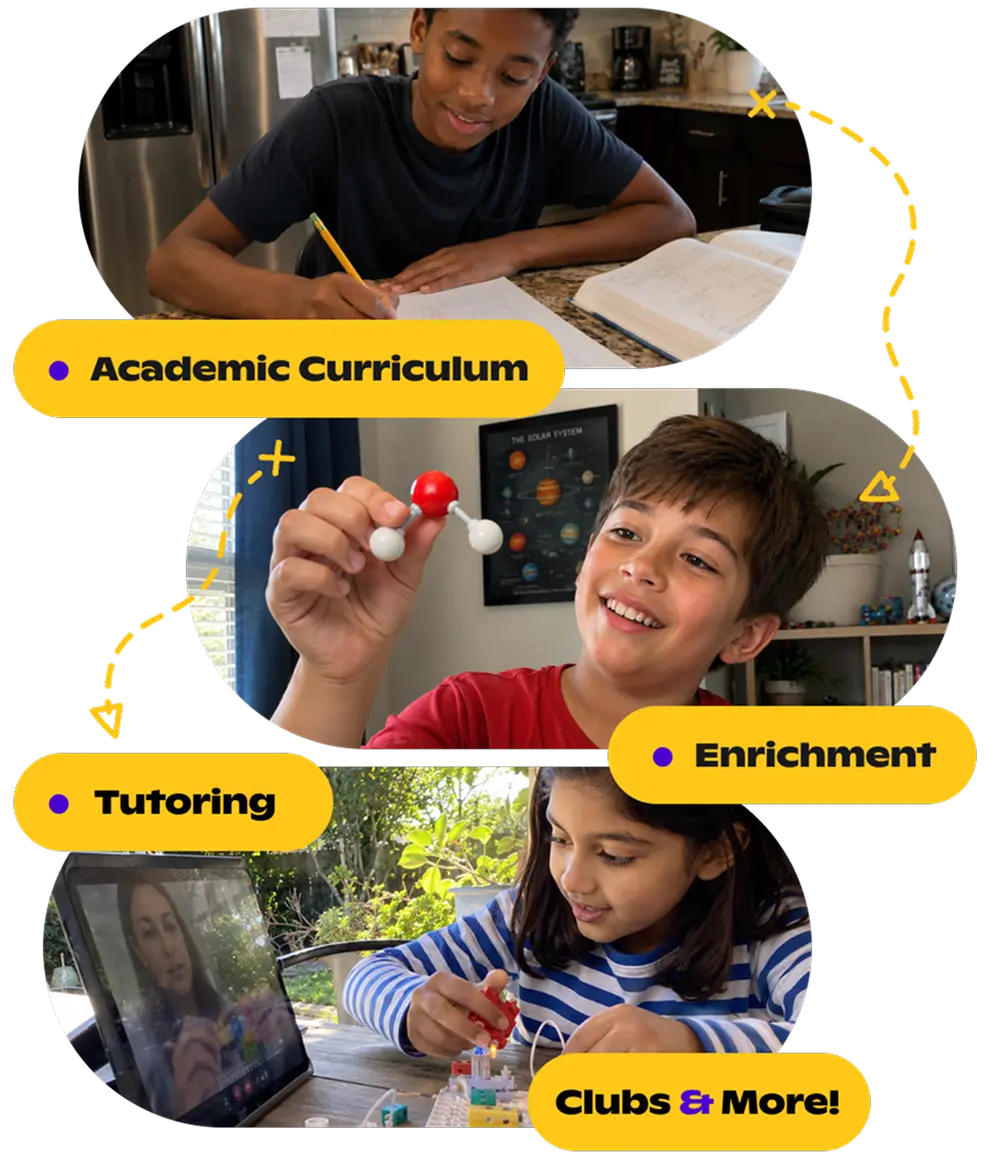
The honest answer is that it depends, because flexibility is the entire point. On Outschool, a family can book a single one-time class to test the waters, a semester-long group class that meets weekly, ongoing 1:1 tutoring, or a self-paced class a child works through on their own time. Live, small-group, tutoring, self-paced: the format bends to the kid, not the other way around.
One of our teammates put it best at the booth. Outschool works less like a set curriculum and more like a Swiss Army knife: whatever a family needs support with in a given season, from core academics to a niche enrichment obsession, there's usually a tool for it. The moment that tended to click for parents was when we stopped describing the platform and started asking about their child. What are they into? Where are they stuck? Then we could pull up real classes and show them, instead of talk about it.
If you want to browse the way we did at the booth, social-emotional classes and emotional intelligence classes are two easy starting points, and you can branch out from there by subject or interest.
Texas families still have questions about TEFA, and that's fair
If one topic dominated the weekend, it was the Texas Education Freedom Account, or TEFA. Families wanted to know the basics: What is it? Are we eligible? How does it work? And once we helped someone find a class they liked, the next question was almost always the same: is this one covered?
Here's the short version. TEFA is Texas's education savings account program, administered by the Texas Comptroller through the Odyssey marketplace. For the 2026 to 2027 school year, homeschool and other non-private-school students receive $2,000 per year, deposited into an Odyssey account, and families use those funds to purchase from approved providers. Online educational programs and private tutoring are both explicitly approved expenses, which is how Outschool classes qualify. [1]
We also heard a lot of hesitation rooted in worry rather than fact. Some families told us they were holding off on applying because they feared government oversight, forced testing, or a curriculum being dictated to them. Those concerns are understandable, and they're worth checking against the actual program rules before ruling anything out, because for many families the reality is far less restrictive than the fear. If TEFA is on your mind, our Texas Education Freedom Account guide for parents walks through eligibility, funding, and deadlines, and our breakdown of what ESA funds can and can't cover answers the "is this class covered" question in more detail.
One clarification came up enough that it's worth repeating here: buying a class and buying a credit bundle are two different things, and they're easy to confuse. If you're unsure which you're purchasing, it's always fine to slow down and check before you spend a dime of your funds.
$20 off your first class WITH promo code: blog
Build the Education your Kid Deserves
Discover thousands of live classes taught by expert teachers, across academics and enrichment.
Browse classesThe quiet win: camera-optional classes for anxious kids
Not every meaningful moment at the booth was about funding. One of the features that resonated most, especially with parents of neurodivergent kids, was something we don't talk about enough: kids don't have to turn their cameras on.
For a lot of children, and a lot of anxious kids in particular, being on camera is the single scariest part of a live online class. Watching that fear ease, in real time, as a parent realized their child could participate with the camera off was one of the most consistent bright spots of the weekend. It's a small design choice with an outsized effect on whether a hesitant kid is willing to try at all.
If camera anxiety is part of your family's picture, it's worth knowing this is built in, not a workaround. Our guide to finding an Outschool class for neurodivergent learners covers what else to look for when you're vetting a class for a child who needs a gentler on-ramp.
What existing families told us
For all the new-to-homeschooling energy, some of the best moments came from families who already use Outschool. More than once, we heard a genuine, unprompted "we love you," often followed by a thank-you for getting approved as a TEFA provider so they could keep the classes their kids already loved. We heard requests to support specific curricula that families are building their year around. And we heard the kind of specific, practical feedback you only get from people who use something every week.
We're taking all of it home. The point of showing up in a hot exhibit hall in July is not to talk. It's to listen, and Round Rock gave us plenty to listen to.
Thinking about the year ahead?
If you met us in Round Rock, or you're a Texas family sorting through your options for the fall, the best first step is a small one. Pick a subject your child is curious about, look at a class or two, and see how it feels. You don't have to build the whole year this weekend.
Browse classes on Outschool whenever you're ready, and if TEFA funding is part of your plan, start with our Texas Education Freedom Account guide so you know exactly how to put those funds to work.
We'll see you at the next one. Bring water.
Sources
[1] Texas Comptroller of Public Accounts, Education Freedom Accounts program. https://educationfreedom.texas.gov



.svg)
.svg)