Online learning can work remarkably well for kids with ADHD — but only when the format fits how their brain actually works. Self-paced apps, recorded video libraries, and worksheet programs share a common failure mode: they put the entire burden of engagement and accountability on the child. For many ADHD learners, that burden is exactly what they cannot carry alone.
What actually works is a live person who can read the room, pivot when focus drops, make the material interesting enough that attention follows naturally, and keep sessions short enough to match a real attention window. The platform question is secondary to the format question.
We looked at five platforms that specifically serve or are frequently recommended for kids with ADHD in 2026 — including platforms built around emotional regulation, cognitive training, and live academic instruction. For each, we considered not just whether the platform works in theory but how well the format and structure fit how ADHD kids actually learn.
The short version: Outschool is the strongest fit for academic learning because its live small-group format, flexible session lengths, and 1-on-1 tutoring options directly address the engagement and accountability gaps ADHD creates. Tapouts is a strong emotional coaching program for kids who need help with regulation and social skills, covering emotional skills rather than academic content. LearningRx offers live 1-on-1 cognitive training focused on attention and processing speed rather than subject matter. Brighterly provides structured 1-on-1 academic tutoring in math and reading with personalized learning plans. And Khan Academy is the best free self-paced option for ADHD learners with strong enough self-regulation to use it consistently.
Outschool
Best for: ADHD learners who need live engagement, sessions short enough for their attention window, interest-led academic topics, and a teacher who adapts in real time
Outschool's format addresses several of the structural barriers ADHD creates in traditional learning environments. Classes run in small groups of typically five or fewer kids, which means less waiting, less distraction from a large group dynamic, and more direct interaction with the teacher. Sessions can be as short as 30 minutes — a meaningful design feature for a child whose productive attention window makes a standard 60-minute session unrealistic. And because kids choose classes based on their own interests, the motivation problem is partially solved before the session even starts.
For families who need 1-on-1 support, Outschool's tutoring search lets you filter for tutors who specifically list ADHD experience, executive function coaching, or neurodivergent-informed instruction. Every tutor has real reviews from other parents, so you can read what families with similar kids experienced before booking a single session. There is no package required upfront — you can run a trial session, assess the fit, and switch tutors without penalty if the first isn't the right match.
- Live small-group classes (typically five or fewer kids) with direct teacher interaction
- Sessions as short as 30 minutes to match real attention windows
- Interest-led subject choices address the motivation component of ADHD
- Search 1-on-1 tutors by ADHD experience; read parent reviews before booking
- No upfront package; trial sessions before committing to ongoing tutoring
Cons: Pay-per-class model; class quality varies by teacher; finding the right tutor fit may take more than one trial session.
Tapouts
Best for: kids who need weekly support with emotional regulation, managing big feelings, and social-emotional skills — particularly ADHD kids whose meltdowns and emotional responses are the primary challenge at home
Tapouts is a live, small-group emotional coaching program for kids ages 4 to 16. Weekly 30-minute sessions are run by certified coaches with backgrounds in child psychology, education, or counseling, grouped by age so kids are always alongside peers at a similar developmental stage. The curriculum — developed by licensed therapists and PhD psychologists — covers emotional regulation, coping tools, self-awareness, confidence, and resilience. The platform was founded by someone diagnosed with Asperger's and designed specifically around the challenges neurodivergent kids face with emotions and self-understanding.
For families of ADHD kids, emotional regulation is often the presenting problem at home. The meltdowns, the low frustration tolerance, the impulsive reactions — Tapouts addresses all of that directly. The live, small-group format is structurally similar to what Outschool offers for academics, which is part of what makes it worth comparing. The distinction is that Tapouts covers emotional and social skills only, not academic subjects. A child who needs both emotional coaching and academic support needs both programs.
- Live small-group sessions (30 minutes, weekly) specifically designed for emotional regulation
- Age-grouped pods; curriculum developed by licensed therapists and PhD psychologists
- Covers exactly the emotional regulation challenges ADHD creates at home
- Free first session; 30-day money-back guarantee; HSA/FSA eligible
- 50,000+ families; 4.9-star average coach rating on Trustpilot
Cons: Covers emotional skills only — no academic content; $39 per week ($159 per four weeks) recurring subscription; does not replace academic tutoring; not the same as therapy if clinical support is needed.
LearningRx
Best for: families looking for intensive cognitive skills training targeting the attention and processing deficits underlying ADHD, rather than subject-specific academic instruction
LearningRx is a brain training program with dedicated ADHD programming and live 1-on-1 remote sessions with trained brain trainers. Rather than teaching academic content, LearningRx targets the underlying cognitive skills ADHD affects — working memory, processing speed, attention, and logic — through intensive, game-like training exercises. The idea is that strengthening these foundational skills will improve academic performance across subjects rather than addressing one subject at a time.
The honest picture: the scientific evidence for generalizing cognitive training gains to real-world academic performance is mixed. NBC News and independent researchers have examined whether brain training programs deliver on their broader claims, and results vary. LearningRx has a dedicated ADHD page and positions itself specifically for kids and adults with ADHD, dyslexia, and other learning differences, and families who find it effective describe meaningful improvements in attention and confidence. The program is significantly more expensive than academic tutoring, often several thousand dollars for a full training program.
- Live 1-on-1 sessions designed to target ADHD-related cognitive deficits directly
- Dedicated ADHD programming and diagnostic cognitive assessment
- Remote training available without a nearby physical center
Cons: Targets cognitive skills, not academic subjects — does not teach math, reading, or other content; significant cost; scientific evidence for broad academic transfer is mixed; not a substitute for subject-level tutoring or live academic instruction.
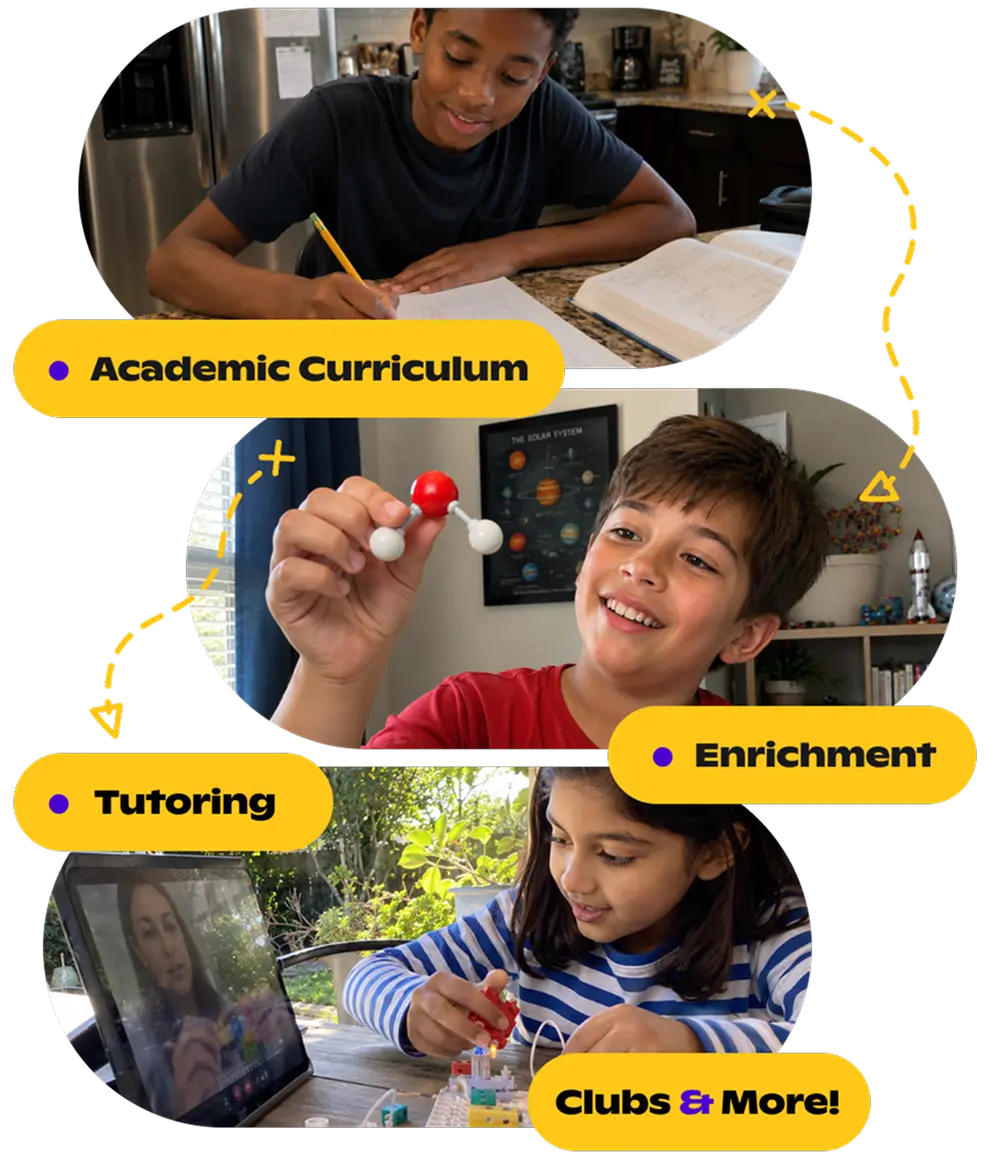
$20 off your first class WITH promo code: blog
Build the Education your Kid Deserves
Discover thousands of live classes taught by expert teachers, across academics and enrichment.
Browse classesBrighterly
Best for: structured 1-on-1 math or reading instruction with a personalized learning plan, ADHD kids who do better with predictable, consistent session formats
Brighterly is a 1-on-1 online tutoring platform for math and reading that starts with a diagnostic assessment and builds a personalized study plan before the first session. For ADHD kids who do better with a clear structure mapped out before each lesson and a consistent tutor they see regularly, that predictability reduces the cognitive load of starting each session.
Brighterly's sessions are designed to be interactive and engagement-focused. The limitation is subject scope: Brighterly covers math and reading only, and requires a subscription commitment rather than flexible per-session booking. Families who need support across multiple subjects will find the model constraining quickly.
- Personalized learning plan based on diagnostic assessment before first session
- Dedicated 1-on-1 tutor; consistent, predictable session structure
- Interactive, engagement-focused session design
Cons: Math and reading only; subscription commitment required; no ESA integration; subject breadth is narrow compared to full-platform options.
Khan Academy
Best for: ADHD learners with strong enough self-regulation to use a self-paced platform independently; free supplemental practice between tutoring sessions
Khan Academy's short video format — usually five to fifteen minutes per video — is structurally better suited to ADHD learners than long recorded lectures. A child can watch a video, do a few practice problems, stop when they lose focus, and come back without losing their place. For ADHD learners who have reasonably solid self-regulation and will return to the platform on their own, that flexibility is a genuine advantage.
The limitation is accountability. Khan Academy has no live person to notice when attention wanders, redirect a child who has disengaged, or make the material more compelling in real time. For most ADHD learners, the absence of external accountability is what causes the platform to stall after an initial week or two of enthusiasm. It works best as a free supplement between live sessions, not as a primary learning program.
- Short video format (5-15 minutes) suits shorter attention windows better than long lectures
- Self-paced; kids can stop and return without losing progress
- Free; covers every K-12 subject
Cons: No live instruction or accountability loop; requires self-regulation most ADHD kids are still developing; no ADHD-specific session structure or features; tends to stall without parent follow-through.
What ADHD-friendly online learning actually looks like
Beyond platform choice, the tutor relationship and session structure matter more for ADHD learners than for most kids. A few questions worth asking before committing to any program:
- How long are sessions? Thirty to forty-five minutes is more effective for most ADHD learners than sixty-minute sessions. A platform that only offers sixty-minute blocks is not designed with real attention windows in mind.
- Does the tutor or program build in transitions between activities? ADHD learners typically do better with variety within a session than sustained single-task work for the full duration.
- How does the tutor respond when a child loses focus or goes off-topic? The answer reveals more about actual ADHD experience than any credential.
- Is there a consistent session structure your child can predict? Predictability reduces the cognitive overhead of starting each session, which ADHD kids often experience as higher than neurotypical kids.
- Can you switch if the first tutor isn't a fit? Finding the right tutor for an ADHD kid sometimes takes more than one attempt. A platform that requires a package purchase before that trial is a real financial risk.
How to choose by age
- Ages four through seven — Emotional regulation support (Tapouts) and live academic engagement (Outschool) both make sense at this age. Short sessions matter most; establishing that learning can feel good is the primary goal.
- Ages eight through twelve — This is when academic gaps start to compound. Live instruction with a teacher who can adapt in real time makes the most difference. Outschool's 1-on-1 tutoring lets you target specific subjects while keeping the format ADHD-friendly.
- Middle and high school — Executive function coaching becomes as important as subject tutoring at this stage. Look for tutors who can help with organization and planning alongside the academic content. Outschool has tutors who list executive function coaching specifically.
If your child could use a tutor who knows how to keep a session moving and make the subject genuinely interesting, browse classes and tutoring for kids with ADHD on Outschool.


.svg)
.svg)