First grade math is the year the training wheels come off. In kindergarten, math was about counting, sorting, and understanding that numbers represent real quantities. First grade is where the operations begin, and where early math anxiety can quietly take root if the pace or approach isn't right.
Not every first grader arrives with the same foundation. Some districts don't require kindergarten, and even among those who attended, readiness varies widely. First graders are still young learners in many ways, and their math needs to reflect that: heavy on hands-on experience, exposure to multiple modalities and strategies, and consistent use of proper math vocabulary from the start. Building that vocabulary early is one of the most underrated investments a parent can make at this stage.
The good news is that first grade math is one of the most teachable years for parents at home. The concepts are accessible, the manipulatives are inexpensive, and the gap between "my child gets this" and "my child is struggling" is usually a method mismatch, not a capability problem.
This guide covers what first grade math actually includes, how to pick the right curriculum for your child, and what to do when the current approach stops working.
What first grade math covers
A solid first grade math curriculum for homeschoolers builds on kindergarten number sense and moves into operations, measurement, and early place value. Most programs cover five core areas.
1. Addition and subtraction
This is the centerpiece of first grade math, and the scope is larger than many parents expect. While kindergartners develop fluency within 5 and work with problems within 20, first grade extends that work significantly: Common Core standards call for adding and subtracting within 100 and counting up to 120. Kids move from counting on fingers to using mental strategies: making tens, counting up, using doubles. The goal for end of year is fluency within 10 and the ability to solve problems up to 100.
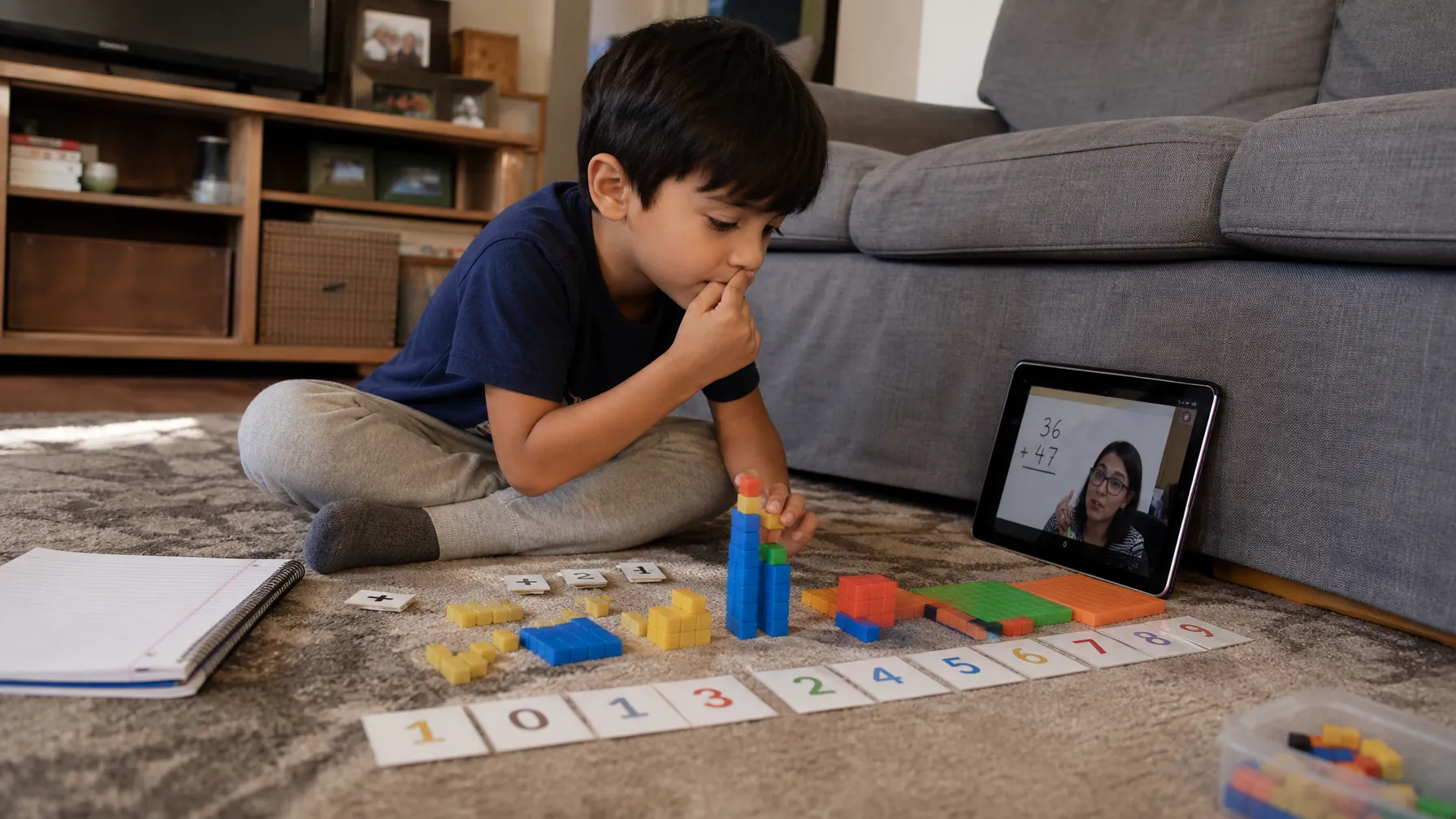
Manipulatives make this concrete from day one. If your child is eating grapes, right there you have addition, subtraction, and even regrouping. Math doesn't need to be designed in advance — it's already in everyday life. Explore first grade math classes for live practice on these foundational operations.
2. Place value: tens and ones
First graders learn that two-digit numbers are made of tens and ones, that 34 means 3 tens and 4 ones, and that they can compare two-digit numbers. This is the conceptual foundation for all the multi-digit arithmetic they'll do for years. Place value gaps follow learners through carrying in addition, borrowing in subtraction, and all the way into fractions and decimals, where the idea of wholes and parts becomes central. Children need to be able to see the math: hands-on work, drawing pictures, and varied concrete experiences build the understanding that worksheets alone cannot provide.
3. Measurement and data
First graders measure and order lengths using both non-standard units and rulers, comparing objects directly (placing them side by side) and indirectly (using a third object as a reference). They organize data into simple graphs and charts.
4. Geometry
Building on kindergarten shapes, first graders learn to describe, combine, and compose 2D and 3D shapes, explore equal shares (halves and fourths), and reason about the properties of shapes rather than just naming them.
5. Telling time and using money
First graders tell time to the hour and half hour on both analog and digital clocks, and work with coin values: identifying pennies, nickels, dimes, and quarters and finding simple totals.
How long should first grade math take?
For most homeschooling families, 30 to 40 minutes of focused math per day works well at this level. A good session might include 5 minutes of mental math warm-up, 20 to 25 minutes of concept work with manipulatives and practice problems, and 5 to 10 minutes of a math game.
First grade math curriculum approaches
First grade, like kindergarten, is still a hands-on learning stage. The approaches that produce the best outcomes at this age prioritize concrete experience, physical manipulation, and conceptual understanding before moving to pencil-and-paper practice. The same logic that applies to kindergarten curriculum choice applies here: don't lead with workbooks.
Conceptual and manipulatives-based programs
Programs like Math-U-See Level Alpha/Beta, RightStart Mathematics Level B, and Miquon Math build understanding before fluency, using physical materials to make abstract concepts concrete before moving to written practice.
Best for: Visual and kinesthetic learners. Kids who understand concepts but struggle to transfer them to paper.
Watch for: These programs require more parent engagement and prep. The manipulatives are worth the investment — base-ten blocks and a number line will serve you for years.
Game-based and project-based learning
Some families build first grade math around games, puzzles, and real-life activities rather than a formal program. Card games, board games, cooking fractions, counting coins — all build genuine math skills without the resistance that worksheets can create at this age.
Best for: Active, hands-on learners. Families where workbooks create daily resistance.
Watch for: It's easy to skip place value with a purely game-based approach. Keep a simple checklist of first grade math skills and confirm you're covering each one. Browse first grade math classes on Outschool for live, game-based options taught by educators who specialize in this age group.
Singapore Math
Primary Mathematics 1A/1B uses a concrete-pictorial-abstract sequence shown to produce strong math outcomes. First graders work with objects, then pictures, then symbols, with each step reinforcing the last.
Best for: Mathematically confident kids ready for a challenge. Parents comfortable with a less scripted approach.
Watch for: Singapore Math moves fast compared to most US curricula. Consider adding a spiral review supplement if your child tends to forget material over time.
Workbook-based programs
Programs like Saxon Math 1, Horizons Math Grade 1, and Abeka Grade 1 provide scripted lessons, extensive practice problems, and built-in review. Saxon's spiral approach constantly revisits previous concepts so nothing gets forgotten.
Best for: Kids who thrive with routine and clear daily expectations. Families who want everything planned out.
Watch for: Workbooks work best in first grade as a supplement to hands-on work, not as the primary vehicle. At this age, pencil-and-paper practice is most effective when it follows concrete and visual experience. If daily math is a consistent battle, adding more manipulatives before workbook time often resolves it.
What to look for in a first grade math curriculum
The best first grade math curriculum for your homeschooler will:
- Spend significant time on place value before adding or subtracting multi-digit numbers
- Use manipulatives or visual models alongside written problems, not as an afterthought
- Build mental math strategies rather than relying only on counting one by one
- Include regular cumulative review so previously learned skills stay sharp
- Move at your child's pace, not a classroom average
First grade is also when fact fluency begins building. This doesn't mean drilling flash cards until a child hates math. It means building familiarity with number relationships through games, patterns, and repeated exposure so that simple facts become automatic over time.
Teaching first grade math at home: practical tips
Do mental math warm-ups daily
Start every math session with 5 minutes of oral math, no pencil, no paper. "What's 7 plus 3? What's 10 minus 4? Count by 5s to 50." This keeps previously learned facts warm and builds the mental flexibility that later math depends on.
Use base-ten blocks for place value — every time
Place value is abstract until it isn't. Physically building the number 34 with 3 ten-blocks and 4 unit-cubes makes the concept stick in a way no worksheet can replicate. If your child can write 34 but doesn't understand why the 3 is "bigger" than the 4, go back to the blocks.
Play math games alongside the curriculum
Games like Shut the Box, dice games, and card games build number sense and quick mental addition without feeling like practice. Dice games in particular are underrated for first grade math — they provide constant exposure to number combinations in a format kids choose to play.
Spiral back to older concepts regularly
Math retention is one of the hardest problems at this age. Children need direct exposure through focused lessons AND regular revisiting of material that is no longer the current topic. A child may actively learn something in October and not encounter it again until the following year — by which point it can feel completely new. Build short review spirals into your weekly routine: 5 minutes per session on a concept from a few weeks ago is enough to keep it active.
Don't rush fact fluency
Addition and subtraction fact fluency is a first grade goal, but it's a by-end-of-year goal, not a September goal. Focus on building strategies (making tens, doubles, counting up from the larger number) before drilling for speed.
Watch for procedure without understanding
A child who can complete a page of addition problems but can't explain what addition means, or can't apply it to a word problem, has learned a procedure without the underlying concept. When that happens, take a step back and return to the foundations: give them different experiences, new chances to manipulate physical objects, and time to explore why the math works the way it does. Non-examples are particularly useful here — asking "is this addition?" about a scenario that is NOT addition builds the kind of discrimination that real understanding requires. This gap becomes a real problem in second and third grade if left unaddressed.
When your child needs a different approach
Signs that your current first grade math curriculum isn't working:
- Consistent daily resistance that hasn't eased after 4 to 6 weeks
- No retention: concepts mastered one week are forgotten the next
- Strong procedure but weak understanding: can complete problems but can't explain them
- Math anxiety that's building, not fading, over time
When a child is stuck, a different voice often makes the difference. Browse first grade math classes on Outschool to find educators who specialize in concept-first, hands-on instruction at this level — patient teachers who can rebuild understanding where it's shaky and help a child reconnect with math in a low-pressure setting.
How Outschool fits into your first grade math plan
Browse first grade math classes to find:
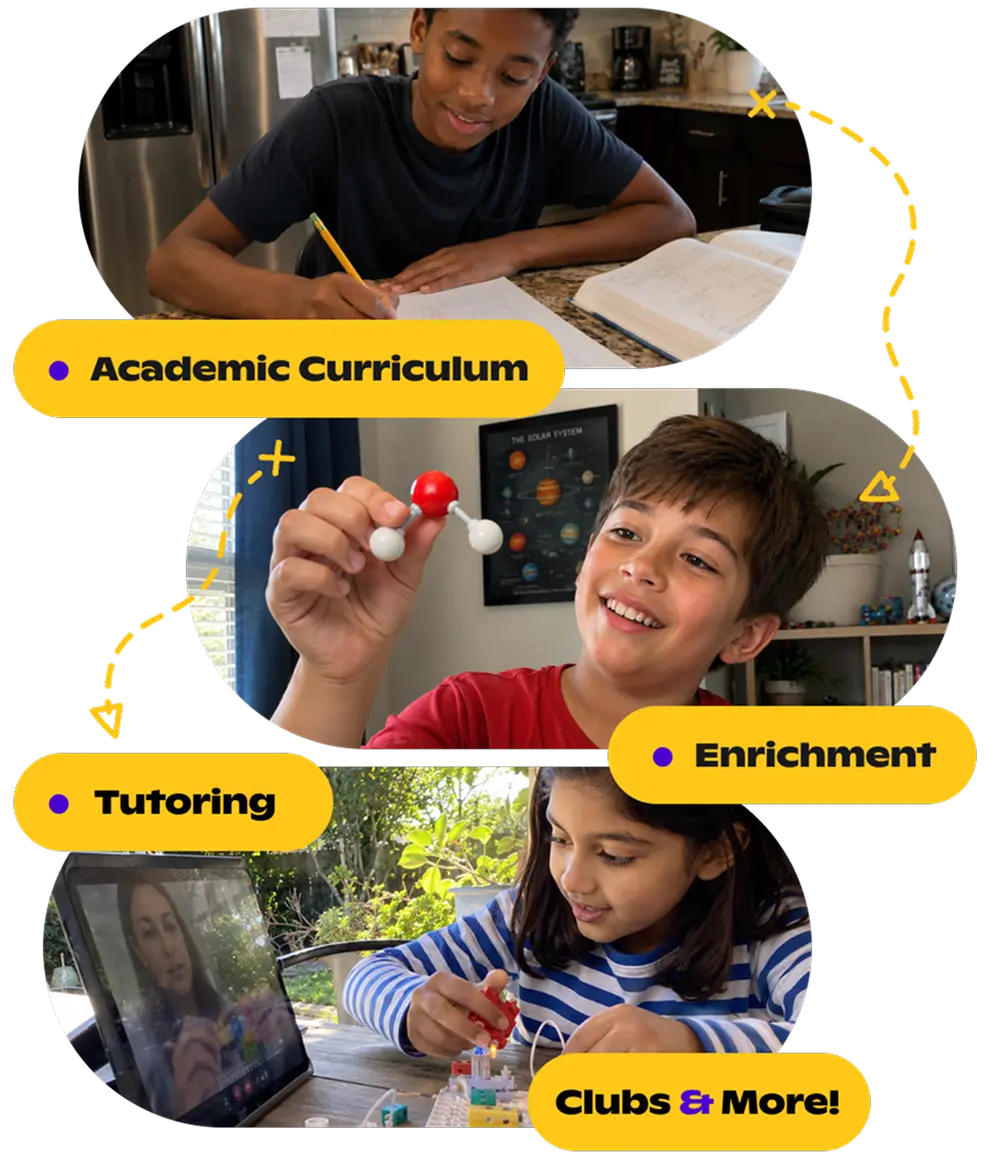
- Concept-specific classes: a four-week class on place value, or a session just on subtraction strategies
- Math games and enrichment clubs: for kids who are on track but want math to be more fun
- Small group tutoring: for kids who need targeted help on a specific skill
- Challenge classes: for first graders who are ready to work ahead
You can also browse elementary school math classes if your child is working at a level that spans multiple grades.
Putting it all together
First grade math is where the love of numbers either grows or quietly gets squashed. The families who set their kids up best at this age kept math hands-on, kept the pressure low, and paid attention to whether understanding was actually there beneath the right answers.
Pick a program that fits your child's learning style, give it a real run of 6 to 8 weeks, and adjust from there. The most important outcome of first grade math isn't mastery of every standard — it's a child who still believes they're good at it.
Explore first grade math classes on Outschool to find live instruction that fits your schedule and supports your current curriculum.


.svg)
.svg)