Tennessee families have access to three state-funded school choice programs, each designed for a different student population. If you've searched for "Tennessee ESA" and landed on a confusing mix of acronyms, you're not alone. The state runs the Education Savings Account (ESA) program, the Education Freedom Scholarship (EFS), and the Individualized Education Account (IEA), and they overlap in name but not in eligibility or funding.
This guide breaks down who qualifies for each, how much funding is available for the 2026-27 school year, and how to spend those funds on learning options that fit your family, including live online classes through Outschool.
The three Tennessee school choice programs at a glance
Tennessee's three programs serve different families:
- ESA (Education Savings Account): For students zoned to attend schools in Memphis-Shelby County, Metro Nashville, or Hamilton County. Funds can be used for tuition at approved non-public schools and other education expenses.
- EFS (Education Freedom Scholarship): Tennessee's universal school choice program, signed into law in February 2025. Open to all Tennessee K-12 students. Funds are used at registered non-public schools, prioritizing tuition and fees.
- IEA (Individualized Education Account): For K-12 students with qualifying disabilities who have an active IEP. Funds cover a wide range of educational and therapeutic expenses.
Each program has its own application process, funding amount, and set of approved expenses.
Tennessee ESA program: eligibility, amounts, and how it works
Who qualifies
The ESA program is available to Tennessee residents whose children are zoned to attend one of three school districts:
- Memphis-Shelby County Schools
- Metro Nashville Public Schools
- Hamilton County Schools
Students zoned to a school that was in the Achievement School District (ASD) on May 24, 2019 are also eligible.
How much funding is available
Award amounts for the 2026-27 school year vary by district:
- Hamilton County Schools: $10,093.89
- Metro Nashville Public Schools: Amount varies (check the ESA portal for your specific award)
- Memphis-Shelby County Schools: Amount varies by school zone
Amounts are based on state and local per-pupil funding for the student's zoned school district, so they differ depending on where you live.
What ESA funds can be used for
Approved expenses include:
- Tuition and fees at approved participating non-public schools
- Textbooks and instructional materials
- Online learning programs
- Tutoring services
- Educational therapies
- Standardized testing fees
How to apply
Applications for the 2026-27 school year have closed. For the 2027-28 school year, the application window is projected to open in February 2027.
Funds are managed through the ESA e-Wallet online portal, where families can make payments to approved providers and track their balance.
Education Freedom Scholarship (EFS): Tennessee's universal program
Who qualifies
EFS is Tennessee's broadest school choice program. Any Tennessee resident who is entitled to attend a public school in grades K-12 can apply. There are no income limits, geographic restrictions, or disability requirements.
The program was established during an extraordinary legislative session in January 2025 and signed into law by Governor Bill Lee on February 12, 2025.
How much funding is available
- 2025-26 school year: $7,295
- 2026-27 school year: $7,530
Scholarships are distributed quarterly, with projected disbursement dates for 2026-27:
- Quarter 1: August 15, 2026
- Quarter 2: October 1, 2026 (about 20% of the full-year award)
- Quarter 3: January 15, 2027
- Quarter 4: March 15, 2027
What EFS funds can be used for
EFS funds are used while enrolled at a registered Category I, II, or III non-public school located in Tennessee. The primary approved expense is tuition and fees. Unlike the ESA and IEA programs, EFS funds are more narrowly focused on school enrollment rather than a la carte educational expenses.
How to apply
Applications for the 2026-27 school year are closed. For the 2027-28 cycle, check tn.gov/education/efs.html for updated application windows.
Contact: Call (615) 741-5158 and select the prompts for Office of Programs and School Choice.
$20 off your first class WITH promo code: blog
Build the Education your Kid Deserves
Discover thousands of live classes taught by expert teachers, across academics and enrichment.
Browse classesIndividualized Education Account (IEA): for students with disabilities
Who qualifies
The IEA program serves K-12 students with qualifying disabilities. To be eligible, a student must:
- Be a Tennessee resident
- Have been enrolled in a Tennessee public school for the entire school year before participating in the IEA program (with exceptions for first-time kindergartners and students new to Tennessee)
- Have an active Individualized Education Program (IEP) with a qualifying disability
Once enrolled in the IEA program, the student can no longer be enrolled in public school.
What IEA funds can be used for
The IEA program offers the broadest flexibility of Tennessee's three programs. Approved expenses include:
- Scholarships to attend certain non-public schools
- Participation in umbrella homeschool programs
- Independently homeschooling
- Tutoring and educational therapies
- Curriculum and instructional materials
- Online learning programs
- Assistive technology
How to apply
Applications for the 2026-27 contract year are closed. The application window for the 2027-28 contract year is projected to open on February 16, 2027.
Contact: Email IEA.Questions@tn.gov
Which Tennessee program is right for your family?
Start with these questions:
- Does your child have an IEP with a qualifying disability? If yes, the IEA program likely offers the most flexible funding for your situation.
- Is your child zoned to attend a school in Memphis, Nashville, or Hamilton County? If yes, the ESA program provides district-specific funding that can exceed $10,000.
- Do you want your child to attend a registered non-public school anywhere in Tennessee? The EFS program is the broadest option, available statewide with $7,530 for 2026-27.
Families cannot receive funding from more than one program at the same time. If you qualify for multiple programs, compare the award amounts and approved expense categories to determine which fits best.
How to use Tennessee school choice funds on Outschool
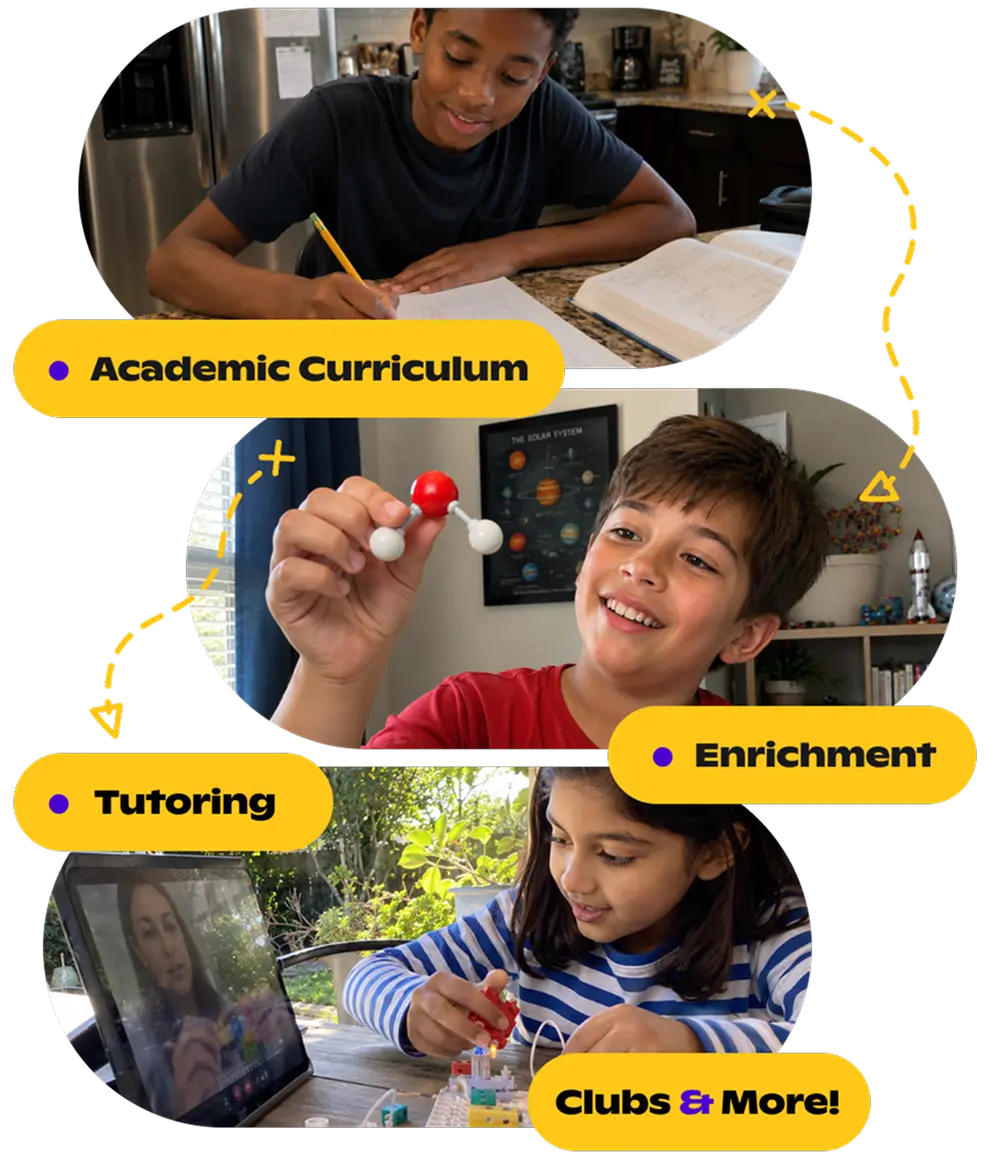
Outschool offers live, small-group classes, 1-on-1 tutoring, and self-paced options across academics and enrichment. For Tennessee families using the ESA or IEA program, online learning programs are an approved expense category.
Families typically use their funds for:
- Live classes in math, reading, writing, science, and more
- 1-on-1 tutoring for personalized academic support
- Enrichment classes in coding, art, music, and life skills
- Test prep and academic assessment support
To use your Tennessee ESA or IEA funds on Outschool, check your program's e-Wallet portal or contact the program directly to confirm Outschool as an approved provider. For the most current information on using Tennessee funds on Outschool, visit our ESA guide.
Frequently asked questions about Tennessee school choice programs
Can I use Tennessee ESA funds for homeschooling?
The ESA program is primarily designed for tuition at approved non-public schools. If you're homeschooling and your child has a qualifying disability, the IEA program offers broader flexibility for home education expenses, including curriculum, tutoring, and online learning programs.
What's the difference between the ESA and the EFS?
The ESA is limited to students zoned to Memphis, Nashville, or Hamilton County schools and offers district-specific per-pupil funding (up to ~$10,000+). The EFS is available statewide to all K-12 students and provides a flat $7,530 for 2026-27, primarily for non-public school tuition.
Can my child receive funding from more than one program?
No. Students may only participate in one Tennessee school choice program at a time.
When do applications open for the 2027-28 school year?
Dates have not been finalized, but historically, applications open in February. The IEA program has projected its 2027-28 application window to open on February 16, 2027.
Are there income limits for any of these programs?
The ESA and EFS programs do not have income limits. The IEA program is based on disability eligibility, not income.
What happens if I don't use all my funds?
Policies vary by program. Check with your program administrator through the ESA e-Wallet portal or by contacting the Tennessee Department of Education's Office of Programs and School Choice at (615) 741-5158.
Sources
[1] Tennessee Department of Education. "Tennessee Education Savings Account (ESA) Program." https://www.tn.gov/education/esa.html
[2] Tennessee Department of Education. "Tennessee Education Freedom Scholarship Program." https://www.tn.gov/education/efs.html
[3] Tennessee Department of Education. "Individualized Education Account (IEA) Program." https://www.tn.gov/education/families/individualized-education-account-program.html



.svg)
.svg)