Summer is here — and if your family has an education savings account, fall planning is already in season.
Most ESA programs run on fiscal or academic year cycles with fund availability windows, enrollment deadlines, and sometimes rollover limits that don't announce themselves in August. Families who map out their fall curriculum now consistently get more out of their programs: better access to high-demand live classes, more time to compare curriculum options, and no scramble when September arrives.
This isn't a guide to spending your ESA funds this summer — that's a separate conversation. This is a blueprint for families who want to walk into the fall year with a clear plan, a funded curriculum, and zero scramble.
What does "back to school" look like for an ESA family?
For families using education savings accounts, there's no single back-to-school template. Some kids are transitioning out of traditional school for the first time in September; others have been homeschooling for years and are simply starting a new academic year. Either way, the ESA back-to-school season is less about supplies and more about curriculum decisions.
The questions worth sitting with now:
- Which subjects need a formal curriculum this fall?
- Where did your kid hit real resistance last year — and does a different format or some live instruction make more sense than more of the same material?
- Where are they genuinely ahead, and where can you give them room to run?
- What's your ESA balance, and how does it map against what you're planning to spend?
Getting honest answers to those four questions before you spend a dollar gives you a curriculum plan, not just a cart full of materials.
What can you use your ESA funds for this fall?
Most state ESA programs allow funds to cover a wider range of educational expenses than parents expect. While specifics vary by program, approved expenses commonly include:
- Curriculum materials and textbooks
- Live online classes and instruction programs (like Outschool)
- Educational software and apps
- Tutoring, both individual and group
- Testing and assessment fees
- Educational therapies and special education services, where applicable
- Extracurricular educational activities, in many programs
What's typically not covered: general school supplies, non-educational items, and services from providers not on your program's approved vendor list.
The most reliable starting point is the ESA approved expenses list for your program. If you're still learning how your account works, the guide to how education savings accounts work covers the fundamentals.
Building a fall curriculum budget with your ESA
The big advantage of an ESA is flexibility — you're not locked into one provider or one approach. Most families get the most out of their funds when they plan by category before spending starts.
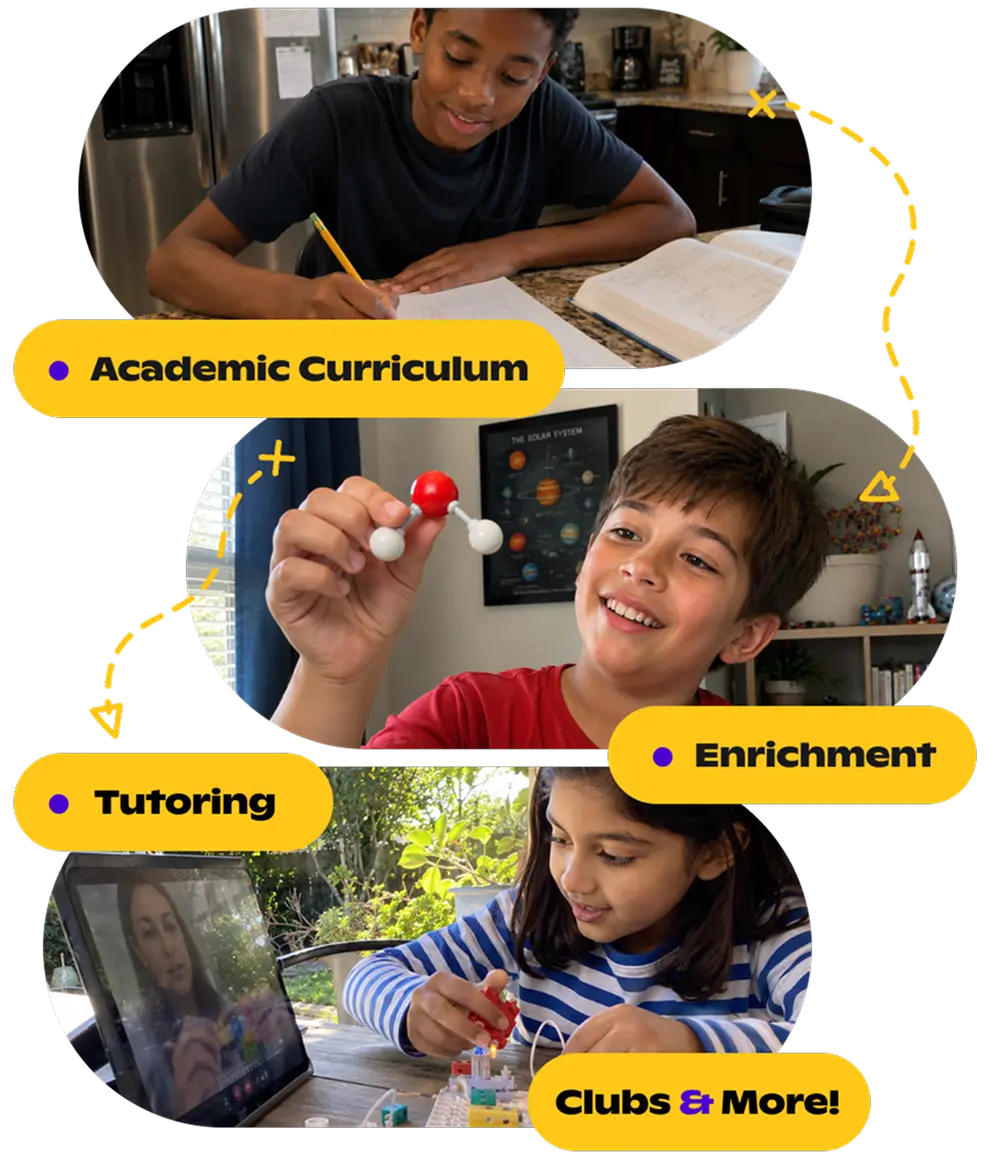
Core subjects first. Math, reading, writing, and science tend to carry the biggest price tags when you're buying structured curriculum programs. Figure out what you need here before anything else, since these aren't optional.
Then enrichment and electives. This is where alt-ed families have a real edge — coding, foreign language, creative writing, art, music. Traditional schools can't offer much of this in a way that fits individual kids. ESA families can. Don't reflexively cut enrichment to pad the core budget; this category is often where kids find the most engagement and where a parent-as-hero curriculum decision pays off.
Then live instruction and tutoring. Live classes and 1-on-1 tutoring provide the accountability and interaction that self-paced materials can't replicate. If your child struggled in a subject last year, more of the same curriculum probably isn't the answer. A weekly live class or a focused tutoring engagement can move the needle in ways workbooks don't.
Once you've mapped spending across those three categories, compare it to your expected fall balance. If you're running short, trim enrichment before core. If you have room, invest in live instruction.
If your budget is stretched: a prioritization order
When your allocation doesn't cover everything on your list, this framework helps decide what makes the cut:
- Tier 1 — Non-negotiables: Core curriculum for math and language arts, essential instructional materials, and any therapeutic or specialized services. These come first.
- Tier 2 — High-value additions: Live classes or tutoring in subjects where your kid needs outside support. A weekly live class with an experienced teacher often delivers more progress per dollar than a second curriculum program.
- Tier 3 — Enrichment and electives: Art, music, coding, foreign language, creative writing. Meaningful for your kid's development, but fundable after Tier 1 and 2 are covered.
- Tier 4 — Nice-to-haves: Educational games, supplemental resources, technology upgrades. Worth it if funds allow — not worth shortchanging Tier 1 and 2 for.
Browse 1-on-1 tutoring classes on Outschool
How to use Outschool with your ESA this fall
Outschool is an approved provider on most major state ESA programs. Families use their ESA funds to enroll in live, small-group online classes and 1-on-1 tutoring across hundreds of subjects — from reading and writing to math, science, coding, and beyond.
Classes are scheduled ahead. Most live classes run weekly for a set number of weeks. Booking in late June or July means you lock in a slot before high-demand classes fill — some fill months in advance.
Pay per class, no semester commitment. There's no year-long contract. You can book a 6-week class, continue if it clicks, or try something different next term.
Small class sizes. Most Outschool classes have between 3 and 12 kids. That's not accidental — it's what makes genuine teacher attention and real peer interaction possible.
ESA wallets are often accepted directly. Depending on your program, you may be able to pay through ClassWallet or Odyssey without submitting receipts separately. Check your program's approved vendor list before booking to confirm how payment works.
Program-specific tips for fall planning
Every ESA runs a little differently. Here's what to keep in mind by program as you plan.
Texas TEFA families. Texas Education Freedom Account funds are distributed quarterly. Map your expected quarterly balance against your curriculum spending before fall starts so you're not overdrawing before the year ends. Weekly live classes that run across a term are often easier to budget than lump-sum curriculum purchases. See the full Texas TEFA guide for distribution details and qualifying expenses.
Florida families (Step Up, FES-EO, FES-UA). Florida runs several parallel scholarship programs, each with slightly different eligibility rules and approved expenses. Confirm Outschool's vendor status through your specific program portal before booking fall classes. The Florida programs guide covers all three, and the Step Up for Students reimbursement guide has Step Up-specific details.
Arizona ESA families. Arizona's Empowerment Scholarship Account is one of the most flexible programs in the country — no income cap, no disability requirement, open to almost any Arizona family. Fall is a strong time to explore new subjects. Read the full Arizona ESA guide for current details on qualifying expenses and fund amounts.
Louisiana GATOR families. The Louisiana GATOR program distributes funds through the Odyssey marketplace. Outschool is live on Odyssey, so Louisiana families can browse and book directly through the platform without a separate reimbursement process. See the Louisiana GATOR guide for fund amounts and program details.
Other states. Alabama (CHOOSE Act), Arkansas (EFA), Georgia (Promise Scholarship), North Carolina (ESA+), South Carolina, Utah, West Virginia, and New Hampshire all have active ESA programs covering online learning providers. Browse all state ESA guides to find yours.
Timing and deadlines: what to put on your calendar
ESA programs don't share a universal calendar, but a few timing principles hold broadly.
Re-enrollment windows. Some programs require annual re-enrollment to maintain eligibility. Confirm your status for the upcoming year before building a curriculum plan around funds you haven't yet secured.
Fund availability dates. Most state programs release funds at the start of the academic year or quarterly. Know when your funds arrive so you can book fall classes as soon as they're accessible.
Rollover policies. Some ESA funds carry forward year to year; others expire at the end of the fiscal year. If you have unused funds from last year, check whether they roll over — or whether spending them before the reset date makes more sense.
Reimbursement submission cycles. If your program uses direct reimbursement rather than a marketplace wallet, you'll pay upfront and submit receipts on a regular cycle. Build those submission dates into your calendar from day one.
The ESA account rules guide covers common program rules, but always verify with your specific program for the most current details.
Frequently asked questions
Can I use my ESA to pay for Outschool classes?
In most cases, yes. Outschool is an approved provider on major state ESA programs including Arizona's Empowerment Scholarship Account, Texas TEFA, Florida's FES and Step Up programs, Louisiana's GATOR, and others. Payment methods vary: some programs pay directly via ClassWallet or Odyssey, while others use a reimbursement model. Check your program's approved vendor list before booking to confirm.
When should I start booking fall classes?
As soon as you've confirmed your curriculum plan and your ESA is active for the upcoming year. Popular weekly classes on Outschool fill up weeks or months in advance — booking in June or July means you lock in preferred times and teachers before demand peaks in late August.
What if I haven't finalized my curriculum yet?
Start with one subject — the one where your kid needs the most support or has the most enthusiasm. Book one class, see how it goes, then layer in more as your plan develops.
Does Outschool require a full-year or semester commitment?
No. Outschool classes are pay-per-class with no semester requirement. You can book a 6-week class, continue if it's a good fit, or try something different next term.
Are there limits on how many Outschool classes I can book with ESA funds?
No cap is set by Outschool. You can apply your ESA balance across as many classes as your program's annual funding allows. Limits are determined by your program's fund amount and approved expense categories.
Ready to plan your fall? Browse live online classes on Outschool across math, writing, science, and hundreds of other subjects. Pay per class, no commitment required.



.svg)
.svg)