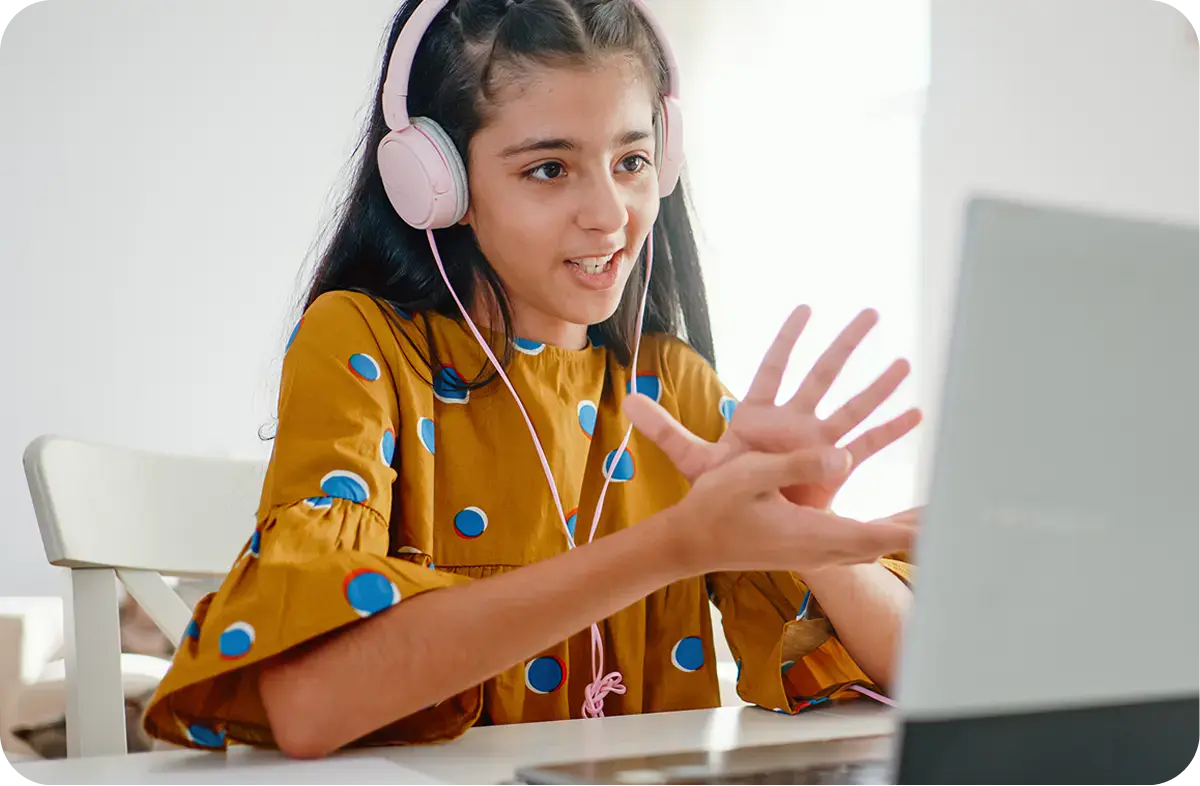
Join a global virtual event where kids communicate live with a simulated Mars mission — complete with real Earth-to-Mars time delay.*
Watch The Recording


During this event, learners will communicate with a Mars analog crew experiencing real mission conditions — including a 10–20 minute communication delay. While waiting for responses, kids collaborate, discuss, and think like real scientists.
*Registrants required to be 18 or older.

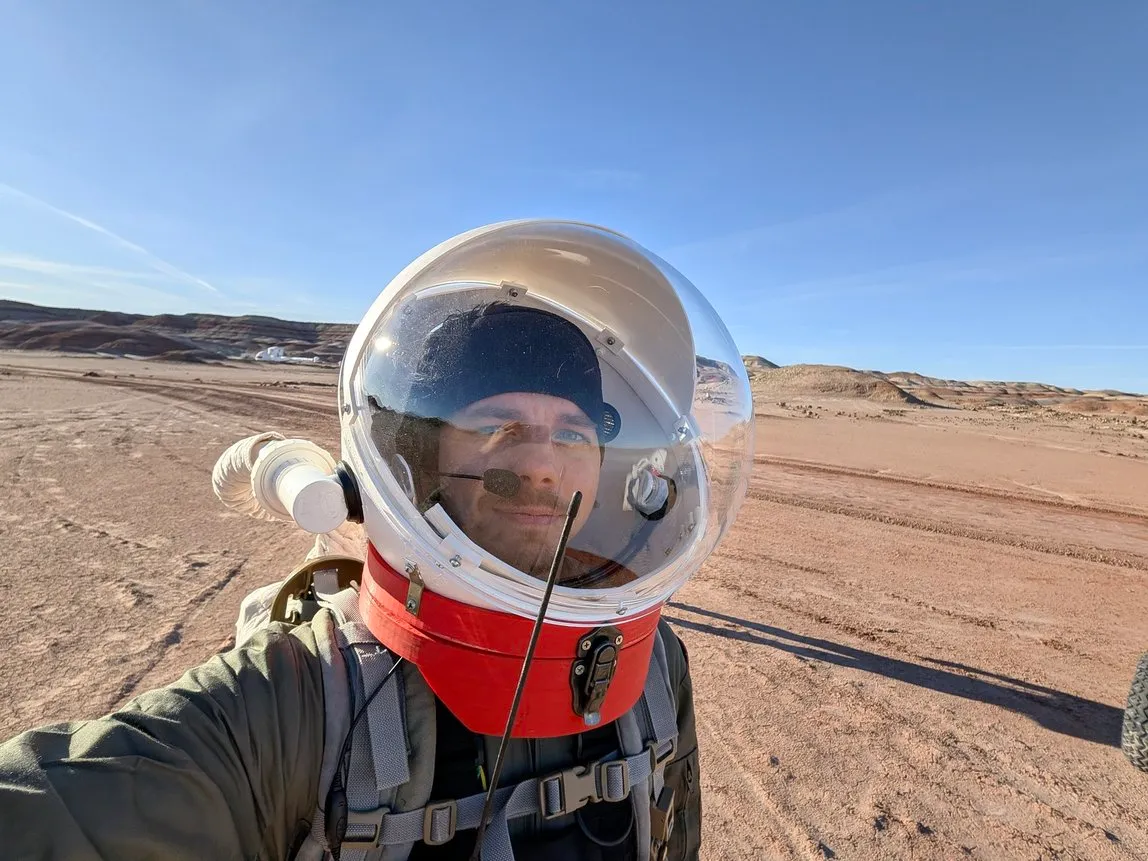
Teacher Tom is an Analog Astronaut selected for an upcoming mission at the Mars Desert Research Station. He is known for turning complex science into “aha” moments through energetic, curiosity-driven classes. A longtime Outschool STAR Educator, he brings rocket science and engineering to life with humor, warmth, and clarity, creating classes learners find engaging, confidence-building, and unforgettable.
Journalist Report
Crew #: 328
Position: Crew Journalist, Comms Officer, & Astronomer
Report prepared by: Tom Bickmore
Hello from the Hab on Sol 11. We kicked off with prep for a 4-hour EVA to the "Sea of Shells" area—same spot Jahnavi, Rebeca, and Aaron visited yesterday. Jahnavi's flag fell off her uniform along the way back then, so today's mission was to recover it (which we did!). The 360° camera I lent them yesterday gave us the exact moment and location—super helpful.
Near the destination, a sharp rock decided we'd gone far enough and popped a tire on Curiosity. Very realistic sim—have you seen the real Curiosity rover's wheel damage pics? We were deep in a canyon with zero direct radio comms back to the Hab. Procedure covered this possibility (always two rovers), so I drove about a mile back to a spot with reliable repeater access.
Standing in the back of the rover, holding the radio high above my suit, I called for help, coordinated the rescue, and kept the stranded crew updated. My Ham radio experience really came in handy here. It took some time, but we clocked exactly 4 hours and 2 minutes outside the airlock—successful EVA overall. We found the Sea of Shells (ground literally covered in fossilized sea shells), recovered the flag, and handled the incident smoothly. Not thrilled about the tire, but happy with how the rescue procedure played out and that we made it back in time for our second delayed-live event.
This EVA felt like one of the most realistic we've had—great demo of teamwork, radio relay science, and sticking to sim rules (no cell service out there either).
Then came the event/experiment: live YouTube broadcast hosted by Zac from The Launch Pad, with us joining from "Mars" via interplanetary comms delay. It was a lot of fun—tons of questions from chat, and Zac did great covering them and smoothing minor glitches, all from his mobile studio (AirBnb for covering the Artemis Launch). Good luck on your MDRS application, Zac—we're happy to support!
Journalist Report
Crew #: 328
Position: Crew Journalist, Comms Officer, & Astronomer
Report prepared by: Tom Bickmore
Journalist Report Title: Interplanetary Zoom Meetings Work!
Hello from the Hab on Sol 10.
WOW! Hard to find words to describe the event we had today!
My students really are out of this world.
We ran our main experimental interplanetary live interaction today. "Event Mission Control" (my space science & engineering students) hosted from Earth live—they did an amazing job fielding questions, moderating chat, and co-hosting—while the crew here at MDRS joined from "Mars" with the full 20-minute communications delay simulated (constant two-way video feeds buffered to mimic light/radio lag between planets).
The whole event was awesome. The crew had a blast sharing mission insights, hopefully inspiring hundreds more kids, and we were all thoroughly impressed by the kids at Mission Control.
This tested 2-way live/continuous video feeds with a buffer/delay to simulate interplanetary signal travel. We used a strict schedule for which "planet" talks when to avoid crossover or interruption. Figuring that out ahead was tricky, and sticking to it took focus, but the practice run helped us get it right in time.
The experiment wasn't just "is it possible?"—it was "is it worth it?":
-Does it feel like a real interaction, or just a series of 10-min pre-recorded videos?
-Can you tell there's a genuine back-and-forth dialog, even with 20 minutes between questions and answers?
These questions matter—they will shape how people communicate between planets in the future. Survey results are still pending, but from our side and early feedback, the experience looks very successful!
For scale: 13 kids at "Mission Control", our 5 crew at MDRS, and over 500 accounts logged in to watch live and submit questions and over 800 more signed up to watch later. (Many were whole classrooms or schools on shared devices, so likely thousands participating.) Around 20 countries joined (that we know of so far). Participants submitted ~1000 questions live—the Mission Control kids answered more than half via text while still handling their live turns. We answered the more mission-specific ones from our delayed side and shared what life is like here. The kids on both ends stayed sharp, engaged, and enthusiastic throughout. So good!
We also had an EVA today: Aaron, Rebeca, and Jahnavi explored to the North West. The rovers again proved capable—almost reaching the intended destination while staying within safe battery reserves. Those on EVA called it the best views they've seen here, with very diverse terrain in new ways compared to other areas.
As we near the end of the mission, we're anxious not to waste any time and make the most of our last few days. The day was very busy, but our other experiments continue progressing, and we're happy with how they're advancing. More on Sol 11 after tomorrow's rescheduled live with The Launch Pad Youtube channel.
Journalist Report
Crew #: 328
Position: Crew Journalist, Comms Officer, & Astronomer
Report prepared by: Tom Bickmore
Hello from the Hab on Sol 9. A mix of exploration, outreach reflection, and schedule adjustments at the Mars Desert Research Station.
Last night's outreach with the school in India (where Jahnavi attended several years ago) was awesome. The students asked great questions, teachers shared warm comments about Jahnavi, and the excitement flowed both ways—seeing their passion for future space careers boosted ours in turn. The love of space across cultures came through clearly and made the session extra special.
We had two EVAs today. The first—Commander Mariló Torres, Crew Scientist Jahnavi Dangeti, and I—aimed for Somerville Overlook but turned into an unintentional rover range test. Perseverance reached 50% battery (our outbound safety limit) a full kilometer short, in the area labeled Candor Chasma on maps. We stopped to explore and compare it to previous sites.
The terrain differed sharply: much more vegetation, signs of different "Martian life" (we saw only 2 aliens (birds) plus tracks from several deer and one or two large herds of cows). It pushed the rover harder over rough ground than any prior outing. I always enjoy the variety—extremes of dryness alongside spectacular past erosion, deep canyons, cacti everywhere, and a few tiny green-leaf plants straight out of a sci-fi movie.
The second EVA was shorter: Engineer/Safety Officer Aaron Tenner and GreenHab Officer Rebeca Gonçalves suited up to film and inspect the outside of the Habitat and compound for safety checks and outreach. They documented what life looks like here—even in our own "front yard."
In the GreenHab, progress continues. We planted new seeds for future crews (carrots and beans) to help with consumption down the line.
Outreach is ramping up fast. The event now scheduled for Thursday (Sol 11) doubled in size today with 500 additional registrations—many of which are whole classrooms rather than individuals, so the number of kids is MUCH higher. The more participants, the more accurate the experiment!
Daily routines hold steady, teamwork remains strong, and we're all looking forward to tomorrow's session. Can't wait to share how it goes tomorrow.
Journalist Report
Crew #: 328
Position: Crew Journalist, Comms Officer, & Astronomer
Report prepared by: Tom Bickmore
Happy Groundhog Day, Earthlings!
Did you know that in North America, there's a day dedicated to groundhogs making predictions about whether spring will come early or if we’re stuck with 6 more weeks of winter? It's true! Across the continent, towns gather around these mysterious creatures (with names like Punxsutawney Phil) as the mayor, decked out in a top hat and suit, anxiously awaits the verdict.
Now, at the Mars Desert Research Station, we have our own very special groundhog: Regolith Reggie. Due to the slightly harsh conditions on Mars, Reggie is... shelf-stable (don’t ask him how, it’s top secret). He’s a hardworking groundhog who enjoys lending a paw in the Green Hab, helping with research, and, of course, boosting morale by predicting early spring—every year, without exception. After all, seasons on Mars are a little different, but who doesn’t love a little optimism?
Hello from the Hab on Sol 8. A packed day at the Mars Desert Research Station—early TV appearance, EVA, my first time running Comms in the Hab, and steady progress on experiments. We appeared live on TV (TeleCINCO in Spain) this morning before 5 AM Martian Standard Time, and had a quick chat about the mission and MDRS facility. Then back to bed for a bit longer. An EVA took place today: Crew Scientist Jahnavi Dangeti, Engineer/Safety Officer Aaron Tenner, and GreenHab Officer Rebeca Gonçalves headed out to the dinosaur quarry. No one got eaten, and no signs of ancient life turned up, but the terrain offered more fascinating layers and erosion patterns to observe. Great for outreach photos as well! While running EVA Comms from the Hab (my first turn at that role), I monitored radio traffic, kept the EVA-Link map updated, and made progress on the Mars topography project—refining the high-res Casey Handmer model setup for future crews to use, without disrupting the smart home dashboard or other critical systems. (Turns out it takes about 20 hours to copy the planet Mars in 3D to make a backup). I also recorded microscope observations of the awesome crystalline structures forming as salts effloresce from the soil drying as part of Jahnavi's curing bricks. It is interesting to see how it differs from the natural patterns we saw on the ground during the last EVA. In the GreenHab we added automation to the hydroponics pumps for better consistency, and celebrated the first germination of a Space Tomato seed (Thanks TomatoSphere!) in the regular Earth soil control (expected to be a bit faster than the regolith setups). The other experiments continue moving forward. We're also preparing for a busy stretch:
Later tonight we have outreach with a school in India where Jahnavi used to attend (more details in tomorrow's report.)
Tomorrow (Sol 9, Tuesday 4 PM MST) we run a live-with-comms-delay interaction on YouTube.
Wednesday (Sol 10, Wednesday 1 PM MST) we join the main Outschool-hosted event. My students will run the Earth side—fielding live audience questions, moderating, and co-hosting—while the crew here answers mission-specific questions with the full 10-minute interplanetary delay simulated. This one is also open to the public (aimed at kids 5-18), so come join us and help with the experiment. I'm especially excited to see my students in action on the other side.
The last few days of the mission are shaping up to be very busy and rewarding. More on Sol 9 after two awesome events and 2 EVAs! (Wow, I better go get some sleep...)

Journalist Report
Crew #: 328
Position: Crew Journalist, Comms Officer, & Astronomer
Report prepared by: Tom Bickmore
Hello from the Hab on Sol 7. A quieter catch-up and recharge day at the Mars Desert Research Station after several late nights—everyone grabbed a bit more sleep and eased into lighter tasks.
We tackled small lingering jobs around the Hab: finished a few items that had waited for time, did extra cleaning, and handled some hand laundry.
Science checks continued: we monitored the brick experiments (drying and early observations from yesterday's mud work), tended plants in the GreenHab, and advanced the detailed Mars topography setup on the Hab iMac for future crews to use.
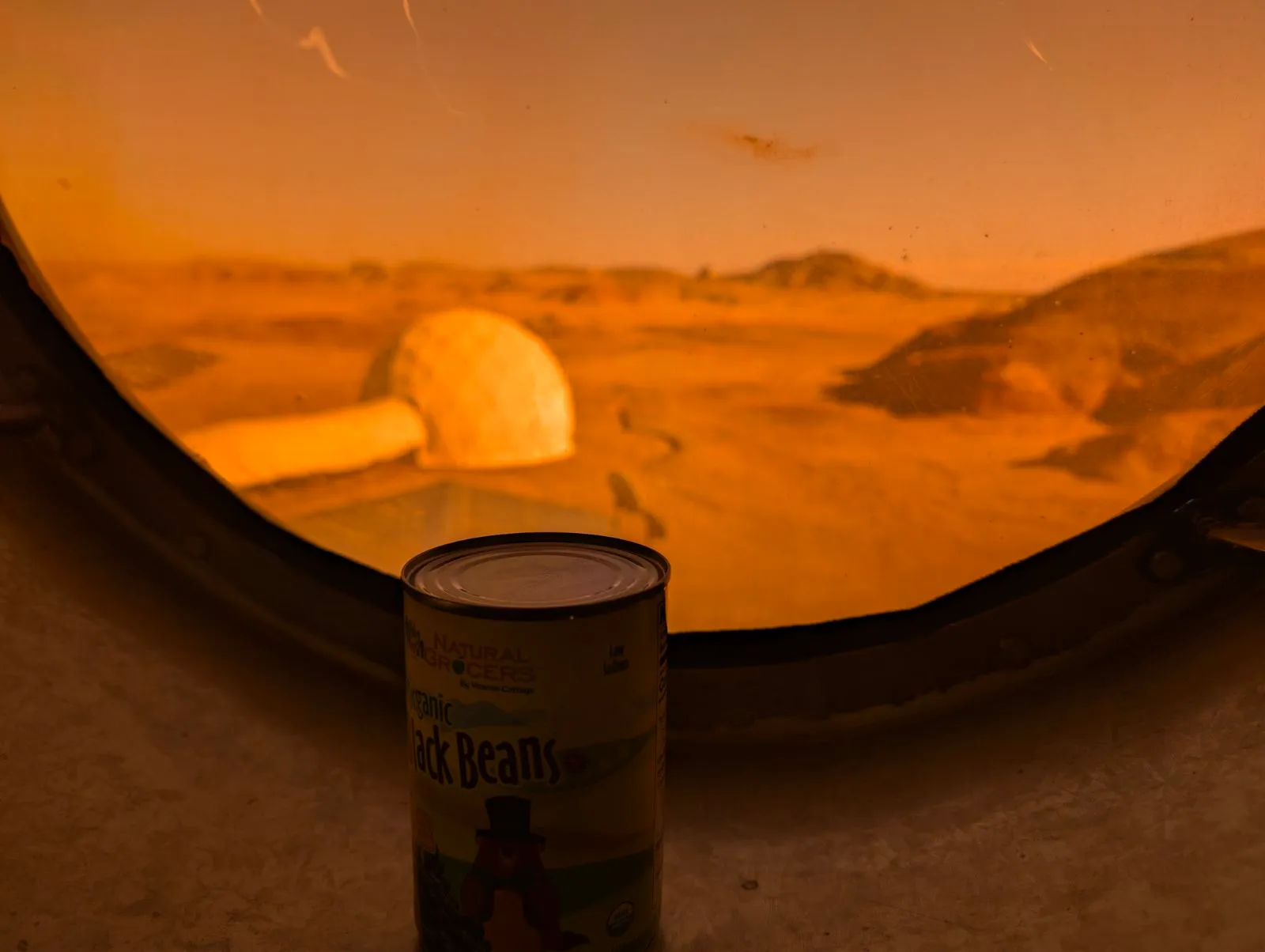
We harvested our first fresh greens from the GreenHab and started assembling proper burgers with creativity from the freeze-dried pantry, fresh lettuce, and other supplies. The crew looks forward to enjoying them greatly tonight.
We also tightened up a few loose items around the Hab—chair legs, brackets, and door hinges—to keep everything solid.
Evening plans include our first game of Terraforming Mars—fitting theme for a Mars crew.
Routines feel comfortable now, teamwork remains strong, and a slower day helped everyone reset. More on Sol 8.
Journalist Report
Crew #: 328
Position: Crew Journalist, Comms Officer, & Astronomer
Report prepared by: Tom Bickmore
Date: 31-01-2026
Hello from the Hab on Sol 6.
Full crew collaboration today at the Mars Desert Research Station—everyone rotated through personal projects, helping where strengths aligned best.
We all took turns making small test bricks from local regolith sifted to uniform particle size and mixed with precise amounts of water, gum, and salt. Messy, sticky work, but fun. The mixture looked and felt temptingly chocolatey—we resisted tasting it.
In the GreenHab, Aaron's materials testing project advanced with further observations.
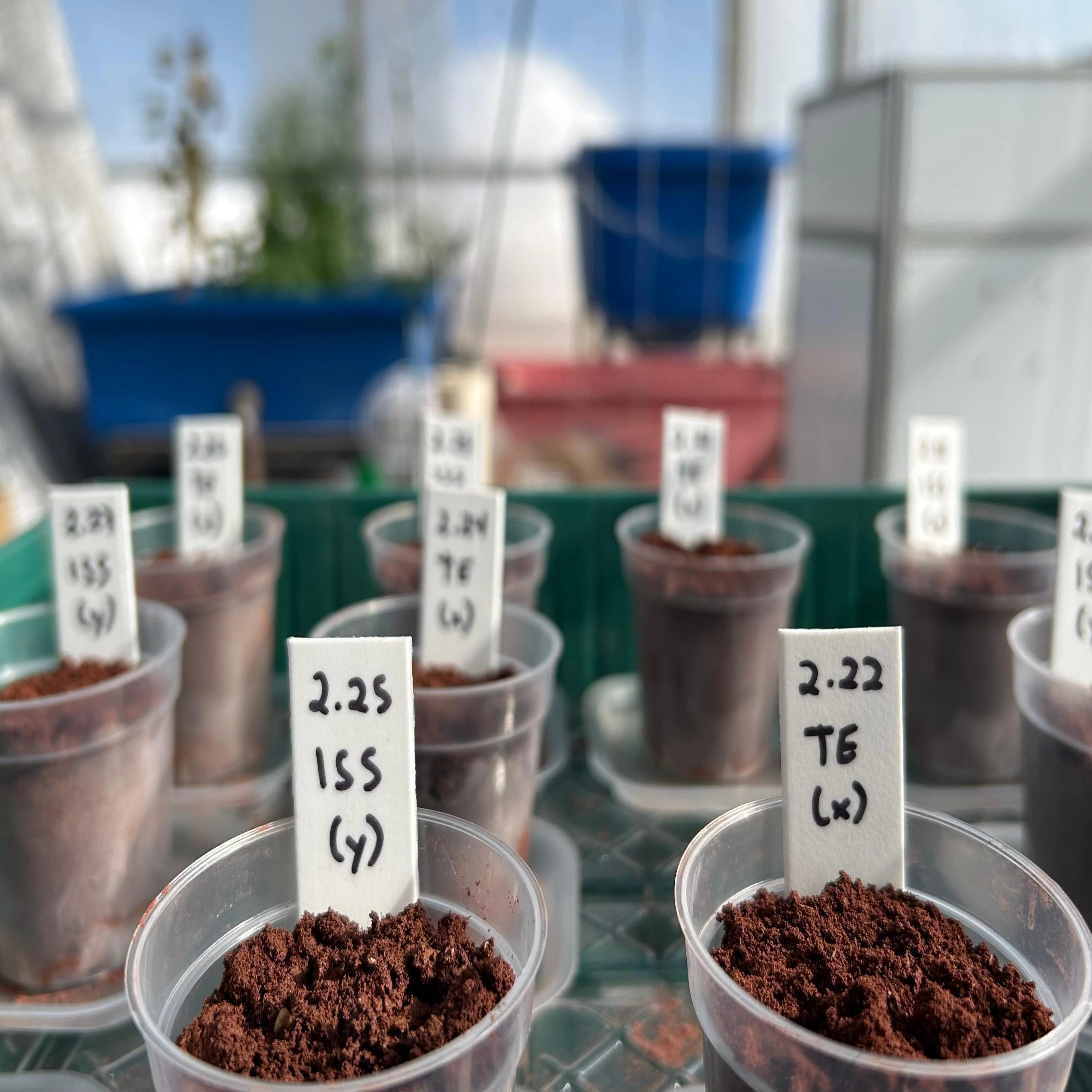
Hydroponic radishes showed continued growth, and radishes in lab-grade regolith produced their first germination. The other setups, including TomatoSphere tomatoes in lab-regolith with 10% organic amendment, progressed steadily.
I configured the main Hab iMac to display the best ever topographical map of Mars (created and donated by Casey Handmer of Terraform Industries). The dataset, which consists of hundreds of millions of files, providing 7-meter per pixel resolution in 3D of the Martian surface is in Linux ext4 format so that it only takes a few TB of space. But that requires further simulation workarounds since macOS and Windows don't read ext4 natively and Google Earth Pro lacks full M1 support. After a couple hours of fiddly setup, I'm most of the way there. Top priority: keep the iMac stable and running smoothly—no risk to the smart home dashboard, EVA-Link map, or critical systems (like Life Support).
We discovered that everything is available for proper hamburgers tomorrow, with some creativity in our Freeze Dried pantry, including fresh lettuce from the GreenHab. The crew is already excited.
Tonight we continued cultural exchange (with five countries represented) by making pancakes from Krusteaz mix with chocolate chips. Some crew members tried them for the first time—they were a big hit. We have had many other cultural exchanges, including friendly conversations about histories, legends, and traditions, and other dishes from different parts of the world.
Daily routines flow naturally now, teamwork stays strong, and projects keep advancing.
More on Sol 7.
Journalist Report
Crew #: 328
Position: Crew Journalist, Comms Officer, & Astronomer
Report prepared by: Tom Bickmore
Hello from the Hab on Sol 5. A big day here at the Mars Desert Research Station: Our first live-delayed outreach session and a solid EVA, plus some nice progress inside.
Last night (Sol 4 evening) we had a movie night. It took surprisingly long to find a sci-fi film none of us had seen. We thought we had one, but halfway through two crew members realized they'd watched it years ago. Fun to see how the group reacted to the movie crew's actions and reactions and to discuss what we'd handle differently in a similar scenario.
Today we ran our first Live-but-delayed outreach event: about a dozen kids from 4 countries joined us for a continuous conversation with the ~10-minute interplanetary comms delay simulated (constant video feeds both ways, delayed between parties). This was a rehearsal with our co-host students to test the full setup before the larger-audience version. We were all impressed by the kids' questions, the depth of their knowledge, and how well they answered each other. Their variety of knowledge and their enthusiasm were incredible. The delay felt real and impactful: watching Earth respond to our "past" selves, then seeing our own delayed feed return. It made the interaction feel connected rather than isolated. Everyone had a great time.
We also had an EVA: Commander Mariló Torres and I went to the northern limit of our range, an area reported for signs of ancient life (it's an active dinosaur quarry). No fossils or ancient traces found, but we did spot a very small live "dinosaur" (a lizard). Active dig sites had protective covers in place. The geology was striking. We saw distinct layers of rock with varied erosion patterns. On the drive to and from, we noticed crystalline patterns in the dirt where water gathers, looking a lot like the growths in Jahnavi's soil experiments and similar to road-salt crystallization during Canadian thaws. Since it's a desert dirt road with no added salt, these must be natural salts efflorescing from the soil. We plan to look more closely and sample these locations on a future EVA.
Commander Mariló Torres and HSO Aaron Tenner gave us a thorough safety briefing on additional Hab emergency procedures—good refresh and details.
A previously "delayed in orbit" supply drop arrived today with key chemicals and additives for Jahnavi's soil experiments (to mix into local regolith for bricks and materials). This unblocks the main Science Dome work that was waiting on these items. Very exciting!
In the GreenHab, radish seeds are already germinating in the hydroponics setup. The other experiments (radish microgreens across four conditions, tomatoes in lab-regolith with 10% organic) continue progressing well.
Another day of progress with personal experiments planned for Sol 6!
Journalist Report
Crew #: 328
Position: Crew Journalist, Comms Officer, & Astronomer
Report prepared by: Tom Bickmore
Hello from the Hab on Sol 4. Another focused inside day at the Mars Desert Research Station—no EVAs, but steady progress on experiments and prep for tomorrow's big activities.
I started early before sunrise, spotting the Chinese Space Station passing overhead (a nice real-world reminder of orbital activity), then captured a longer sunrise timelapse plus some pre-dawn shots with stars still visible—great light for photos.
We continued working on personal experiments throughout the day.
Crew Scientist Jahnavi Dangeti saw interesting developments in her soil testing: mineral crystals appear to be growing out of the brick samples she formed.
GreenHab Officer Rebeca Gonçalves finished testing her hydroponics setup and planted the radish seeds in it. The radishes are being grown as microgreens across four conditions for comparison: hydroponics, lab-certified regolith sim, locally collected regolith, and organic potting soil. Tomatoes are in the lab-regolith sim. All regolith-based setups include 10% organic potting soil by volume to support growth.
Engineer/Safety Officer Aaron Tenner worked on paperwork for his project, along with outreach tasks and planning.
I posted more of our daily reports and photos for outreach, got the Mars topography model (created and donated by Casey Handmer) running on my laptop after testing, and we're awaiting confirmation to install it on the main Hab iMac. I also started setting up the Solar Telescope and preparing the Robotic Observatory for use—expanding my hands-on contributions beyond journaling.
Rebeca was assisted by Commander Mariló Torres on some of the GreenHab tending and planting work today.
This evening, with very clear skies, we watched the ISS (or our "Martian Space Station" equivalent) pass overhead—bright, steady, and a great view. I captured a Martian sunset timelapse to close out the day.
We're gearing up for two key activities tomorrow: a longer EVA to the north, and our first Live-but-delayed session with kids on Earth. This one is a rehearsal with the same ~10-minute comms delay setup, constant video feeds (delayed between parties), and the same co-host students who will run the larger-audience event next time. It's a chance to test the flow and tech before the full version.
Daily routines are settling in well, and the crew is staying productive.
More on how Sol 5 goes.

Journalist Report
Crew #: 328
Position: Crew Journalist, Comms Officer, & Astronomer
Report prepared by: Tom Bickmore
Hello from the Hab on Sol 3. No EVAs today—just a relatively calm, productive inside day at the Mars Desert Research Station as we keep building momentum.
We woke up to the smell of fresh bread baking (another successful batch from the bread-maker), and I captured an amazing sunrise timelapse over the Martian desert landscape this morning—beautiful start to the day.
We spent time cleaning up the Hab and getting familiar with the cleaning tools and supplies available here. One quirky find: vacuum filters tucked in the back of a cupboard which was labeled "Christmas Grogu" for reasons unknown. (A previous crew's inside joke?)
The bulk of the day went to personal experiments, but it was rarely solo work. We rotated help based on each person's strengths, which made everything run smoothly and efficiently.
Engineer/Safety Officer Aaron Tenner got his materials testing experiment running: comparing the structural performance of 3D-printed hydroponics hardware made from different filaments. (I got to drill a bunch of the holes for it.)
Crew Scientist Jahnavi Dangeti made sample bricks from regolith sorted into different grain sizes, using molds 3D printed and assembled by Aaron. (I spent about an hour dancing around with a stack of screens in the science dome, sifting and sorting the collected sample into different sizes.)
GreenHab Officer Rebeca Gonçalves continued advancing her plant experiments, which are starting to fill up the GreenHab alongside Aaron's hydroponics setups.
On the outreach side, I arranged an additional event and refined more details for our main Live From Mars session. More schools and individuals keep signing up—interest is growing steadily. We have a practice run scheduled for Friday with my co-hosts (some of my best space-loving students), and I'm personally very excited to introduce the crew to my students (and honestly, maybe even more excited to show off my students to the crew).
Commander Mariló Torres kept us going through the day with another great experimental Martian meal. Tasty and well received by the crew!
Daily routines feel more natural now, and the teamwork is stronger than ever.
We are also looking into an EVA to clean the exterior Hab windows for better pictures. With gravity on Mars reduced, ladders are safer, right?
More updates on Sol 4.
Crew #: 328
Position: Crew Journalist, Comms Officer, & Astronomer
Report prepared by: Tom Bickmore
Steady progress here at the Mars Desert Research Station as we build momentum in sim on Sol 2.
We started the day enjoying the bread from last night's test run—it came out nicely and made for a good addition to breakfast.
Overnight, we had made a few more adjustments to the Hab temperature controls for better sleep, and the whole crew noticed the difference this morning.
GreenHab Officer Rebeca Gonçalves gave an interview to Globo, a Brazilian media outlet, talking about the mission and our GreenHab activities.
We headed out on another training EVA, this time for Crew Scientist Jahnavi Dangeti and Engineer/Safety Officer Aaron Tenner to complete their required practice. I went along to document Jahnavi's soil collection work for her research.
After a lunch debrief, we did a second EVA: Commander Mariló Torres and I assisted Rebeca in gathering regolith samples from the spots she'd scouted—locations identified as the closest local matches to Martian soil properties while still workable for planting.
We brought back a solid amount of good material for our GreenHab experiments. I also captured some specific footage during the EVA to share with Globo for Rebeca's piece.
Along the way, we spotted an interesting mix of rocks in the red dirt: blues, greens, pinks, yellows, and plenty of jagged quartz-like chunks with transitions to other types—nice variety to photograph and study.
Projects are picking up speed. The space-flown tomato seeds are now planted in the lab-simulated Martian regolith and today's regolith we collected will be used for a micro-greens experiment. One hydroponics test now has water flowing, and Aaron has been making on-the-spot modifications to his separate hydroponics setup to better fit local supplies and GreenHab systems.
Outreach is building too: more schools and individuals are signing up for our upcoming Live From Mars event, where kids around the world will talk with us through a simulated interplanetary comms delay (about 10 minutes each way), co-hosted by my students on Earth. It's encouraging to see the interest grow day by day.
Daily routines are smoothing out, reports are getting easier, and the team is working amazingly well together.
More on Sol 3.
.jpg)
Journalist Report
Crew #: 328
Position: Crew Journalist, Comms Officer, & Astronomer
Report prepared by: Tom Bickmore
Hello from the Hab on Sol 1! (A sol is one day on Mars)
We're now fully in simulation at the Mars Desert Research Station, and today was our first complete day of routines plus our introductory EVA. (Extravehicular Activities)
A resupply drop came in today, topping off our inventory with the missing items—nice to have everything squared away.
We spent time prepping the suits and radios for the first EVA. Getting the radios positioned and working reliably while fully suited took some coordination, but we sorted it out without major issues. This EVA was our required training outing to the Marble Ritual site—a short, easy walk (or rover drive) from the Hab that's ideal for first-timers to practice suit mobility and procedures. If the rovers had any trouble, walking back is straightforward. Commander Mariló Torres led the group. GreenHab Officer Rebeca Gonçalves checked soil along the route, scouting locations for tomorrow's sample collection that are as close as possible to Martian regolith while still suitable for growing.
Tom Bickmore, the Crew Journalist, took a couple hundred photos, some 360 video, and assisted with navigation.
Supporting our mission on comms and GPS monitoring, we had Aaron Tenner, Engineer & Safety Officer, and Jahnavi Dangeti, our Crew Scientist.
Driving the rovers in suits is an adjustment—you can't easily turn your head to check sideways or behind, so we relied on clear radio communication and extra caution during turns to keep the group together.
Back in the Hab, we assembled our first fully cooked meal: spaghetti with tomato powder and ground beef. It came out well—tasty and a solid win for our expectations for what we can do with the available supplies. We also found the bread-maker and plan to run a test batch tonight after reports are filed. Daily reports are getting smoother, experiments are starting up, and the crew is working well together.
More updates on Sol 2.

Hello from the Mars Desert Research Station! Today marked the exciting start of our mission as Crew 328, where we're simulating life on Mars right here in the Utah desert. We kicked things off with health checks to ensure everyone was ready for "launch" – and we all passed with flying colors! Our journey to "the Hab" was an adventure in itself.
The crew shuttle (which looked a lot like an old Chevy Suburban with some bumpy suspension) dodged "rogue asteroids" along the way. Yes, we actually had to swerve around a massive 2-meter tumbleweed that barreled right in front of us, looking just like a real space rock!
Our first task upon arrival: unloading cargo and hauling supplies upstairs with solid teamwork. Then, before simulation kicked in, we suited up in flight suits for a group photo in front of the Hab — a classic shot to inspire future explorers.
We then eagerly explored our new Martian home (and claimed our bunks). The Hab is incredibly clever, with compact living quarters, a science dome, and even a greenhouse for growing food (with some veggies still alive from previous crews, so we'll get to eat fresh greens!)
Our 5-hour orientation & training covered everything from safety procedures and tours to trying on a spacesuit (I got to be the demo model – it felt like gearing up for a real Mars walk!).
We wrapped up the day by taking inventory of our supplies, including plenty of freeze-dried meats and veggies alongside cereals, cheeses, powdered milk, & baking items. To make meals more fun, each of us "smuggled" in some personal shelf-stable delicacies to supplement the standard rations — variety is key on Mars!
We also made inventory checks on emergency and medical supplies, then filed our first reports. Late into the evening, we dove into geological maps to plan tomorrow's EVA – we're hunting for soil samples that mimic Martian regolith to grow space tomatoes and radishes in our greenhouse.
Stay tuned for Sol 1, where the real Mars simulation begins!
Crew 328 Pre-Mission Update – January 14, 2026 Journalist: Tom Bickmore (Teacher Tom)
Sol -11 (Pre-sim): 11 days to sim entry
Crew 328 is in final prep mode before stepping into the Hab on Jan 25. I'm dialing in my project: near-live video classes with students, using constant but ~10-minute delayed feeds in both directions to simulate real Mars-Earth comms lag. Should make for some interesting delayed Q&A sessions while we're "on Mars."
We're packing key gear and studying safety protocols. We are coordinating our other experiments together: growing tomatoes from seeds sent from the ISS, hydroponics designs, and bacteria to clean Martian regolith. I'm also testing some recipes for cooking with freeze-dried food.
The team is excited for isolation, desert EVAs, science work, and keeping the sim tight. This rotation will blend real analog challenges with education outreach—bringing Mars exploration straight to kids on Earth!
More to come once we're suited up and reporting from inside the Hab. Stay tuned!


Our top online enrichment offerings for middle & high schoolers. These classes help kids learn new skills, build confidence, and shine bright.
Live from Mars is for learners and families, with registration completed by a parent or guardian age 18 or older. No astronaut experience required.
The event takes place as a live Zoom webinar. You can join from a computer, tablet, or phone using a web browser or the Zoom app. This event will be viewed only, with no participation via video or voice. Participants will be able to submit questions and comments via the chat.
Just like real space missions, messages take time to travel between Earth and Mars. While those messages are in transit, learners will hear from guests and have chances to win prizes.
Yes. Learners can submit questions ahead of time using the form above, and selected questions will be shared with the Mars analog crew during the event.
The event will be recorded and shared with families who register, so you can watch afterward if you are unable to join live.