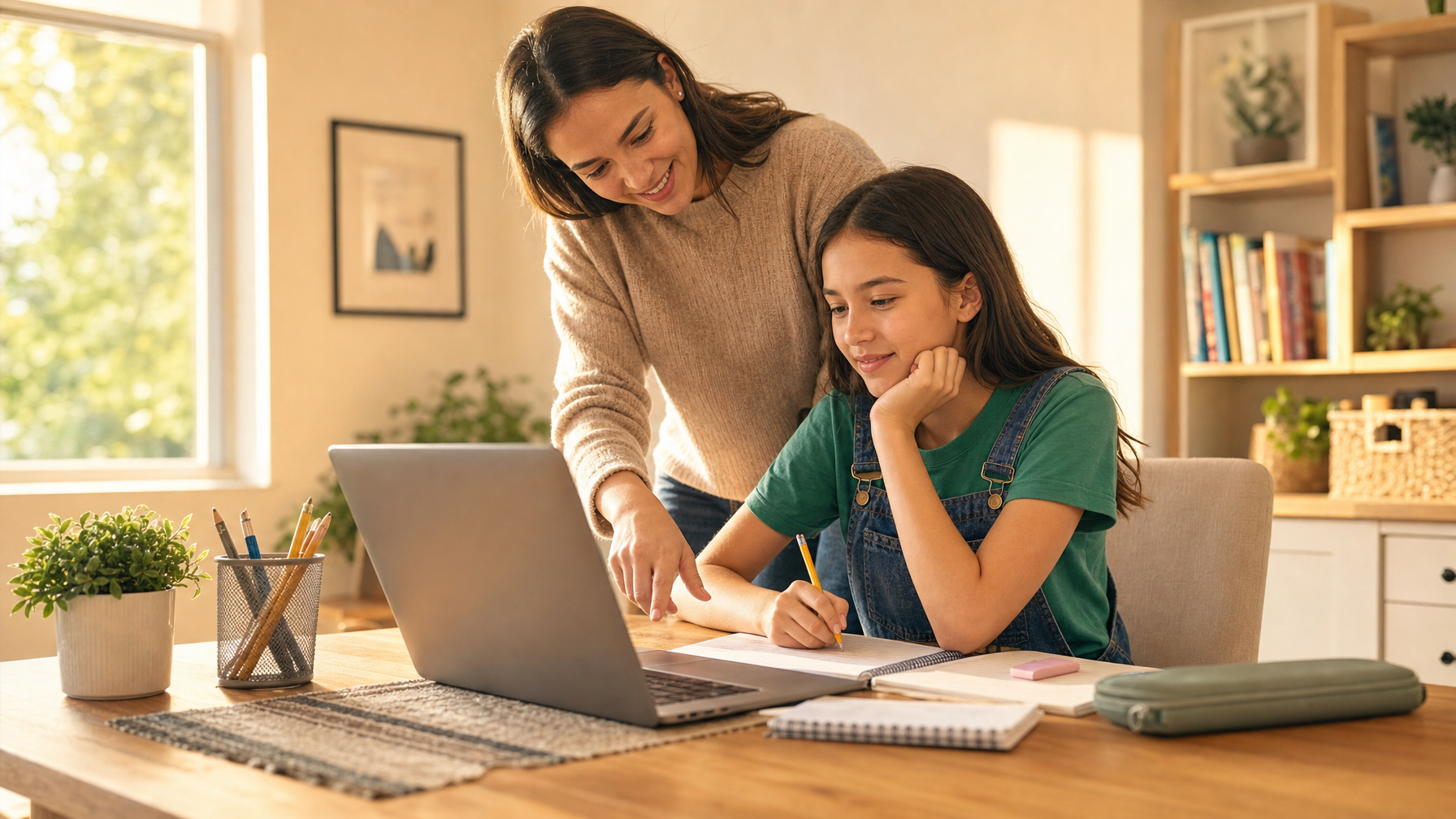
Self-paced classes sound like a dream when you're staring down a rigid weekly schedule. No fixed class time, no scramble to log on at 10am sharp, your kid moving through the material when they're actually ready for it. For some kids, that freedom is exactly what unlocks their learning. For others, an open timeline turns into a pile of unopened lessons and a Sunday-night guilt spiral.
So which one is your child? The honest answer usually isn't a flat yes or no. It depends on where they are right now with a few specific skills, most of which are learnable. This quiz walks you through the ones that matter, then helps you make sense of what your answers are telling you.
What self-paced online classes really are
A self-paced class gives your child pre-recorded lessons, readings, and activities they work through on their own timeline, usually with a teacher available for questions, feedback, or check-ins. There's no set meeting time. Your kid decides when to sit down and how much to cover in a sitting, within whatever deadlines the class sets.
That structure rewards one thing above all: self-regulated learning, the ability to set a goal, start without being told, and keep going when the novelty wears off. Decades of research tie self-regulation to stronger academic outcomes, and the good news is that it develops with practice and support rather than arriving fully formed [1]. So a "not yet" on this quiz is a starting point, not a verdict.
The quiz: is your child ready for self-paced learning?
Answer each question with mostly yes, sometimes, or rarely. Keep a rough tally as you go.
- Starting without a nudge. When there's a task they know they need to do, does your child begin on their own, or do they wait to be told every time?
- Sticking with something hard. When a problem gets frustrating, do they push through or shut down and walk away?
- Managing time loosely. Given a few days to finish something, can they pace themselves, or does it all pile up at the last minute?
- Working without an audience. Do they stay reasonably focused when no one is sitting next to them?
- Asking for help. When they're stuck, will they send a message or flag a question rather than quietly giving up?
- Tracking their own progress. Do they have any sense of what they've finished and what's left?
- Handling open time. On an unstructured afternoon, can they land on something productive, or do they drift?
- Reading and following directions. Can they work through written instructions without an adult translating each step?
- Learning from feedback. When a teacher points out a fix, do they apply it next time?
- Owning the outcome. Do they connect "I didn't do the work" with "that's why it didn't go well," without you spelling it out?

$20 off your first class WITH promo code: blog
Build the Education your Kid Deserves
Discover thousands of live classes taught by expert teachers, across academics and enrichment.
Browse classesHow to read your results
Count your mostly-yes answers.
7 to 10 yeses. Your child is likely ready for self-paced classes, and may thrive in them. Kids in this range often chafe against fixed schedules and do their best work when they control the pace. Start with one self-paced class in a subject they already like, so the format, not the material, is the only new thing.
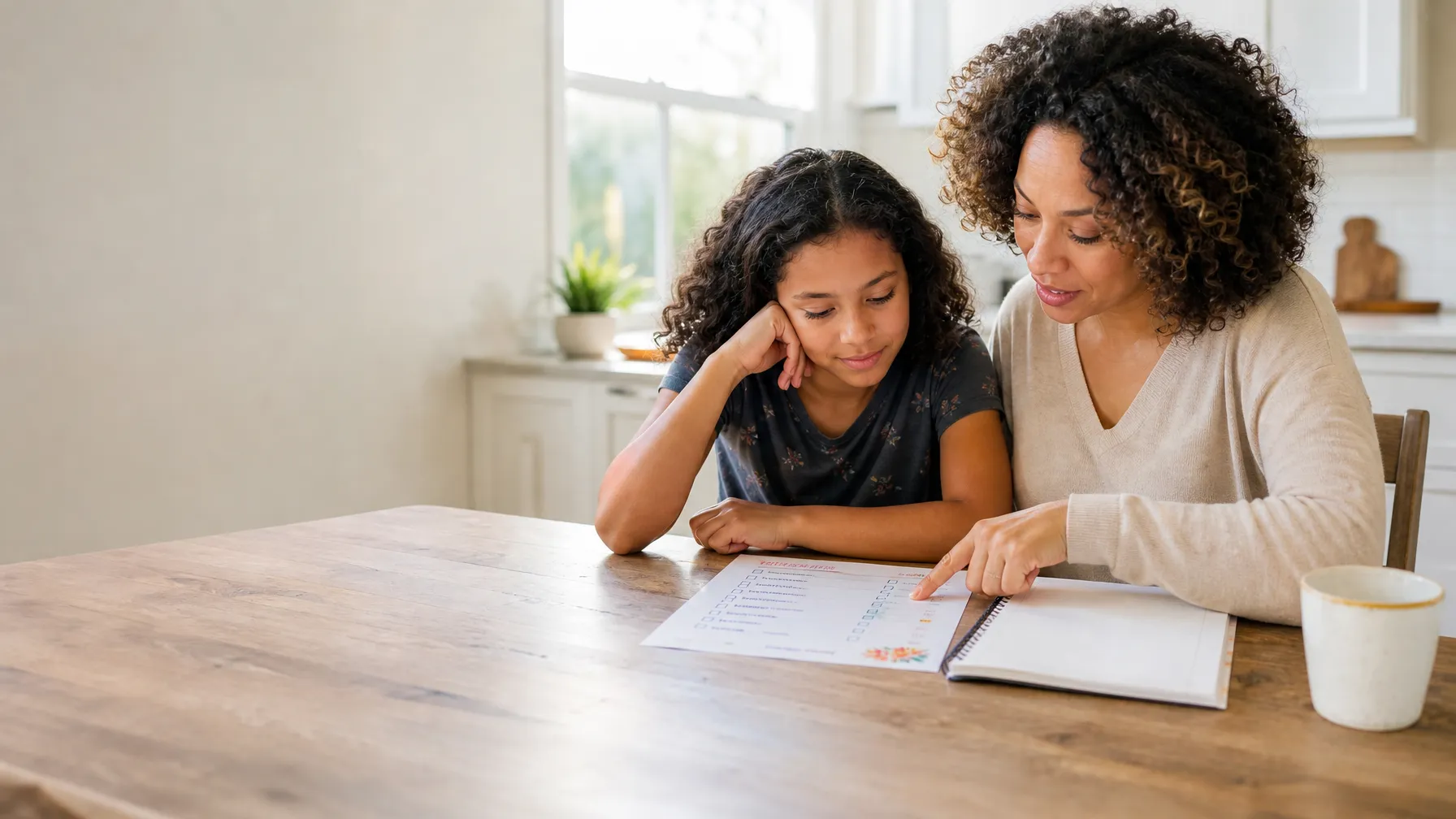
4 to 6 yeses. Your child is close. They can probably handle self-paced learning with some scaffolding from you: a shared weekly checklist, a standing time block on the calendar, and a quick Friday check-in to review what got done. Mix one self-paced class with the live, scheduled classes they're used to rather than switching everything at once.
0 to 3 yeses. A fully open timeline would likely overwhelm your child today, and that's completely normal, especially for younger kids or anyone still building executive function skills. Live classes with a set time and a teacher keeping the momentum are a better fit for now. You can build toward self-paced learning over the next several months.
If the answer is "not yet"
Readiness is a set of habits, and habits respond to practice. A few things that move the needle:
- Shrink the runway. Instead of "finish this by Friday," try "do the first two pages before lunch." Short, concrete targets build the starting-without-a-nudge muscle.
- Make progress visible. A simple checklist your child ticks off gives them the tracking skill that self-paced classes assume.
- Practice the hand-raise. Reward asking for help early. Kids who see help-seeking as smart, not as failing, do far better without a teacher in the room.
- Build the skill directly. Short study skills classes and structured test-prep habits give kids the planning and pacing tools that transfer straight into independent work.
It also helps to hear how this plays out in real families. One Outschool parent shared how self-paced learning reshaped her family's homeschool, from supporting a dancer's packed schedule to giving a neurodivergent daughter room to work at her own speed. Self-paced options aren't better or worse than live classes. They fit different kids, and often different seasons for the same kid.
Frequently asked questions
What age is right for self-paced classes? There's no single cutoff. Readiness tracks with executive function and reading independence more than with a birthday. Plenty of motivated 10-year-olds do well with support, while some teens still prefer the structure of a set class time.
Can we combine self-paced and live classes? Yes, and for many families that's the sweet spot. A live, scheduled class anchors the week while a self-paced class flexes around it.
My child did great, then stalled. What happened? Motivation dips are normal, especially once the newness fades. Rebuild a light structure, a weekly time block and a quick check-in, and the pace usually recovers.
Does self-paced mean no teacher? No. Good self-paced classes still include a teacher for feedback, grading, and questions. Your child just isn't meeting them at a fixed time.
If your quiz result pointed toward readiness, browse Outschool's classes and start with one subject your child already enjoys. If it pointed toward "not yet," a scheduled live class is a strong next step while those independent-learning habits grow.
Sources
[1] Zimmerman, B. J. (2002). Becoming a Self-Regulated Learner: An Overview. Theory Into Practice, 41(2), 64-70. https://www.tandfonline.com/doi/abs/10.1207/s15430421tip4102_2


.svg)
.svg)