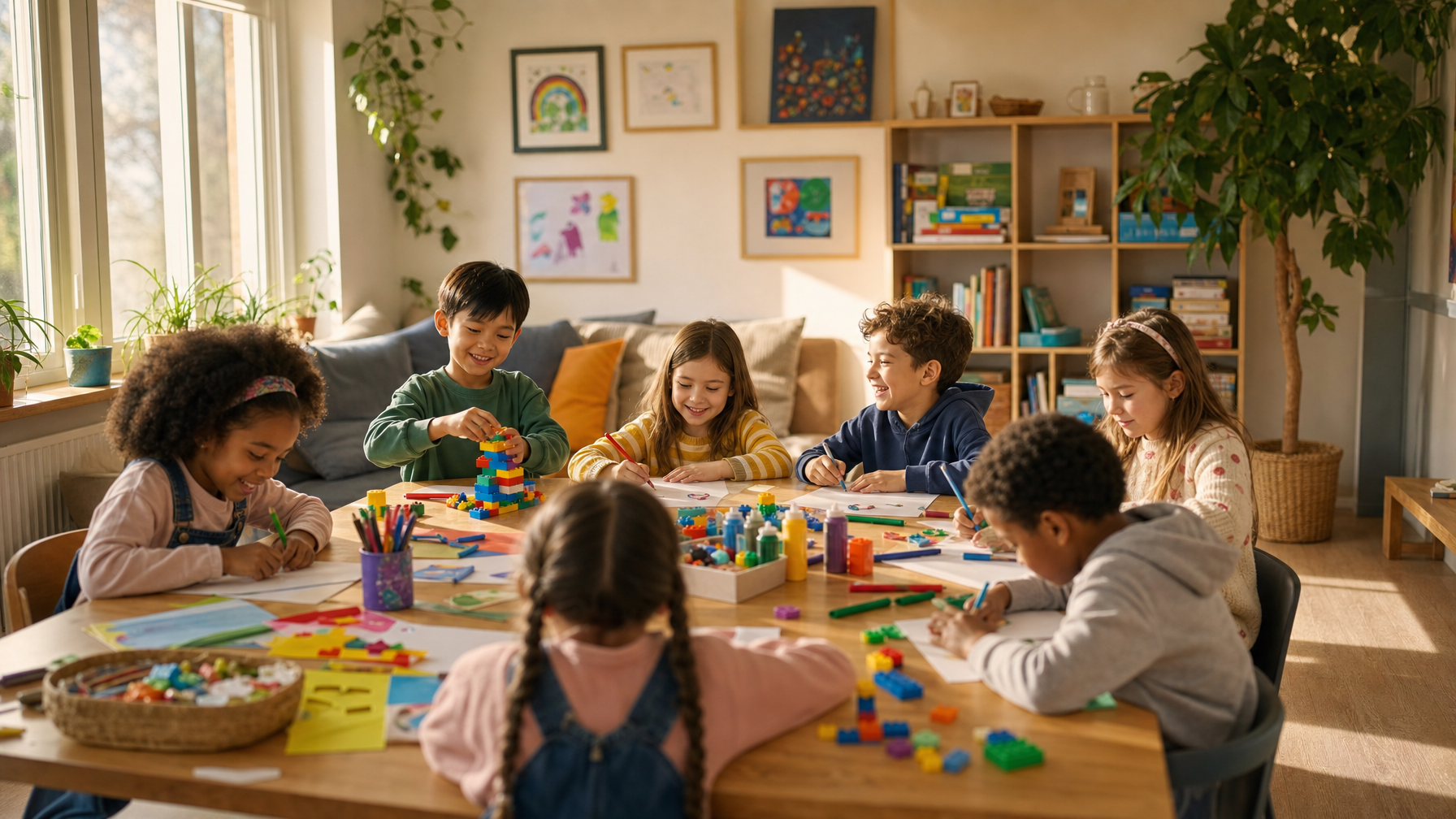
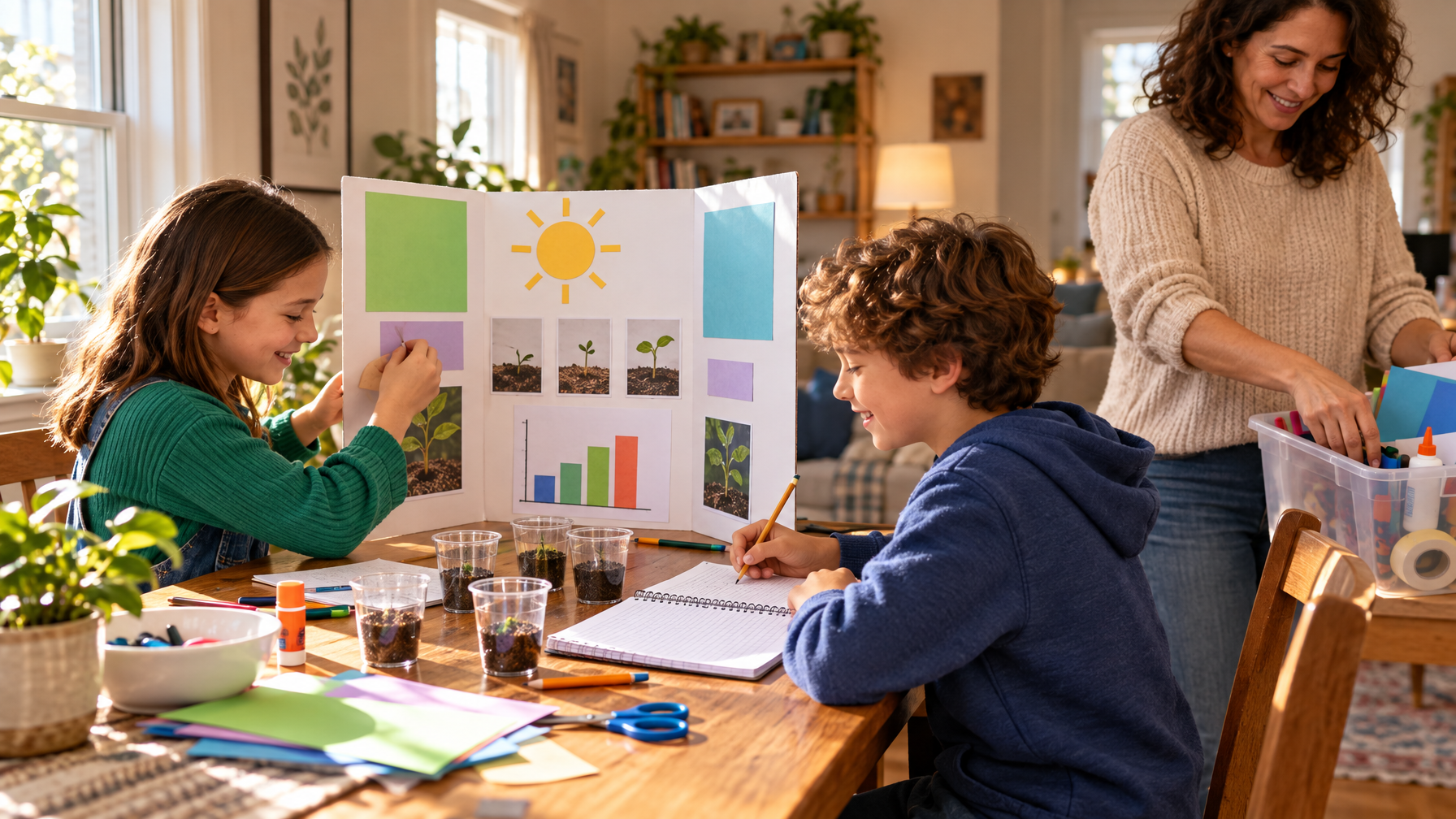
The best online science class for your kid is live, small-group, and hands-on, taught by someone who knows the subject and gets kids doing science instead of watching it. Video libraries are useful for review. They cannot answer “but why?” in the moment.
The National Research Council’s framework for K-12 science education is built around kids doing the practices of science: asking questions, running investigations, and building explanations, not memorizing facts from a page.[1] A class worth the money should feel like that.
The short version: Outschool is the fit when you want a live teacher and a specific topic (volcanoes, marine biology, chemistry). Generation Genius is polished, standards-aligned video for K-8. Mystery Science is open-and-go elementary lessons with hands-on kits you run at home. Khan Academy is free concept practice for middle and high school, not a lab.
At a glance: named options compared
Use this as a first filter. Details sit in each section below. If we keep this comparison long-term, the Designer table belongs here: Option, Best for, Format, Age band, Watch for.
Outschool. Live small-group and 1:1 classes. Ages 3 through high school. Watch for: quality varies by teacher.
Generation Genius. Standards-aligned video lessons. K-8. Watch for: no live teacher.
Mystery Science. Open-and-go elementary lessons with hands-on activities. Elementary only. Watch for: you are the teacher in the room.
Khan Academy. Free concept videos and practice. Middle and high school. Watch for: not hands-on; needs self-motivation.
What makes an online science class worth it?
Not all “online science” is the same thing. Before you enroll, look for these:
A real teacher, teaching live. Science questions are unpredictable. A live teacher can follow a kid’s curiosity; a pre-recorded video cannot.
Small groups. Smaller classes let the teacher change pace and depth for the kids in the room, which is one of the more consistent findings on engagement.[2]
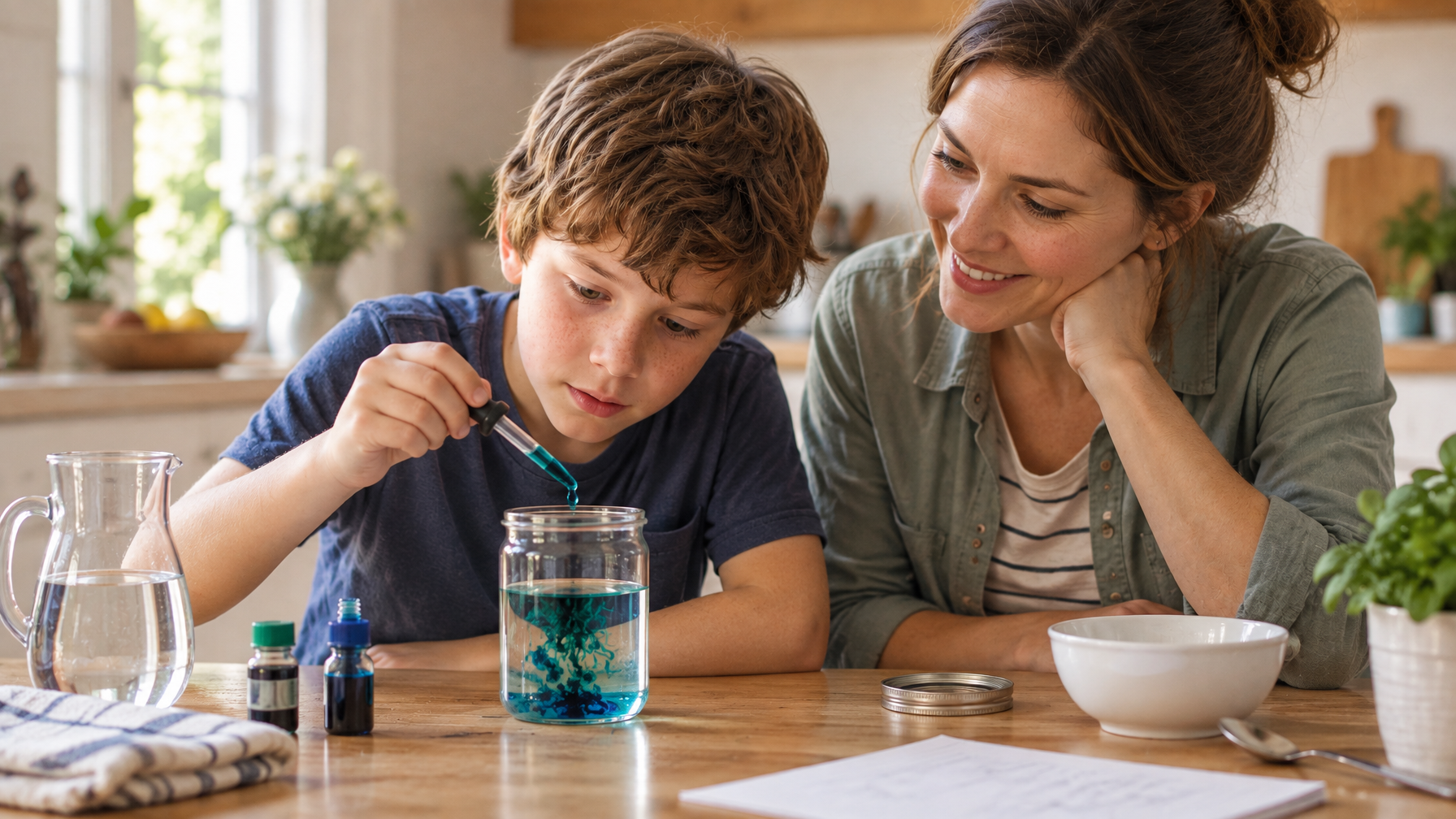
Hands-on experiments. The best classes send a simple materials list so your kid is mixing, building, or observing, not just listening.
A specific focus. “Science” is enormous. A class on volcanoes, marine biology, or chemistry reactions almost always beats a vague survey class.
Subject-matter expertise. A genetics class taught by someone with a biology background is a different hour than a generalist reading slides.
Live or self-paced: which is better for science?
Both have a place. It depends on your kid.
Live classes win when your kid learns by talking, asking, and doing alongside other kids. They are the closest thing to a strong classroom science teacher.
Self-paced options (recorded video libraries, apps) are cheaper and more flexible. They are a solid supplement for review or for a kid who wants to binge dinosaur content on a Saturday. They cannot notice when your kid is lost.
A lot of families do both: a live class for the core of a topic, plus a self-paced library for the in-between curiosity. If you want to try the hands-on part at home first, our list of 10 science experiments to try with your kids is a low-stakes start.
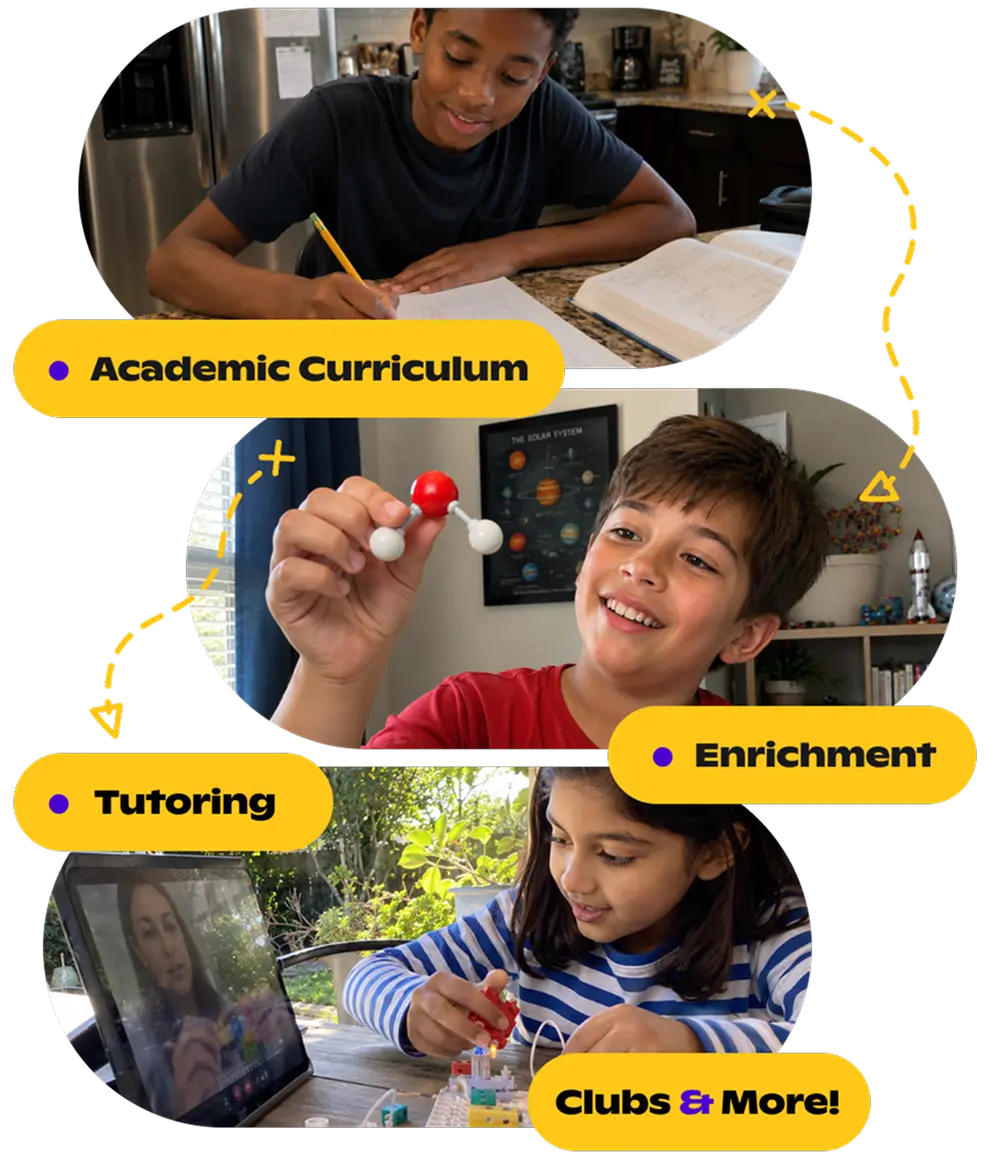
$20 off your first class WITH promo code: blog
Build the Education your Kid Deserves
Discover thousands of live classes taught by expert teachers, across academics and enrichment.
Browse classesThe main online science options, compared honestly
Outschool is a marketplace of live, small-group and 1:1 science classes taught by independent teachers, from a one-hour volcano lab to a multi-week biology sequence. Strength: variety, live teaching, and matching a specific teacher to a specific kid. Watch for: quality varies by teacher, so read reviews and check background. Browse online science classes and, if animals are the hook, biology classes.
Generation Genius offers polished, standards-aligned science videos and lessons for K-8. Strength: production quality and curriculum alignment. Watch for: self-paced video, not live interaction.
Mystery Science is a library of open-and-go elementary science lessons with hands-on activities. Strength: easy for parents to run. Watch for: elementary only, and you are still the adult in the room.
Khan Academy is free and strong for middle and high school science concepts. Strength: cost and depth. Watch for: built for independent learners, and it is not hands-on.
If you want live teaching and a teacher who reacts to your kid, a marketplace like Outschool is the fit. If you want a low-cost, self-paced supplement, the video libraries work alongside it.
How much do online science classes cost?
Self-paced libraries often run about the price of a streaming subscription. Live classes cost more, because you are paying for a teacher’s time, and prices range from a one-off workshop to weekly or 1:1 instruction.
You do not have to make science your one big outsourced subject. On a marketplace you can build it a la carte: one topic your kid is obsessed with, taught live, while you handle the rest at home.
If your family has an education savings account, the math often changes. In many states, live online classes are an approved expense. Our guide to ESA approved expenses walks through it. Use ESA funds or programs like OpenEd if available in your state.
How to match a class to your kid
Start with the kid, not the curriculum.
The kid who loves animals: marine biology or zoology, or browse biology classes.
The kid who likes to build (safely): a hands-on chemistry or physics class with experiments.
The reluctant one: a single-session workshop on something they already like, space, slime, dinosaurs, before a multi-week course.
The deep-diver: a semester-long course that mirrors a real science sequence. Our homeschool science curriculum guide pairs well with live classes. If you plan to teach some of it yourself, how to teach biology can help you decide what to keep and what to outsource. For a project-based stretch, see science fair projects for kids.
Questions parents ask
Can I use online classes for my kid’s entire science education?
Yes. Plenty of families run their whole science track through live online classes. Whether that is the right call is a budget-and-preference question. It is most affordable with ESA funds when those are available in your state.
Can my kid do multiple science subjects at once?
They can, though many kids do better going deep on one topic at a time. A common rhythm is one core weekly class, plus the occasional one-off workshop.
How do I know the teacher actually knows the subject?
Check the teacher’s profile for their background and read class reviews from other parents. A genuine science background plus a track record with families at a similar age is worth more than a slick description.
What age can kids start online science classes?
There are play-based science classes for kids as young as 3 or 4, up through high-school-level biology, chemistry, and physics. Shorter and more playful for little ones, deeper as they grow.
The goal is not the single best class. It is the teacher who makes your specific kid lean in. Start with one topic they already love. Browse live online science classes for kids on Outschool.
Sources
[1] National Research Council, A Framework for K-12 Science Education: Practices, Crosscutting Concepts, and Core Ideas (2012). nationalacademies.org/read/13165/chapter/2
[2] “Differentiation approach in education: Tailoring instruction for diverse learners,” PMC (2025). pmc.ncbi.nlm.nih.gov/articles/PMC11786651/


.svg)
.svg)